Welcome to our travel blog. We are Tabitha and Nic. In 2011 we 'retired' in our early 40s and set off to travel the world. We spent our first year in South America and have been lucky enough to make two trips to Antarctica.

Our blog is a record of our travels, thoughts and experiences. It is not a guide book, but we do include some tips and information, so we hope that you may find it useful if you are planning to visit somewhere we have been. Or you may just find it interesting as a bit of armchair travel.


Showing posts with label Argentina. Show all posts

Sunday, August 27, 2017

A visit to the Feria de Matadores

Corrida de sortija, Feria de Matadores, Buenos Aires
One thing that we had meant to go to previously, but hadn't got around to, was the Feria de Matadores. This Gaucho market is held in the suburbs of Buenos Aires, about a forty minute bus ride out of the centre.

There are lots of market stalls, some of which are very generic, but others have some good authentic goods, including mate cups and bombillas, and some - though not as many as we had expected - gaucho related items. There were certainly a lot of knives on sale.

Feria de Matadores, Buenos Aires


There are also food stalls, where we had a few more decent empanadas, but you could also get other traditional fare like locra, and there are a couple of nice old fashioned places to eat.


The locals enjoy the market, with live music and traditional dancing in the square, which generally draws a small crowds of onlookers, and a few hapless tourists may be tempted to join in.


Corrida de sortija, Feria de Matadores, Buenos Aires
But the main reason that we had come along was to enjoy the spectacle of the corrida de sortija, a gaucho sport that involves galloping your horse along and trying to collect a small ring, that is dangling at about head height, on a little stick.

We watched this for quite a while, and it is clearly not easy at all. Most people failed, either missing the ring altogether, knocking it off, or managing to collect it, only to drop it afterwards. But some did get it, and trotted back, proudly showing off the ring.
Child's play? Corrida de sortija, Feria de Matadores, Buenos Aires
They start them early at this sport, and we saw a kid of about twelve, (maybe, I'm lousy at judging ages,) and another that can't have been older than two, having a go at a lowered ring.

What is nice about this market and the corrida de sortija, is that whilst there are obviously tourists here, being a bit further out of town, the numbers are rather less than at San Telmo for example. Of course the vendors are used to visitors, and cater to them, but this is predominantly an event for local people.

Starting them young at the Corrida de sortija, Feria de Matadores, Buenos Aires


There were comparatively few people watching the gauchos tilting for their rings, and it was evident that they were doing this for themselves, not to entertain a crowd. In our eyes, that made this a very worthwhile trip out of the centre.
 
Corrida de sortija, Feria de Matadores, Buenos Aires

Success! Corrida de sortija, Feria de Matadores, Buenos Aires


Corrida de sortija, Feria de Matadores, Buenos Aires

Success! Corrida de sortija, Feria de Matadores, Buenos Aires

Success! Corrida de sortija, Feria de Matadores, Buenos Aires

Corrida de sortija, Feria de Matadores, Buenos Aires

Success! Corrida de sortija, Feria de Matadores, Buenos Aires

Feria de Matadores, Buenos Aires

Mate cups and bombillas, Feria de Matadores, Buenos Aires

Feria de Matadores, Buenos Aires

Feria de Matadores, Buenos Aires

Feria de Matadores, Buenos Aires

Feria de Matadores, Buenos Aires

Saturday, August 26, 2017

Back in Buenos Aires ...

Soda siphons at San Telmo market
From Rosario, we took the bus to Buenos Aires, and then a cab on to our Airbnb place in our usual neighbourhood, Palermo.

Being back here was always going to be a risk for our diets, but we love the city, so it was a risk worth taking, and anyway, we had to come here to catch our plane home.

We did mitigate the risk by joining the local gym, and getting ourselves along there at least four times a week.

Café Bar Plaza Dorrego, San Telmo


As it was to turn out, our time here wasn't too bad, and we may even have lost a pound or so. It helped that, much to our disappointment, our favourite little dulce de leche cake shop had closed down.


We also strictly limited our intake of ice cream and wine, and ate plenty of lovely steak. The latter at least, was no hardship!


We did give in to a few empanadas though, including our favourite ones from last time, the fried ones from L'Escondida. They didn't let us down, they were still delicious. Some others that we really enjoyed here were from La Cocina, which is a lovely traditional place, but really quite tiny.


Buenos Aires


And then there was a more unusual, but incredibly tasty, lamb version, in a place in San Telmo, called El Banco Rojo. They also had a really excellent burger. I'd had no intention of having a burger, but when I saw the ones being delivered to other customers, I succumbed; I didn't regret it at all!

We didn't only eat while we were here though. We did quite a lot of walking around, not necessarily to anywhere in particular, just to get some extra exercise in to burn off those empanadas.

Whilst in San Telmo, we popped along to the market there. We had been there previously, and had loved some of the stuff on the stalls, so we were fully expecting to fill up the remaining space in our rucksacks with nice things.

Palacio Paz, Buenos Aires


Unfortunately, there didn't seem to be that many stalls around this time, and so we only ended up buying one of the lovely old coloured glass soda siphons that we had admired last time around, but had to resist because they were too heavy to carry around or post back.


Palacio Paz, Buenos Aires

We also took a guided tour around Palacio Paz, which was the private mansion of the very wealthy founder of La Prensa newspaper, Jose C Paz. He commissioned a French architect called Louis Henri Sortais to design it, and had most of the materials imported from Europe.


It is said to be the largest private home ever built in Argentina, and some suggest that Paz had ambitions to become President, and intended to use this as a place where he could entertain and impress important dignitaries.

However, Paz never actually got to live here. The work started in 1902, but wasn't completed until 1914, two years after Paz died.


Palacio Paz, Buenos Aires
The family did move in, but even that was short-lived, as the financial difficulties of the 1930s led them to sell the building to the Military Officer's Association, which now uses it as their clubhouse.

They offer guided tours in Spanish or English, where you can see the main parts of the elaborately decorated house. The tours are good, with lots if interesting facts, but much of the decoration isn't really to my taste. It is an interesting visit if you have spare time, but probably not a priority otherwise.

Fortabat Art Collection, Buenos Aires

We even managed a quite cultural outing to the Fortabat Art Collection. It was opened by the Chairperson of the second largest cement manufacturer in Argentina, María Amalia Lacroze de Fortabat, using a portion of her vast personal art collection. There is a lot by Argentine artists, as well as international names, including an Andy Warhol portrait of the owner.


Fortabat Art Collection, Buenos Aires

It wasn't quite what we had expected from the write up, and most of it we wouldn't have considered hanging on our wall if you'd given it to us free, but it made a change from the usual stuff you find in many galleries.

We did quite like some of the rather whacky pieces on the top floor, although we were a little dubious about whether the artist was being a bit cheeky in the way he was rehashing a lot of other artists work.

We may not have done a lot here this time, but it was a great way to end our trip to Chile and Argentina. But first we have one last post, for our trip out to the Feria de Mataderos.

Fortabat Art Collection, Buenos Aires

Palacio Paz, Buenos Aires

Palacio Paz, Buenos Aires


Thursday, August 24, 2017

Rosario - home of the Argentine flag


Rosario
When we were in South America back in 2012, we visited Rosario, but unfortunately it didn’t work out too well for us. Firstly, we arrived to discover that a booking error meant that our nice centrally located hostel didn’t have a room for us.

They were very apologetic, and very helpful in finding us a place to stay, but the fact that it was a major bank holiday weekend meant that the best they could do was a room back out by the bus station, a taxi ride away.

Rosario

That was inconvenient, but not nearly as problematic as the fact that I then managed to wake up in the morning with my back out. This actually made the room change a bit more welcome, as I could just about crawl to its en-suite bathroom, whereas the original booking would have seen us in a room where I would have had to make it either up or down a flight of stairs to one of the shared bathrooms. That would not have been good!

Whilst my back recovered quite quickly then, it still meant that we never got to see any of the city, so we decided that we would try again this time. Happily, second time around was rather more successful. Our Airbnb room was ready and waiting, and aside from Nic still having a little bit of a problem with his recovering ankle, there were no unexpected health issues, so we were able to get around and see the place.

Rosario

Rosario is a great little city, albeit in a rather understated and quiet way. There isn’t a great deal to ‘do’ in the way of tourist sights, but that also means that, especially as we drift into autumn, there aren’t that many tourists here either. Like Buenos Aires, it is a city that has lots of fabulous old buildings dotted along the streets, some of them well preserved, others faded and crumbling, but all of them adding to the character and feel of the streets.


Argentine Flag
I
It is slightly surprising, but also quite refreshing, that they don’t make more of the fact that Che Guevara was born here, but one thing that you can’t fail to notice here, is the preponderance of the Argentine flag. The people of Rosario are proud of their flag. This isn’t because they are that much more patriotic than their fellow countrymen, but rather because this was where the flag was first flown, by Manuel Belgrano, in 1812 during the Argentine War of Independence.

National Flag Memorial, Rosario
The Monumento National a la Bandera, or the National Flag Memorial, is a huge monolithic structure, which unfortunately was undergoing renovations while we were there, so the mirror pool was empty, and there was scaffolding on some of it. But still, there is no doubting that the people of Rosario wanted to celebrate their connection to the flag. There were a couple of school groups visiting in the time that we were there, so clearly it is still regarded as an important part of their history.


National Flag Memorial, Rosario


As well as the monument itself, there is a wall full of plaques that have been sent by other cities to commemorate various anniversaries of the flag. It is a strange concept to me, that so much time, effort and money should have been put into celebrating a flag. I grant that it is quite a pretty flag, but then I rather like the design of our own Union Flag, but I still wouldn’t want to see this kind of fuss made over it.


National Flag Memorial, Rosario

We visited a couple of museums here, but both were sadly a little disappointing. The Museo de la Memoria, was different to many, in that it used artworks to express some of the stories and emotions of the Dirty War, but it didn’t really add anything in terms of information. As in Cordoba, it is located in a building that was used to hold and torture those arrested, but here, you didn’t really get any sense of being in such a place, or at least we didn’t.


The Museo de la Ciudad, or City Museum was OK, but was a bit light on content. We had read that it looks at the history of the city, and at the people who have lived there, including the indigenous people. What was there was interesting, but it felt to us a bit like they had the nice extra bits, without having some of the more substantial fundamentals.

National Flag Memorial, Rosario


It didn’t help that it was entirely in Spanish, some of it quite complex, so although we understood a reasonable amount, we definitely didn’t get it all, and may have got the wrong end of the stick. On balance, I would say that if you are around the park area, and can speak some Spanish, it is worth dropping in for a while, but otherwise, it may not be the best way to spend your time. If you are there, there was quite a nice place to eat nearby, called Los Potrillos.


Talking of restaurants, we also took a wander along the waterfront, which is quite a popular activity amongst locals, and ended up in a swish place called Don Ferro. It is in an old railway building, and both looks good, and had excellent food.


Rosario


Rosario also had a number of that kind of nice relaxing café that we had found so lacking in Cordoba, though sadly we had to resist the tasty looking cakes in them. There was one café called Esperia, that we would have liked to have sampled more of, including the cocktails that they serve, had we not been back to being good on our diets.


Overall, we liked Rosario, even though there isn’t a huge amount in the way of good tourist attractions.
Waterfront venues, Rosario

Old Railway lines, Rosario


Rosario


Rosario


Wednesday, August 23, 2017

Jesuit Estancia and Che's House, in Alta Gracia

Main House of Jesuit Estancia, Alta Gracia
Whilst in Cordoba, we took a day out to go to the to the Jesuit Estancia in Alta Gracia, one of five that were established in the areas surrounding Cordoba to provide supplies and income to their city headquarters. It was only about an hour away on the bus, so we could get away with leaving late morning, rather than having to set off at the crack of dawn.

When we got there, we checked in at the tourist information office, which was in the old clock tower, put up to mark the town's 350th anniversary, to pick up a map, and they also gave us the opening times of the places we were interested in visiting. This was helpful, because unlike in the big city of Cordoba, we were back in the land of siestas. As the Jesuit Estancia was going to be closing soon, we decided to take a stroll around the square, Plaza Manuel Solares, and then have an early lunch before starting on the tourist bits.


Clocktower, Alta Gracia


We opted for a parilla on the square called Trattoria Oro, which if I am honest, didn't really look too promising. The Italian sounding name, the rather uninspiring looking frontage, and an old fashioned and slightly ragged interior, all suggested that the food would be more about sustenance than enjoyment.

However, one thing that we have learnt in Argentina, is that the old phrase 'you shouldn't judge a book by its cover' could have been coined for restaurants here. As it turned out, not only could we get food choices that were good for our eating plan, it tasted great too.


After lunch, we had a little stroll alongside the Tajamar, a man-made lake that once acted as the reservoir and irrigation source for the Estancia.


Church of Our Lady of Mercy, Alta Gracia

The Estancia, or ranch, would have taken up much of the surrounding area, with both pastoral and arable farming, raising cattle and other animals, as well as growing crops of cereals and vegetables.


There would have been flour mills, and workshops, for trades like blacksmithing, textiles and carpentry, as well as accommodation for the 310 black African slaves and other workers that would have been here.


Church of Our Lady of Mercy, Alta Gracia

The land was given to Juan Nieto by the King of Spain in 1588, and was donated to the Jesuits in 1643 by Alonso Nieta de Herrera, the widow of Juan Nieto's daughter, when he joined the Order after her death. It remained with the Jesuits until their expulsion in 1767, after which it changed hands a number of times before 1868, when Manuel Solares bequeathed it to establish a town here.


Main House of Jesuit Estancia, Alta Gracia


The Jesuit church, Our Lady of Mercy, is now a public church for the town, and the main house is the museum that we have come to see.


The museum has a number of rooms that are furnished as they would have been at various points throughout the building's history, not just from the Jesuit period. Indeed, whilst there is some information about the Jesuits, there is less focus on that than I had expected.


Villa Nydia, Casa de Che Museum, Alta Gracia


Aside from the Jesuit connection, Alta Gracia has a number of other museums, but we only had time for one more, and we opted to go to see the house that had once been home to Ernesto Guevara, or Che.


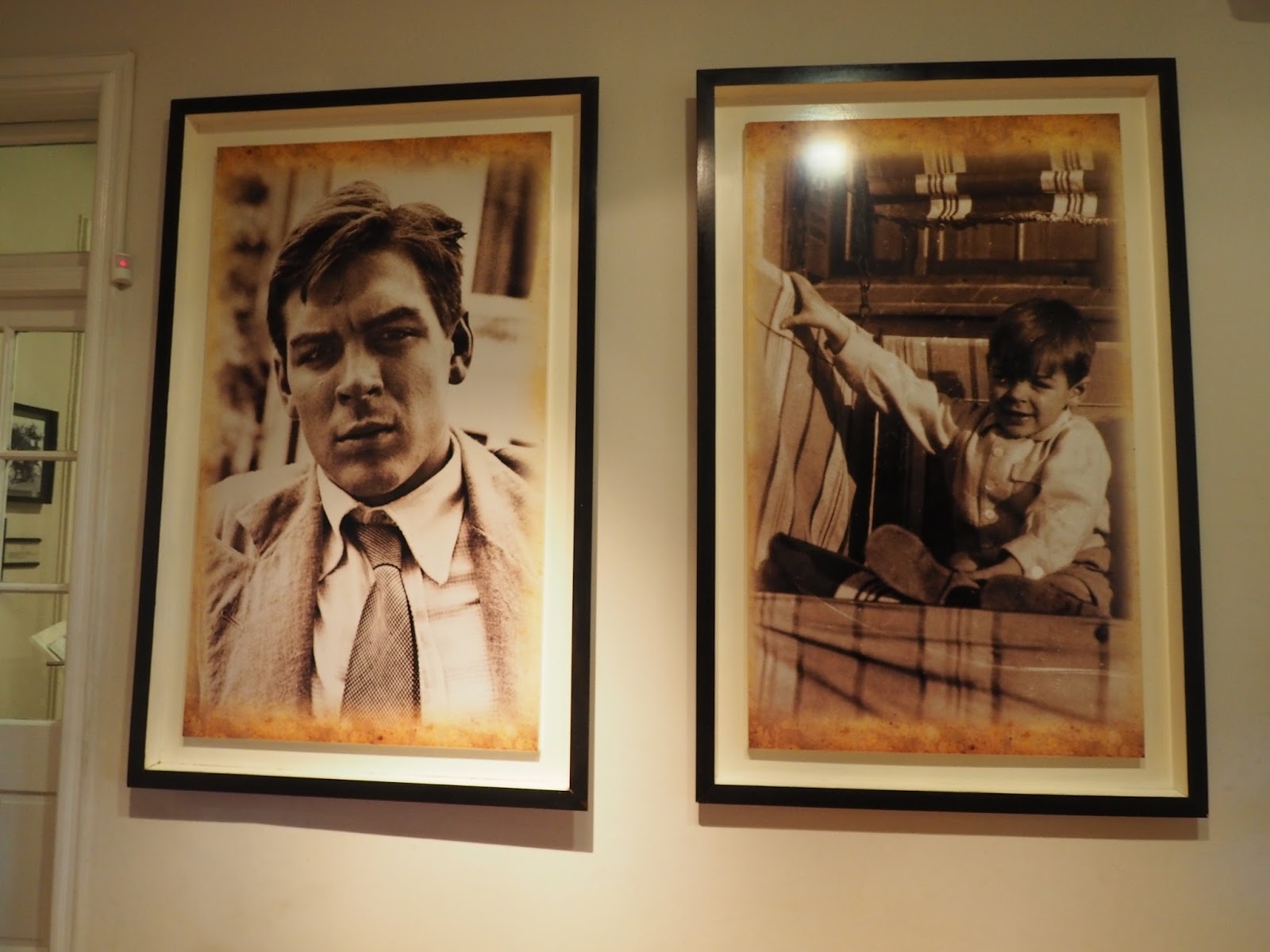
Ernesto came from a middle class background, and his parents moved to the town in 1932, when he was four years old, in the hope of helping his asthmatic condition.


Ernesto's room, Casa de Che Museum, Alta Gracia


He lived in Alta Gracia with his family, including his four younger siblings, for eleven years, after which the family moved to Cordoba, and then Che went to medical school in Buenos Aires.

During their time in Alta Gracia, they spent some of the years (1935-7 and 1939-43) in this house, Villa Nydia.


The kitchen, Casa de Che Museum, Alta Gracia


There are a number of exhibits from his childhood bedroom and the literature that he read, to tales of his exploits after leaving here, including is infamous motorcycle trips, where he first saw the inequalities in the countries of South America, leading to his eventual role in the overthrow of Cuba with Fidel and Raul Castro.

Che is obviously a hero to many people, even though many of them actually know very little about the man, his beliefs or his actions.


Ernesto as a boy, Casa de Che Museum, Alta Gracia


I personally have yet to learn enough about the man to make a decision about what I think of him overall, so it was interesting to gain a little more information about his childhood background and formative years.


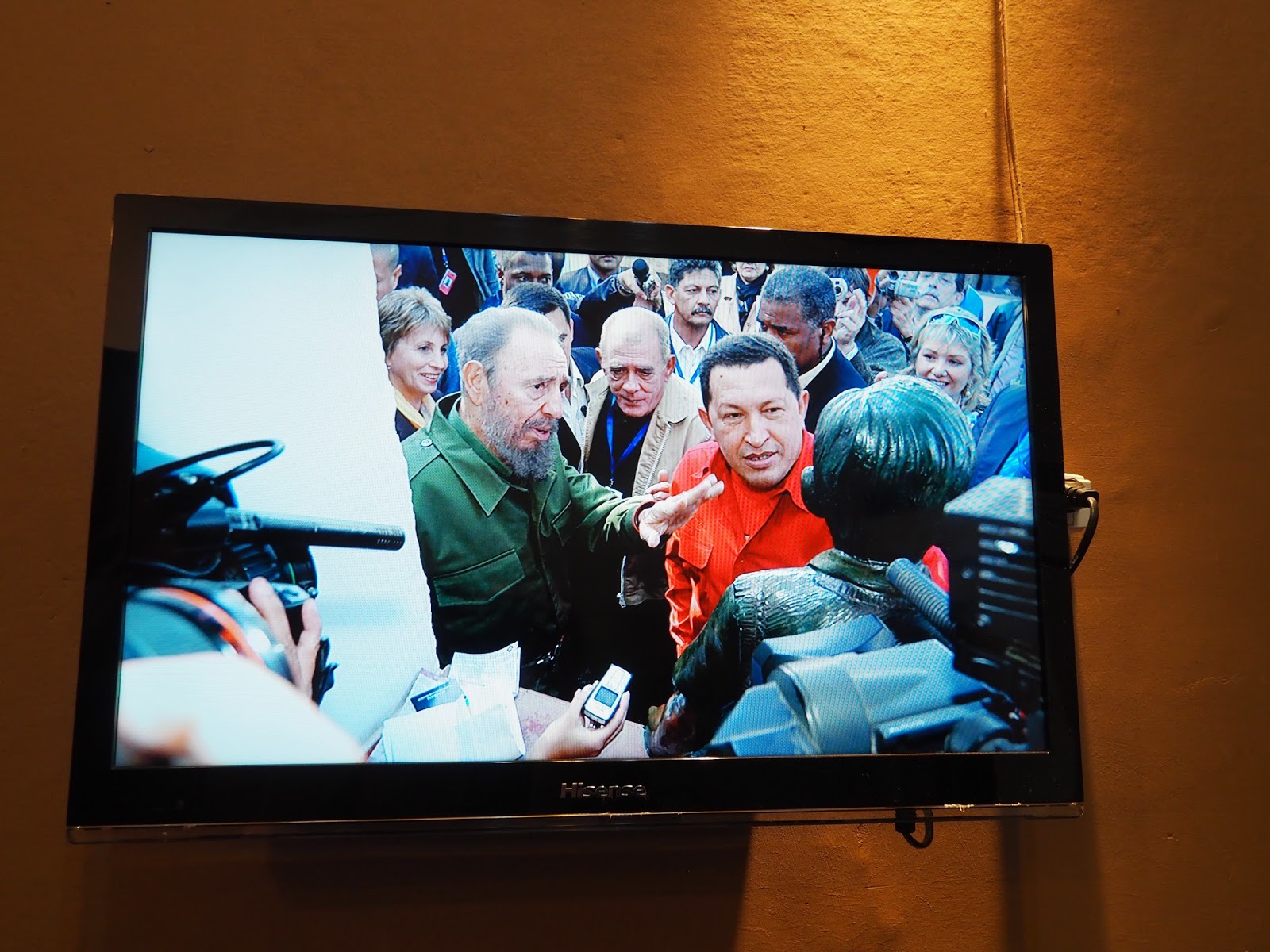
The house, with its statue of little Ernesto sitting on the balcony, saw its visitor numbers rise dramatically from around 5000 a year, to around 100,000 a year after a couple of famous visitors were here in 2006. Fidel Castro and Hugo Chavez came here together on 22 July 2006, and the resulting coverage saw numbers boom. There was a steady trickle when we were there, but I suspect it is a little off the main tourist route for many people.


Fidel Castro and Hugo Chavez visit the Casa de Che Museum, Alta Gracia

Fidel Castro and Hugo Chavez visit the Casa de Che Museum, Alta Gracia
Family photos of Che, Casa de Che Museum, Alta Gracia

Photo of Che at medical school, Casa de Che Museum, Alta Gracia


Motorbike like that Che used on his trips, Casa de Che Museum, Alta Gracia


Church of Our Lady of Mercy, Alta Gracia


Main House of Jesuit Estancia, Alta Gracia
Father Domingo Viera, Alta Gracia


Main House of Jesuit Estancia, Alta Gracia

Main House of Jesuit Estancia, Alta Gracia

Main House of Jesuit Estancia, Alta Gracia

Main House of Jesuit Estancia, Alta Gracia

Main House of Jesuit Estancia, Alta Gracia

Main House of Jesuit Estancia, Alta Gracia
View of Clocktower from Jesuit Estancia, Alta Gracia