Welcome to our travel blog. We are Tabitha and Nic. In 2011 we 'retired' in our early 40s and set off to travel the world. We spent our first year in South America and have been lucky enough to make two trips to Antarctica.

Our blog is a record of our travels, thoughts and experiences. It is not a guide book, but we do include some tips and information, so we hope that you may find it useful if you are planning to visit somewhere we have been. Or you may just find it interesting as a bit of armchair travel.


Showing posts with label torii gates. Show all posts

Sunday, May 8, 2016

Giant Torii Gate at Miyajima

Miyajima
From Hiroshima, we took the train and ferry to the island of Miyajima, to see the Itsukushima Shrine and its famous Torii Gate.

Miyajima
Miyajima would be quite a nice, if hilly, island to explore anyway, with its primeval forest, ropeway, and multiple temples.

Unfortunately, it rained almost all the time we were here, and being the fairweather travellers that we are, we didn't fancy getting that wet.


Miyajima


We did visit the rather pretty five storey pagoda, and the Toyokuni Shrine next door. The Shrine is also known as Senjokaku, which means '1000 Tatami Mats Hall', and was built in 1587, as a library to hold Buddhist Sutras.


Miyajima
However it seems that, following the death of Hideyoshi Toyokuni, the building was never completed, as there are no walls and the wooden structure has never been painted; actually the unpainted, and now weathered finish, looks good.


Miyajima


The structure was converted to a Shinto Shrine during the Meiji period, and contains a number of large decorated votive boards, and well as lots of rice paddles, some of which are pretty big. Not the largest rice paddle in the world though, that honour is held by the especially large one kept in the town, but I seem to have lost my photo of it. Why all the rice paddles? Apparently this was where they were invented.

There are more deer here too, though they ask you not to feed them, so they're not as friendly. There will still try to steal any paper to eat that though, so careful of your maps. Not sure why deer like eating paper, but they do.


Miyajima
The main attraction though, is the Itsukushima Shrine. It is quite an impressive shrine, with multiple rooms, including a Noh stage, but the main factor is its setting. With the forest behind it, and the sea out to the front, with piers going out over the water, it looks pretty good. The vermillion colour is said to keep evil spirits away.


Miyajima
Then you add the huge 16m tall Torii Gate, that stands off in the water. Needless to say, this is a great photo opportunity, and local photographers have taken full advantage of it by setting up benches for group photos, with the gate in the background and, if they're lucky, the added extra of a couple of deer.

There has been a torii gate here since 1168, although this current one was built in 1875. At low tide, locals also come out to collect shellfish; we certainly saw lots of little crabs.
Miyajima

You can also walk out to the base of the gate, and see where people press coins into the base and make a wish. Mind you don't get your feet wet though.

Miyajima
Miyajima


Miyajima

Miyajima


Miyajima
Miyajima


Miyajima
Miyajima


Miyajima
Miyajima


Miyajima
Miyajima


Wednesday, March 2, 2016

Kyoto - Fushimi-Inari Taisha and Tofuku-ji

Fushimi-Inari, Kyoto
Today was one of the visits I was most looking forward to, though I was not so keen on the frustration that I was expecting to feel with other visitors. Both feelings turned out to be justified.


Fushimi-Inari, Kyoto
Our trip today was down to the south of Kyoto, and we decided to walk down, which took us past various smaller temples, and through some non-touristy residential areas, which made a pleasant change.


Fushimi-Inari, Kyoto
Our prime target though, was the incredibly busy Fushimi-Inari, which is the Shinto shrine with thousands of the orange torii gates.


Fushimi-Inari, Kyoto
The shrine was built in 711 by the Hato family and is dedicated to Inari, the Shinto God of rice (and therefore sake). The principal deity is Ukanomitama-no-mikoto to, the goddess for food and rice. The main shrine building, the Go-Honden, was built in 1499 and the Romon Gate was donated in 1589 by Toyotomi Hideyoshi.

Fushimi-Inari, Kyoto
There are thousands of these orange torii gates along trails leading up and around Mount Inari each has been donated by an individual or company, and you can see the name of the donor on the back. They are replaced every ten years and cost between 400,000 and over 1 million yen (£2,500-6,000), depending on the size.
Fushimi-Inari, Kyoto

Along the trails there are a few cafes, where you may well see aburaage - or fried tofu - as one of the popular options. This is because it is said to be a favourite food of foxes, which are thought to be the messengers of Inari. This is why you will see a number of statues of foxes, kitsune, around the shrine.

Fushimi-Inari, Kyoto
The torii gates at shrine do look incredibly impressive, especially when the sun breaks through the gaps and makes them glow. Unfortunately the curse of selfie sticks is all too evident here, so if you want an uninterrupted view of the gates, be prepared to be very patient.

Fushimi-Inari, Kyoto


Tofuku-ji Temple, Kyoto
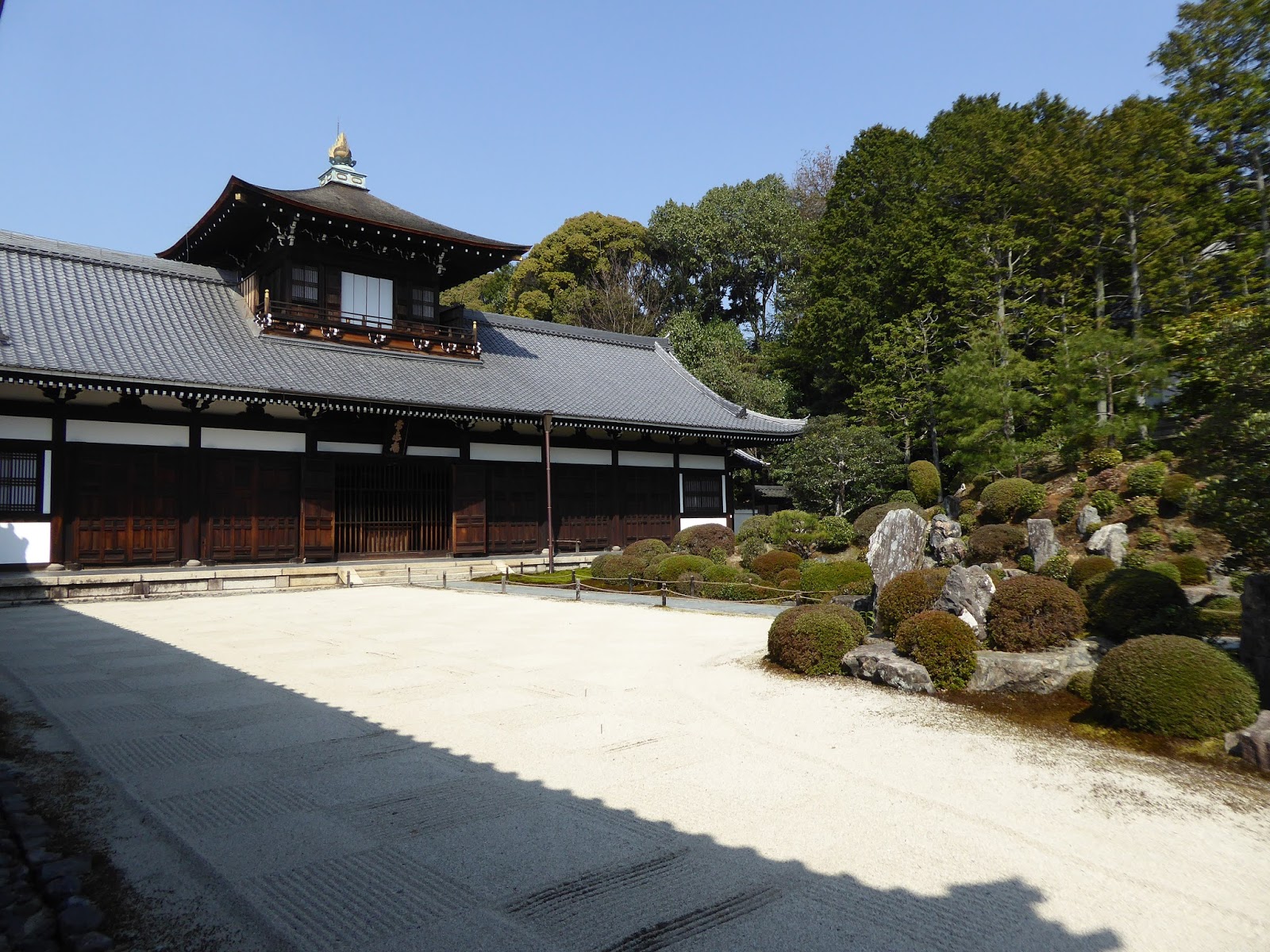
Our other temple for this posting is the Tofuku-ji temple, one of the five Kyoto Gozan temples, built in 1236. It is most visited in the autumn, which the maple trees are said to be spectacular.

San-mon Gate, Tofuku-ji Temple, Kyoto

The San-mon Gate is designated as a 'national treasure', and the site has a number of buildings listed as 'important cultural properties', including the Kansan-do Hall, the Zen-do Hall, and a lavatory!

Tofuku-ji Temple, Kyoto
Hojo Teien, Tofuku-ji Temple, Kyoto
Tofuku-ji Temple, Kyoto

Tofuku-ji Temple, Kyoto
San-mon Gate, Tofuku-ji Temple, Kyoto


Tofuku-ji Temple, Kyoto


Tofuku-ji Temple, Kyoto