Welcome to our travel blog. We are Tabitha and Nic. In 2011 we 'retired' in our early 40s and set off to travel the world. We spent our first year in South America and have been lucky enough to make two trips to Antarctica.

Our blog is a record of our travels, thoughts and experiences. It is not a guide book, but we do include some tips and information, so we hope that you may find it useful if you are planning to visit somewhere we have been. Or you may just find it interesting as a bit of armchair travel.


Showing posts with label Lake Titicaca. Show all posts

Sunday, September 25, 2011

Puno and the Floating Reed Islands

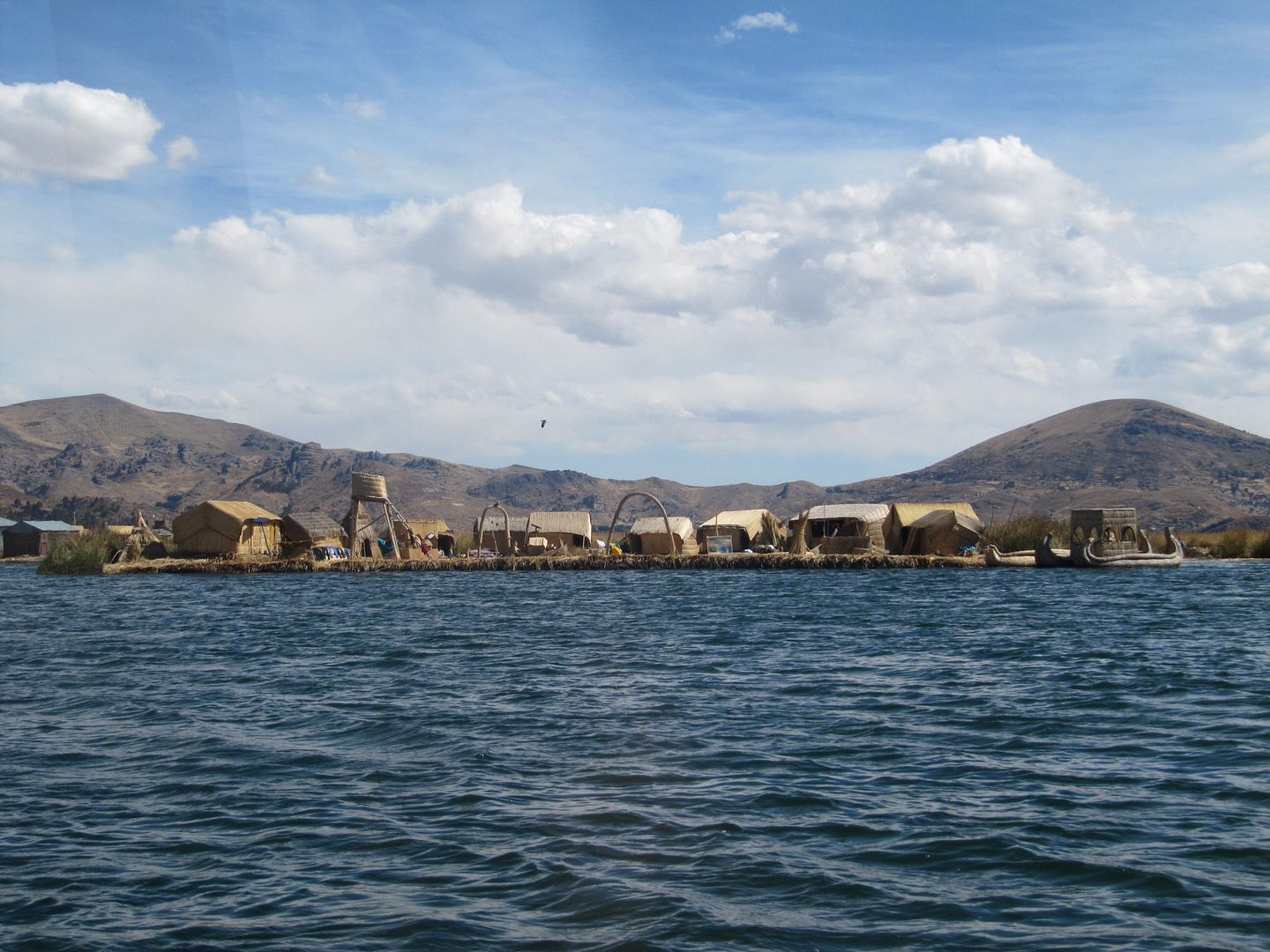
Floating reed islands, Puno, Peru
Our next stop was still on Lake Titicaca, but further around to place called Puno.  After a quick lunch on the lake front, having run the gauntlet of people calling to us to eat in their place, we picked up a local guide for another boat trip, this time to the floating reed islands.
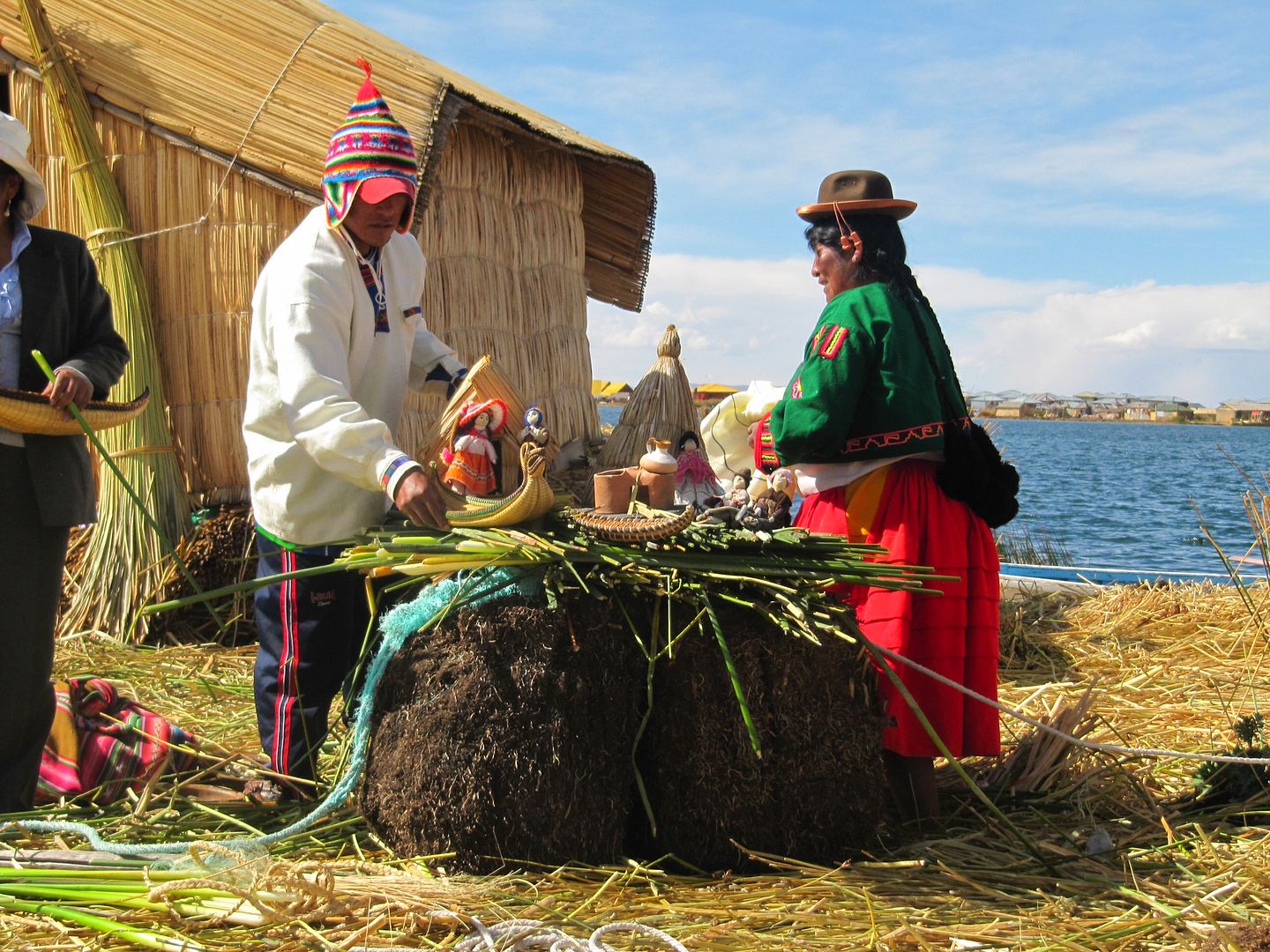

Floating reed islands, Puno, Peru

People having been living on the floating reed islands for centuries and we took a trip out to meet some of them and find out about their life on the lake.  I'm not sure how I feel about this sort of tourism.  I like to see how different people live and learn something about their the culture and lifestyle, but I feel like I am intruding into something personal when they take you into their home.
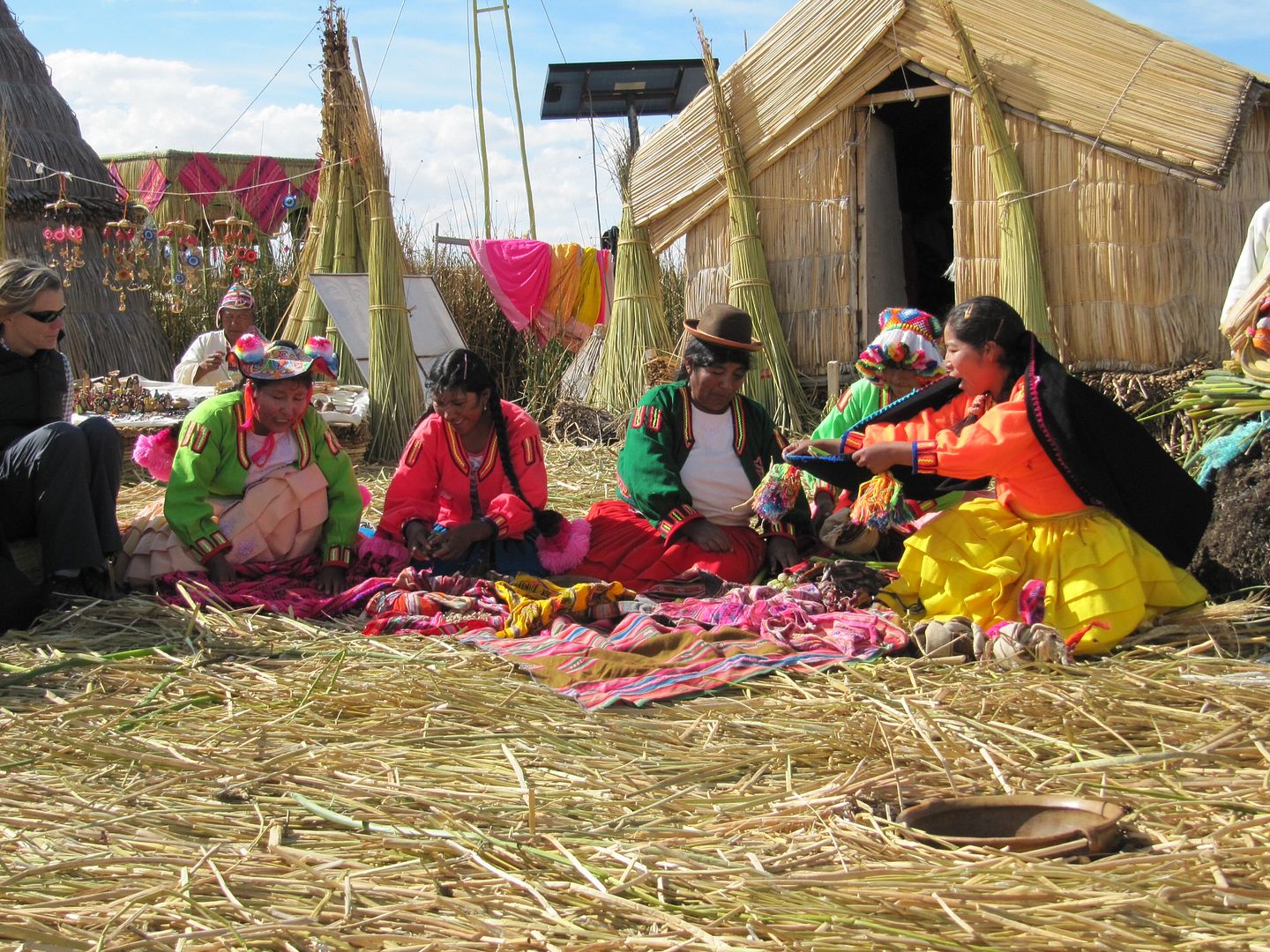
trading on the reed islands, Puno, Peru
I know that on a tour like this one, it is all planned and the people concerned use the tourism to make a living, either through a feeAdd caption from the tour or by selling their crafts to the visitors.  It was made clear to us that these people were happy to have us visit and take photos, whereas there are some on other islands who do not accept visits and who believe that taking their photo takes their soul, so they are left in peace.
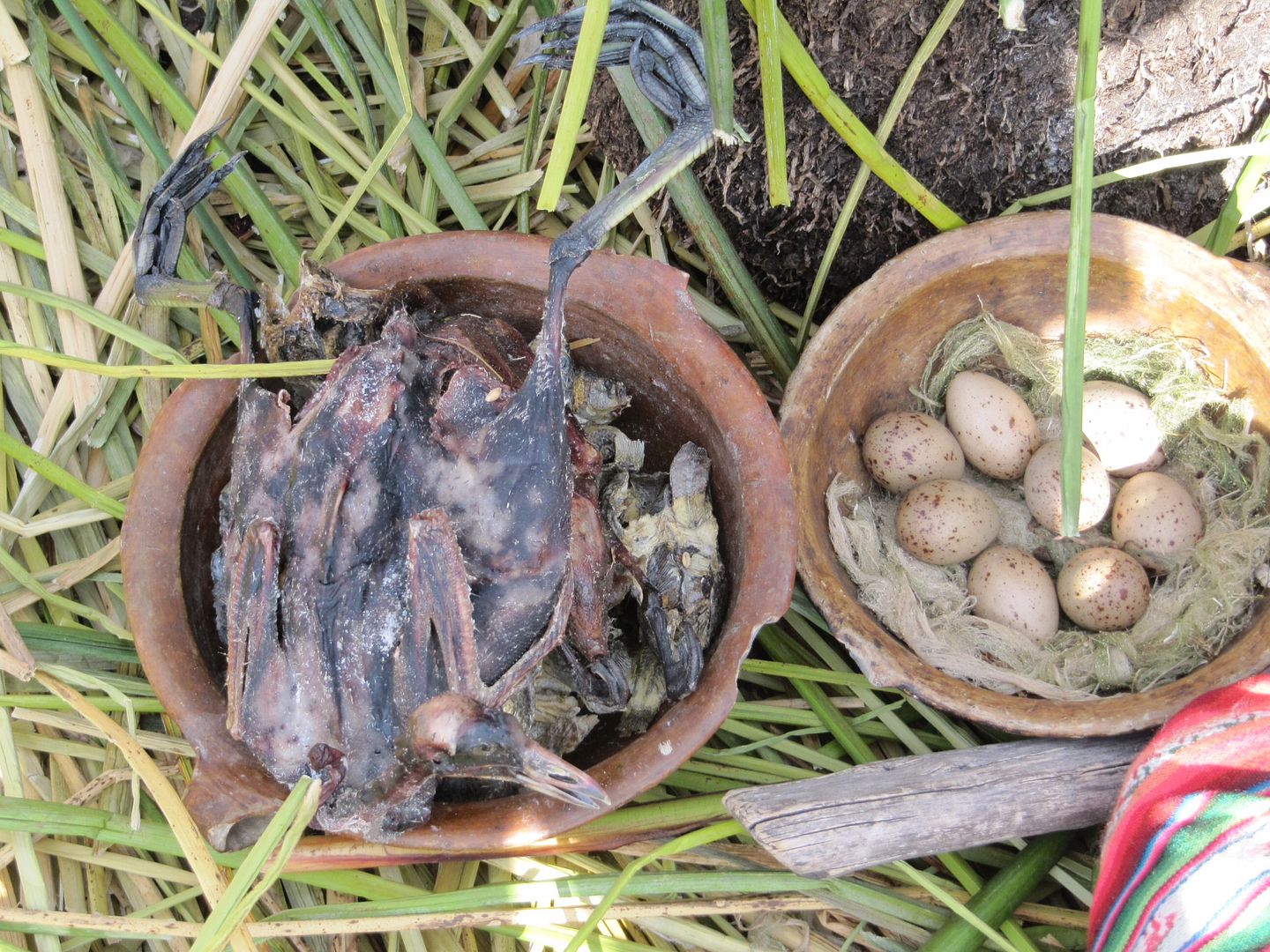
food on the floating reed islands
The visit itself was fun but a little cringe worthy at times.  They started by telling us about the islands and how they are made but cutting the reeds loose so that they float, layering turfs and reeds to create a platform and putting in anchor poles to stop the islands form actually floating away.  They told us about their food - largely fish, birds and eggs that they gather and dry out to store, with vegetables and other items that they trade on the mainland.  They showed us how the women meet and barter their goods, and how they fish through a hole in the island.  That was all quite interesting and even though we know that they don't all rely on these methods anymore, it was still a good insight to how people used to live and how some still do.

Floating reed islands, Puno, Peru

Then they sang us a couple of songs in the two local languages, Quechua and Aymara.  That was a bit twee, but OK, as it showed us the different languages.  Then they sang twinkle twinkle little star in English.  Hmmm! There really wasn't any good reason for that.
dressed up on the reed islands


  Then they announced that they were gong to take us in small groups into their houses.  This was a bit wierd and felt a bit intrusive, even if we did get the impression that a number of these people don't actually live on the islands any more.  And then they dressed us up in their traditional clothes.
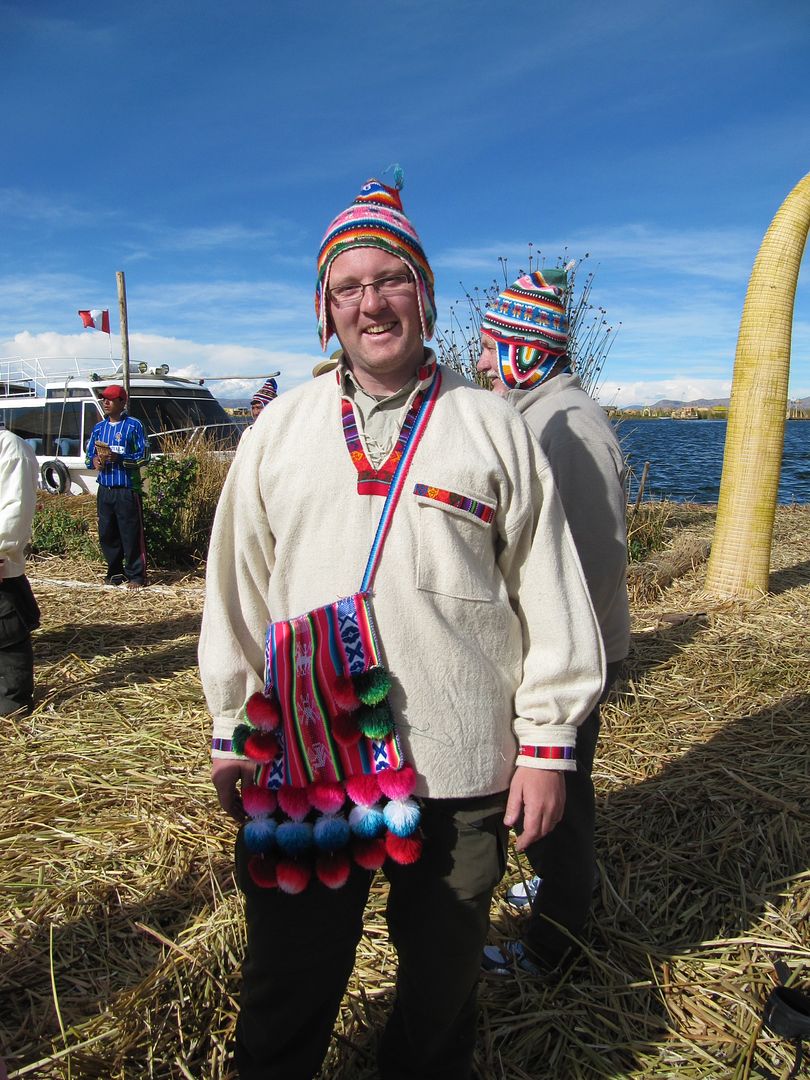
dressed up on the reed islands

For the boys this just meant a shirt, an woolly hat and a colourful 'man bag'.

For us girls we had big puffy skirts, waistcoats, things that looks like the big tassels that you tie curtains back with for our hair, and bowler hats.   All in a variety of clashing colours. We looked like Boy George in the Karma Chamaeleon video!

 After a communal dance that seemed a bit like the hokey cokey, we had a tour around the very small island. Knowing that guinea pig is a speciality in Peru, when we saw the group of them in the 'garden' one of the group asked if they were for eating.  Our islander looked a little horrified and said that they were pets. Not entirely sure I believe this, as it seems that a floating reed island is not an ideal place to be able to support pets that don't pay their way, but I guess we'll never know for sure.
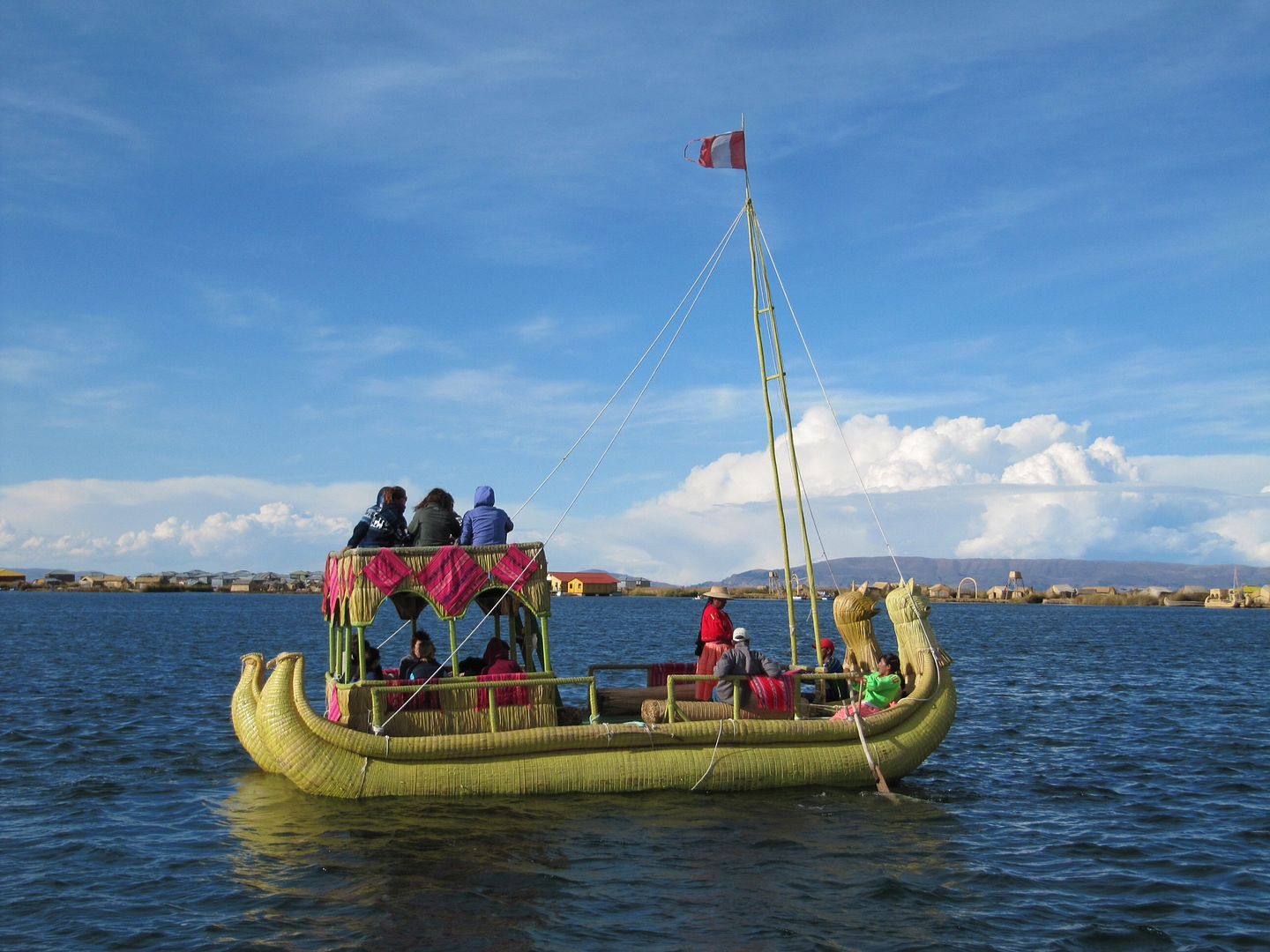
Reed boat, Lake Titicaca, Peru
 It was an interesting experience overall, though it is hard to know how much you see a real existence and how much is show for us.  Obviously as soon as tourism impacts on a community then things change for the people, so there can't ever really be an authentic experience - even anthropologists studying remote tribes have to realise that the mere fact of their being there changes things - but it gives us some idea of what life was like.  And I guess that as long as we recognise these limitations, and all parties are happy with what they get out of the deal, then there is no harm done.

Back on the mainland, we settled into our hotel for the night and then went out for a meal.  I had my first opportunity to try out alpaca.  It was nicer than llama, and not as beefy as many of the other animals seem to be, but it was nothing overly special.  Guinea pig is next on the list, but I will wait until we get to Ariquipa for that.

Copacabana and the Isla del Sol


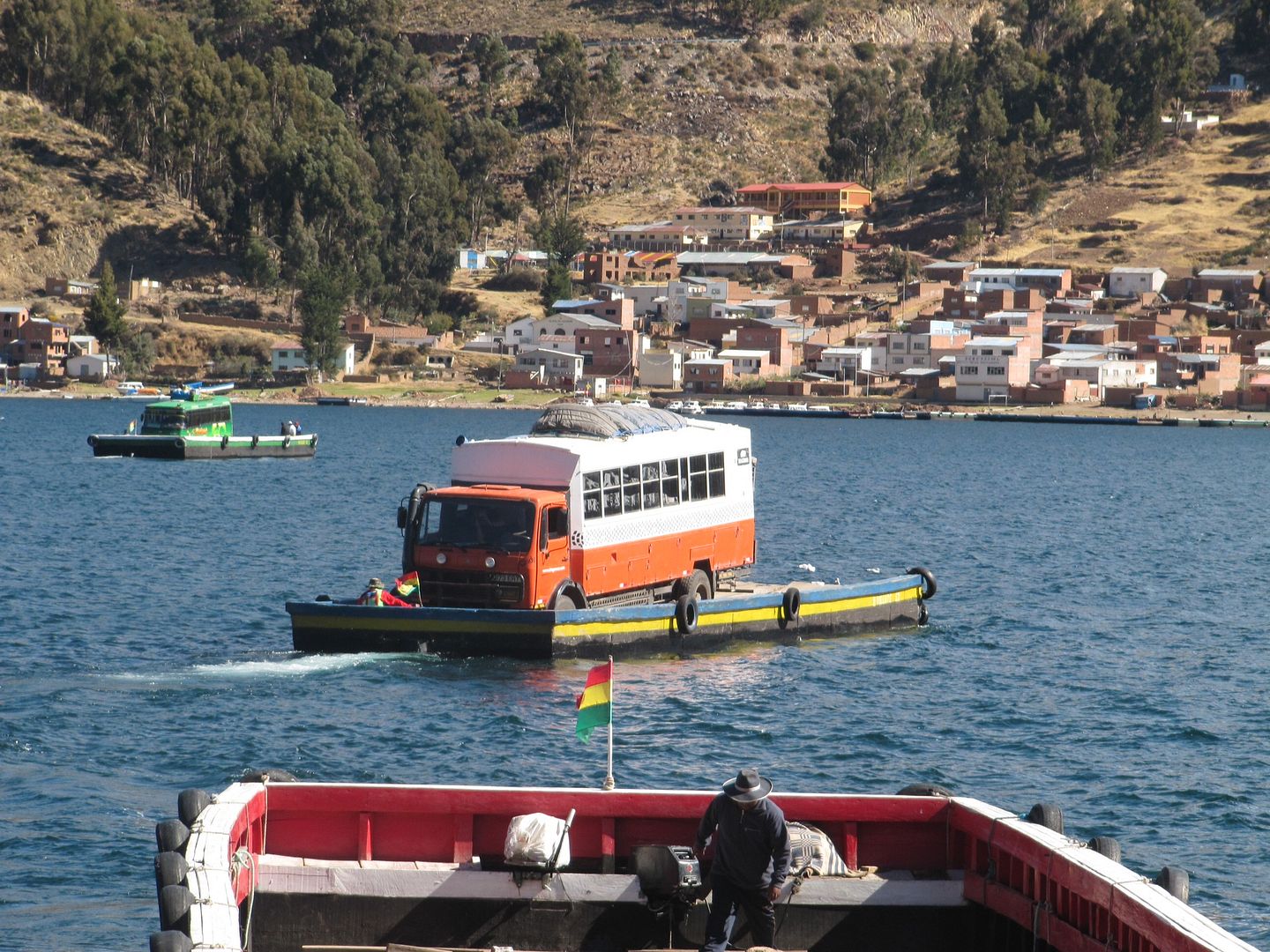
Cindy crossing Lake Titicaca
 Our next stop after La Paz was Lake Titicaca - which apparently means 'great puma', and our first stop was Copacabana.  Inevitably there was much humming of the song by Mr Manilow, although of course that is not where he was singing about.  However we were told that the Copacabana beach in Rio was named after the town here because the outline of the coast is similar.

The journey here was OK but got interesting when we had to take a ferry across the lake to where we were staying.  There was a ferry for the truck, but we all had to get off and go across separately.  This is probably for the best, as apparently one of the other truck operators lost one of their trucks recently when the ferry sank.


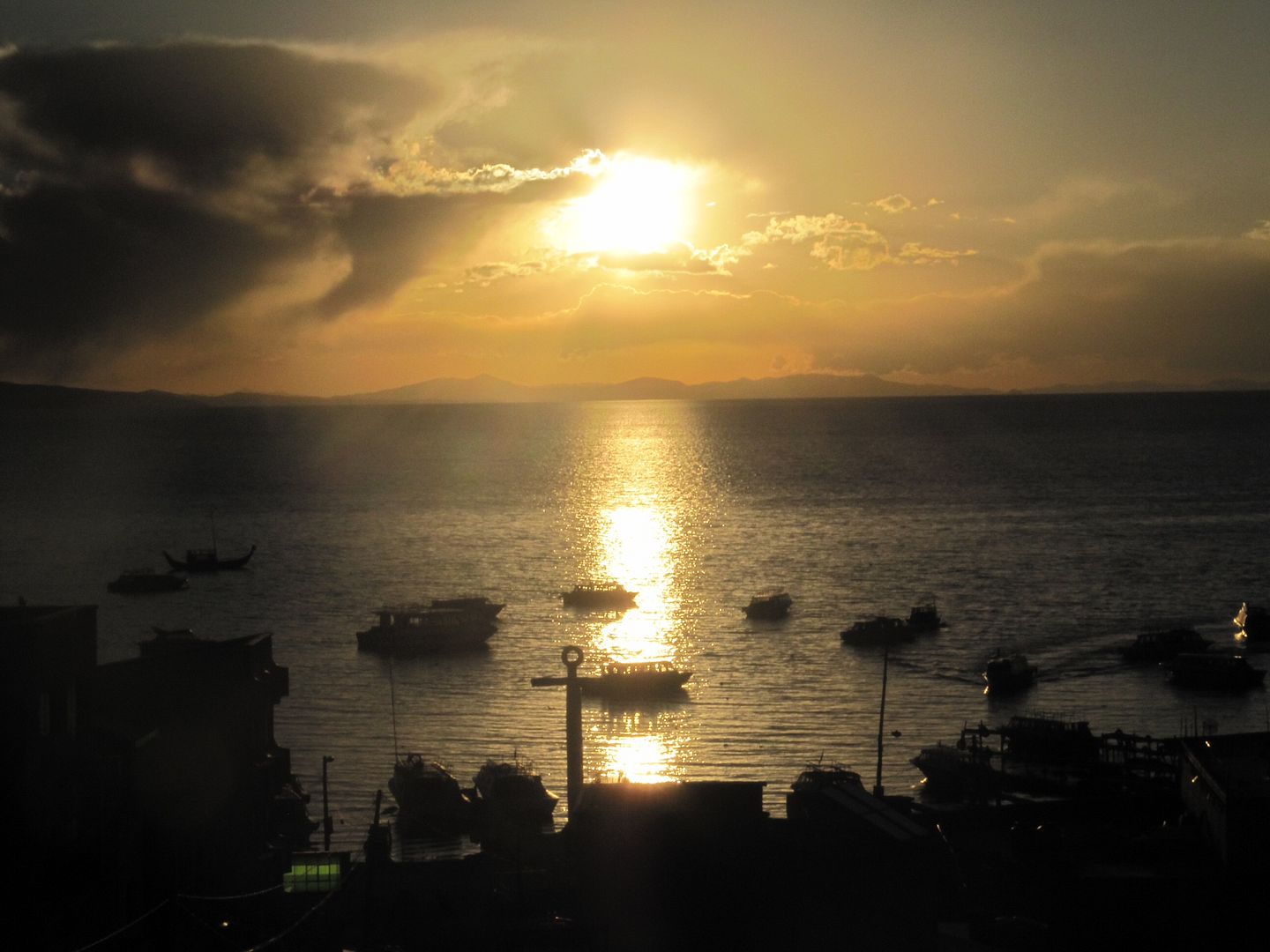
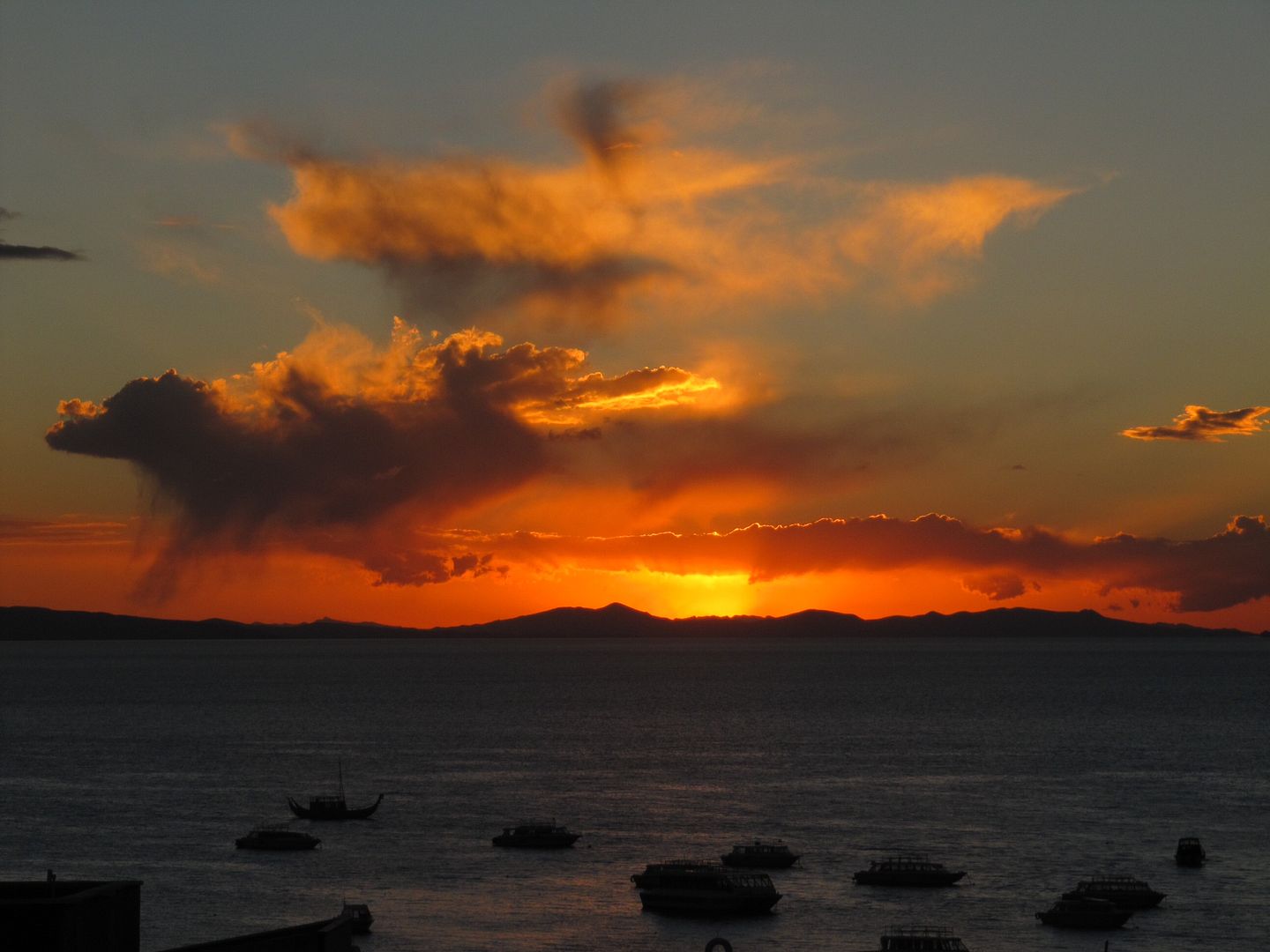
Sunset at Copacabana, Bolivia
 But it was a strange sight seeing Cindy float off on a small ferry that was really no more than a floating platform with a small outboard motor.  But it made it across OK, and we followed on the passenger boat.  I've said before that health and safety isn't a factor in Bolivia, so we were a bit surprised and slightly worried when they started handing out life jackets.  And then we were even more concerned when they ran out half way through the group!  But still, we made it across without incident.


Sunset in Copacabana, Bolivia

Copacabana is a small place with a couple of main streets that are focused on the tourist markets and then other streets clearly intended for the locals.  Our hotel claimed to have no record of our booking, despite Izzy being able to see the note of it on the counter, and it took repeated attempts to get towels and loo rolls, but generally it was OK.  The worst bit was the hike up five flights with the rucksacks.

We headed off almost straight away for a group meal on the roof of a local restaurant.  After watching the sun set though, we all gave in to the cold and retreated inside, taking our tables and chairs back down with us.

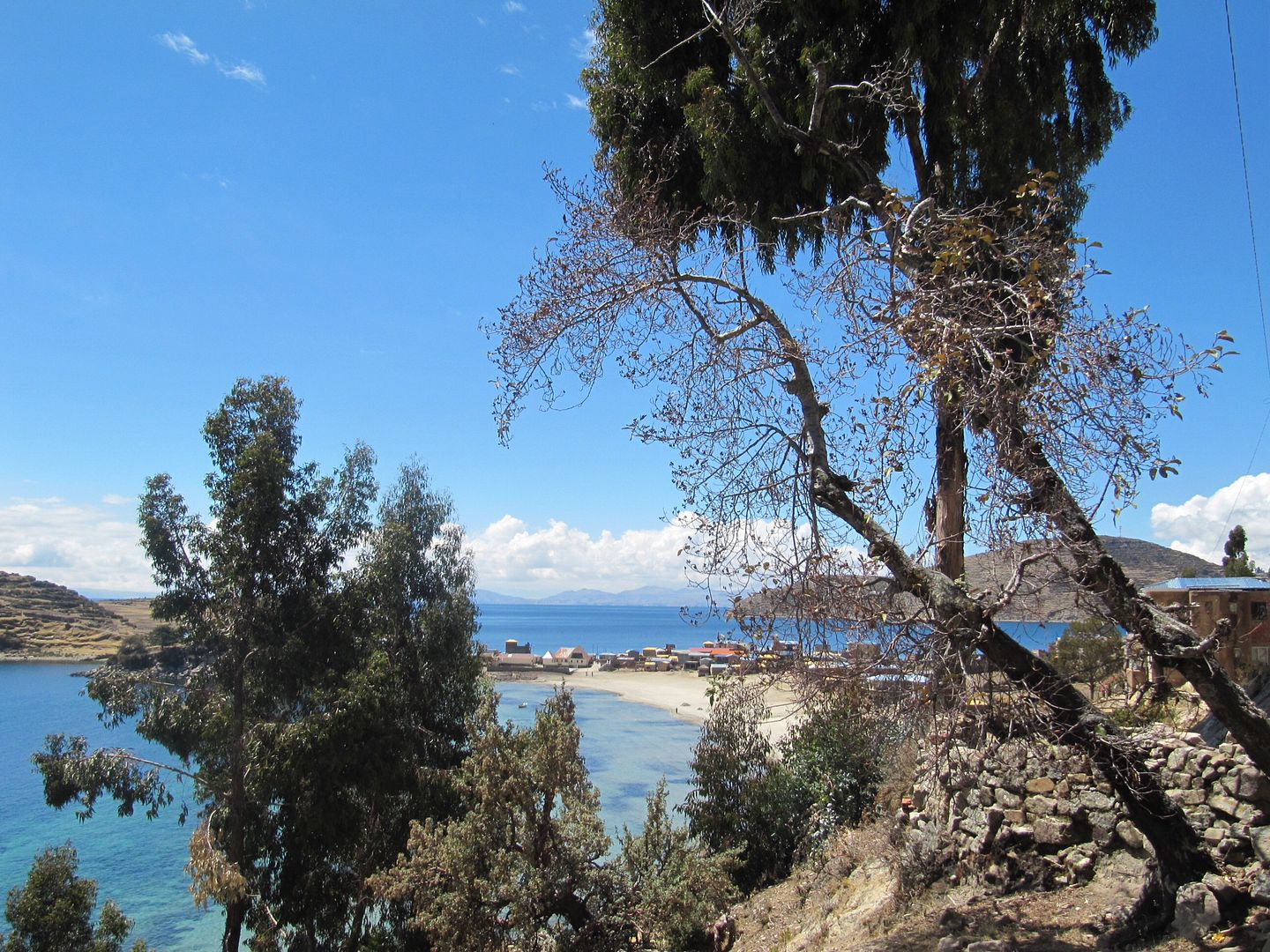
Isla del Sol, Bolivia
As in most places in South America there are a lot of dogs wandering around.  Unfortunately the ones here all decided to congregate close to our hotel for dog wars.  Every so often, minor skirmishes would break out with a lot of very loud barking.   Nic wasn't impressed and broke out the earplugs.

Isla del Sol, Bolivia
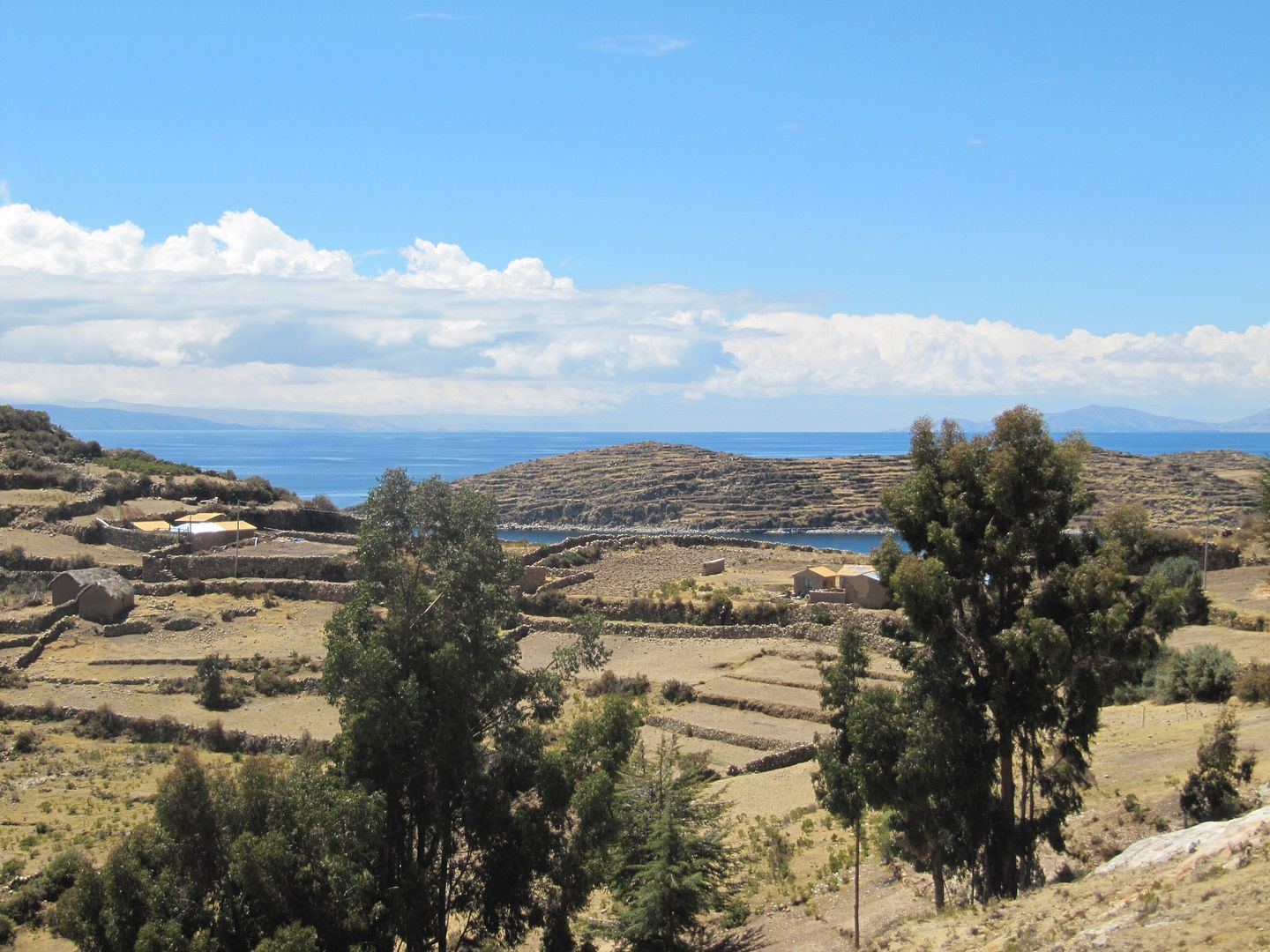
The next day we set off to get a boat to the Isla del Sol, the supposed originating point of some of the local gods, and some suggest the sun itself.  No life jackets at all this time, despite it being a two hour journey, but we decided to take that as a sign that this boat was safer - we know that it probably isn't true, but sometimes you just have to tell yourself these lies to make you feel better!

Isla del Sol, Bolivia
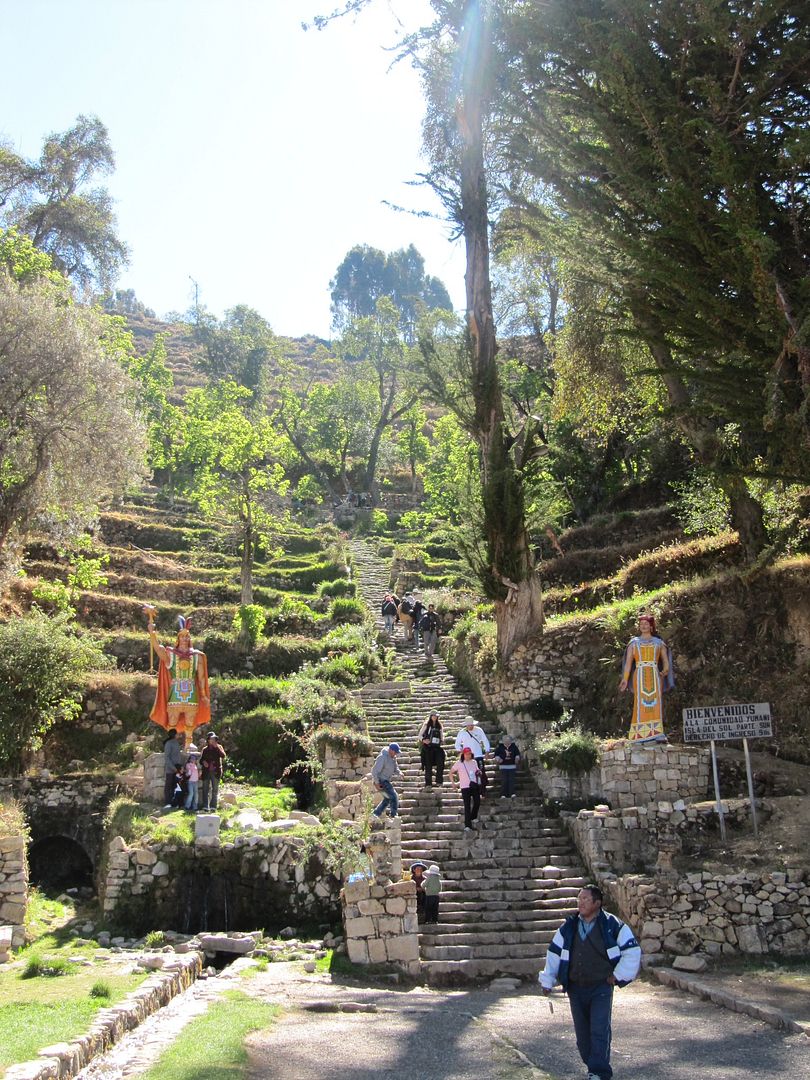
When we got there, our little walk to the inca ruins took us nearly an hour and a half, mostly up hill.  I was knackered. After a brief stop for lunch, the plan was either to go on for another three hour walk to the other side of the island, or go back the way we'd come and take a boat to the other side.  Either way we had a boat to catch back to Copacabana.  As we only had two and a quarter hours to do the three hour walk before the boat was due to go, and I figured that meant going faster than I would cope with, I decided to go back.  Trouble was, we only had forty minutes to catch that boat too. Although most of the way back was downhill, there was still quite a steep bit first and so we know this was not long enough.  Thankfully, the guide sorted out someone to go on ahead and make the boat wait for us.  We rushed back and made it in fifty minutes in the end, and then the boat sat there for another fifteen minutes before it actually left.

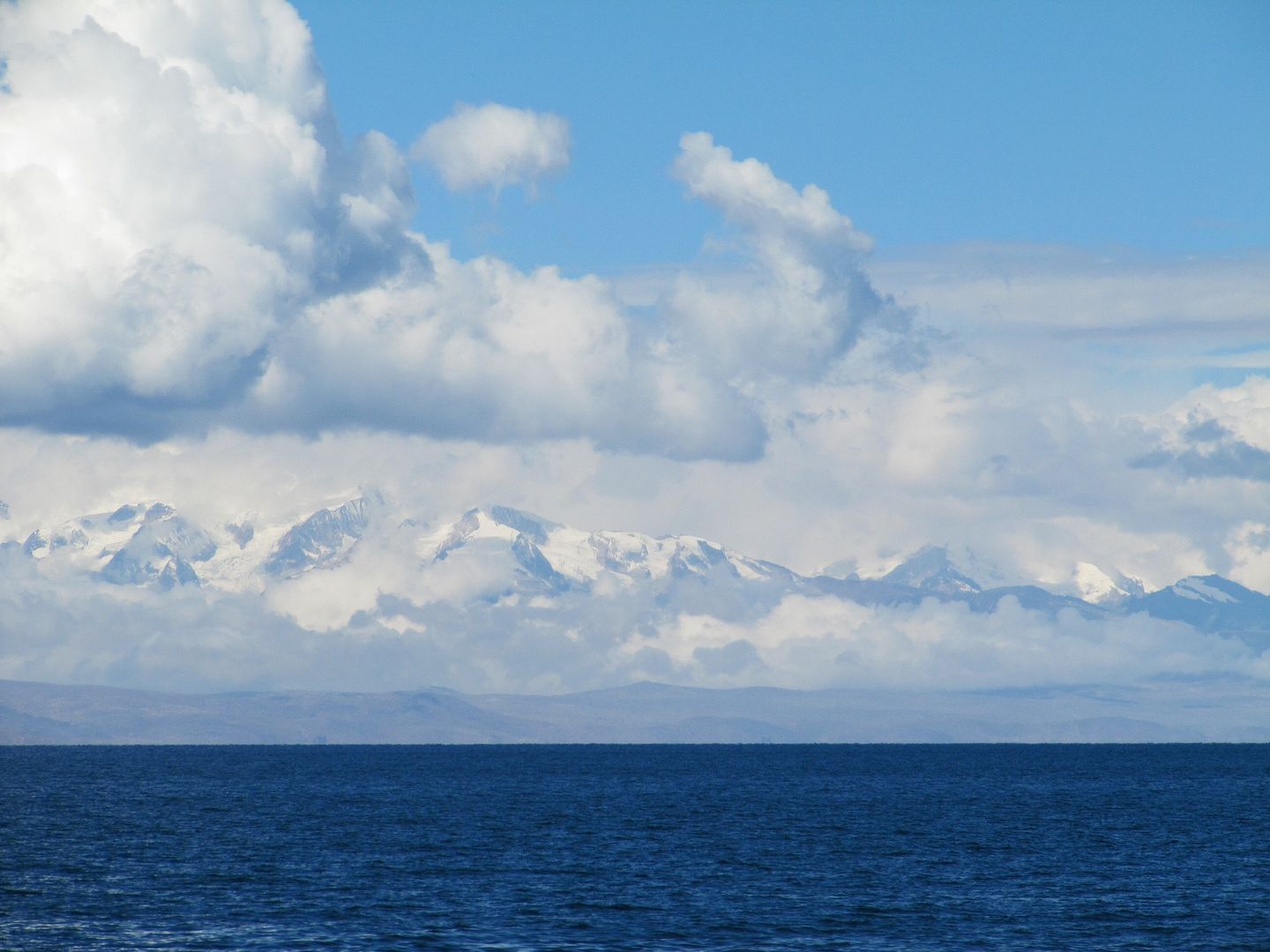
Lake Titicaca, Bolivia
The rest of the group was also late back from their walk, but the boat waited for them, so we made it back to Copacabana.  Nic and I took a walk around the main square before dinner rather than going back up all the steps to the hotel room, and then found a little place to eat and sample a few cocktails.  We had some interesting charades and pictionery with the staff to try to work out what a few of the items on the menu were, but we got there.

That was our last day in Bolivia, as the next day we were to cross the border into Peru