|
| Main House of Jesuit Estancia, Alta Gracia |
Whilst in Cordoba, we took a day out to go to the to the Jesuit Estancia in Alta Gracia, one of five that were established in the areas surrounding Cordoba to provide supplies and income to their city headquarters. It was only about an hour away on the bus, so we could get away with leaving late morning, rather than having to set off at the crack of dawn.
When we got there, we checked in at the tourist information office, which was in the old clock tower, put up to mark the town's 350th anniversary, to pick up a map, and they also gave us the opening times of the places we were interested in visiting. This was helpful, because unlike in the big city of Cordoba, we were back in the land of siestas. As the Jesuit Estancia was going to be closing soon, we decided to take a stroll around the square, Plaza Manuel Solares, and then have an early lunch before starting on the tourist bits.
 |
| Clocktower, Alta Gracia |
We opted for a parilla on the square called Trattoria Oro, which if I am honest, didn't really look too promising. The Italian sounding name, the rather uninspiring looking frontage, and an old fashioned and slightly ragged interior, all suggested that the food would be more about sustenance than enjoyment.
However, one thing that we have learnt in Argentina, is that the old phrase 'you shouldn't judge a book by its cover' could have been coined for restaurants here. As it turned out, not only could we get food choices that were good for our eating plan, it tasted great too.
After lunch, we had a little stroll alongside the Tajamar, a man-made lake that once acted as the reservoir and irrigation source for the Estancia.
 |
| Church of Our Lady of Mercy, Alta Gracia |
The Estancia, or ranch, would have taken up much of the surrounding area, with both pastoral and arable farming, raising cattle and other animals, as well as growing crops of cereals and vegetables.
There would have been flour mills, and workshops, for trades like blacksmithing, textiles and carpentry, as well as accommodation for the 310 black African slaves and other workers that would have been here.
 |
| Church of Our Lady of Mercy, Alta Gracia |
The land was given to Juan Nieto by the King of Spain in 1588, and was donated to the Jesuits in 1643 by Alonso Nieta de Herrera, the widow of Juan Nieto's daughter, when he joined the Order after her death. It remained with the Jesuits until their expulsion in 1767, after which it changed hands a number of times before 1868, when Manuel Solares bequeathed it to establish a town here.
 |
| Main House of Jesuit Estancia, Alta Gracia |
The Jesuit church, Our Lady of Mercy, is now a public church for the town, and the main house is the museum that we have come to see.
The museum has a number of rooms that are furnished as they would have been at various points throughout the building's history, not just from the Jesuit period. Indeed, whilst there is some information about the Jesuits, there is less focus on that than I had expected.
 |
| Villa Nydia, Casa de Che Museum, Alta Gracia |
Aside from the Jesuit connection, Alta Gracia has a number of other museums, but we only had time for one more, and we opted to go to see the house that had once been home to Ernesto Guevara, or Che.
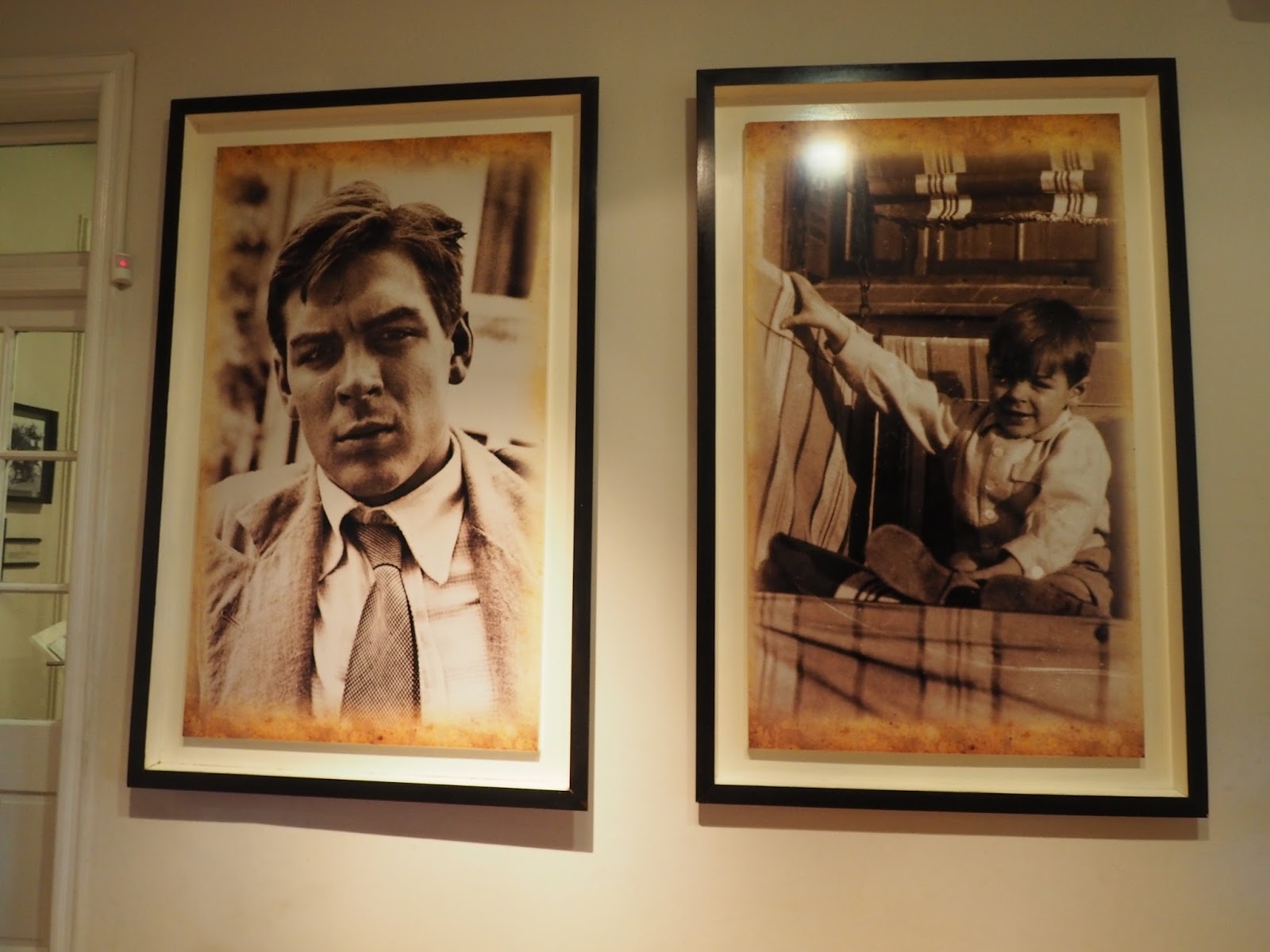
Ernesto came from a middle class background, and his parents moved to the town in 1932, when he was four years old, in the hope of helping his asthmatic condition.
 |
| Ernesto's room, Casa de Che Museum, Alta Gracia |
He lived in Alta Gracia with his family, including his four younger siblings, for eleven years, after which the family moved to Cordoba, and then Che went to medical school in Buenos Aires.
During their time in Alta Gracia, they spent some of the years (1935-7 and 1939-43) in this house, Villa Nydia.
 |
| The kitchen, Casa de Che Museum, Alta Gracia |
There are a number of exhibits from his childhood bedroom and the literature that he read, to tales of his exploits after leaving here, including is infamous motorcycle trips, where he first saw the inequalities in the countries of South America, leading to his eventual role in the overthrow of Cuba with Fidel and Raul Castro.
Che is obviously a hero to many people, even though many of them actually know very little about the man, his beliefs or his actions.
 |
| Ernesto as a boy, Casa de Che Museum, Alta Gracia |
I personally have yet to learn enough about the man to make a decision about what I think of him overall, so it was interesting to gain a little more information about his childhood background and formative years.
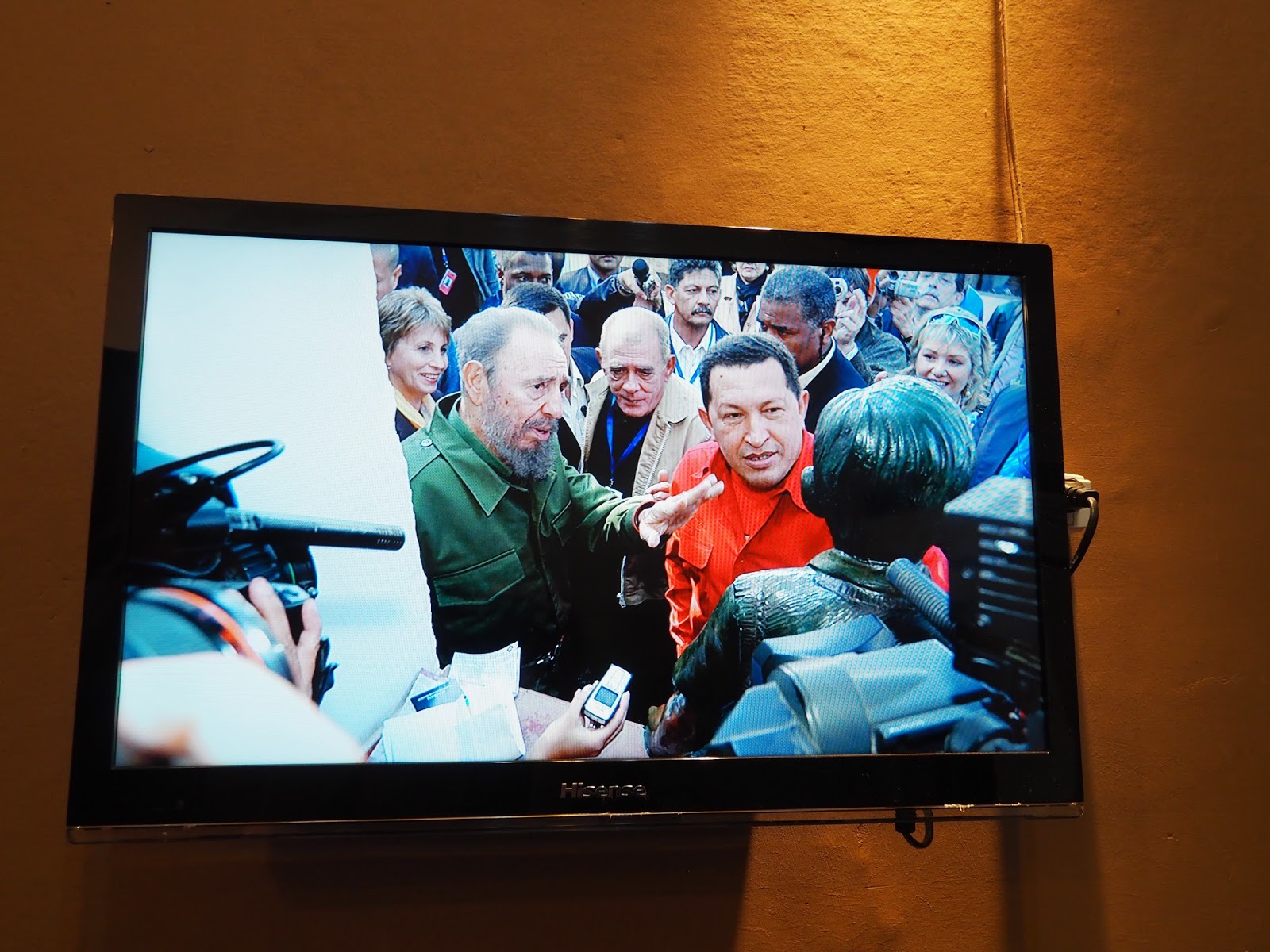
The house, with its statue of little Ernesto sitting on the balcony, saw its visitor numbers rise dramatically from around 5000 a year, to around 100,000 a year after a couple of famous visitors were here in 2006. Fidel Castro and Hugo Chavez came here together on 22 July 2006, and the resulting coverage saw numbers boom. There was a steady trickle when we were there, but I suspect it is a little off the main tourist route for many people.
 |
| Fidel Castro and Hugo Chavez visit the Casa de Che Museum, Alta Gracia |
 |
| Fidel Castro and Hugo Chavez visit the Casa de Che Museum, Alta Gracia |
 |
| Family photos of Che, Casa de Che Museum, Alta Gracia |
 |
| Photo of Che at medical school, Casa de Che Museum, Alta Gracia |
 |
| Motorbike like that Che used on his trips, Casa de Che Museum, Alta Gracia |
 |
| Church of Our Lady of Mercy, Alta Gracia |
 |
| Main House of Jesuit Estancia, Alta Gracia |
 |
| Father Domingo Viera, Alta Gracia |
 |
| Main House of Jesuit Estancia, Alta Gracia |
 |
| Main House of Jesuit Estancia, Alta Gracia |
 |
| Main House of Jesuit Estancia, Alta Gracia |
 |
| Main House of Jesuit Estancia, Alta Gracia |
 |
| Main House of Jesuit Estancia, Alta Gracia |
 |
| Main House of Jesuit Estancia, Alta Gracia |
 |
| View of Clocktower from Jesuit Estancia, Alta Gracia |