Welcome to our travel blog. We are Tabitha and Nic. In 2011 we 'retired' in our early 40s and set off to travel the world. We spent our first year in South America and have been lucky enough to make two trips to Antarctica.

Our blog is a record of our travels, thoughts and experiences. It is not a guide book, but we do include some tips and information, so we hope that you may find it useful if you are planning to visit somewhere we have been. Or you may just find it interesting as a bit of armchair travel.


Showing posts with label Transport. Show all posts

Wednesday, May 10, 2017

La Rioja

From the plane over the lakes, with the Lanin Volcano (3747m), Bariloche
From Esquel, we left the south and headed for the still somewhat warmer climate of northern Argentina. We took a bus back to Bariloche, stayed the night there, then flew from Bariloche to Cordoba, wit some great views of the lakes area, got on an overnight bus from Cordoba to San Juan, where we were due to take another bus on to La Rioja.


From the plane over the lakes, Bariloche

We started to get concerned about the lack of a bus when it was about half an hour late and there was still no sign of it. But we weren't too worried, because there were some local people waiting for it too, so we knew that we had the right place, and hadn't missed it leaving.

Coming up to an hour overdue, Nic tootled off to try to find someone from the company to ask - but no joy there.


Minor Basilica San Nicolas de Bari, La Rioja

At this point, I was watching the other people waiting, speak to the conductor of another bus, from a different company to the one we were supposed to be on, which had the name of a place that I didn't recognise on the front. I figured they were just asking him if he knew anything about our bus. Then these other people started getting on the bus.

Concerned that they knew something we didn't, we spoke to the conductor, and he said we could get on his bus to La Rioja. I have no idea why he would let us on his bus. I don't know whether it was actually our bus (but with no clue to suggest it), whether they are the same parent company, whether they have an arrangement where they can recharge the company that we paid, or if they just aren't that bothered. Whatever the truth of the situation, we didn't really care too much, as long as we were finally going to get to La Rioja!


La Rioja
The journey had been a long one, and we hadn't got much sleep on the overnight bus, so we were quite tired, and couldn't be bothered to go and do a grocery shop, so we just went out for a meal. Having had to make do with the limited and non diet compliant options available while travelling, we had intended to be good, but ended up sharing a couple of empanadas and having a glass of wine. Not too terrible, but it meant that we'd not really had a good week at all, so we were not looking good for the weigh in on Monday!

La Rioja

Over the weekend, we had a pootle around the city and tried our best to be better behaved food wise. We mostly did OK with that, except for one cheeky dessert. We had gone to a restaurant called Avellaneda, which turned out to be really rather good. Our mains weren't too badly behaved, but we were tempted by the sound of a dessert of carrot gnocchi, cooked in a saffron jus, with a white chocolate and mint sauce. We compromised and shared a portion, and it was delicious.

La Rioja is another place that has a long siesta in the afternoon, which is rather a nuisance, especially as we were staying a reasonable walk from town, so you don't really want to have to walk in in the morning, back out again, and then do the same again later in the afternoon.

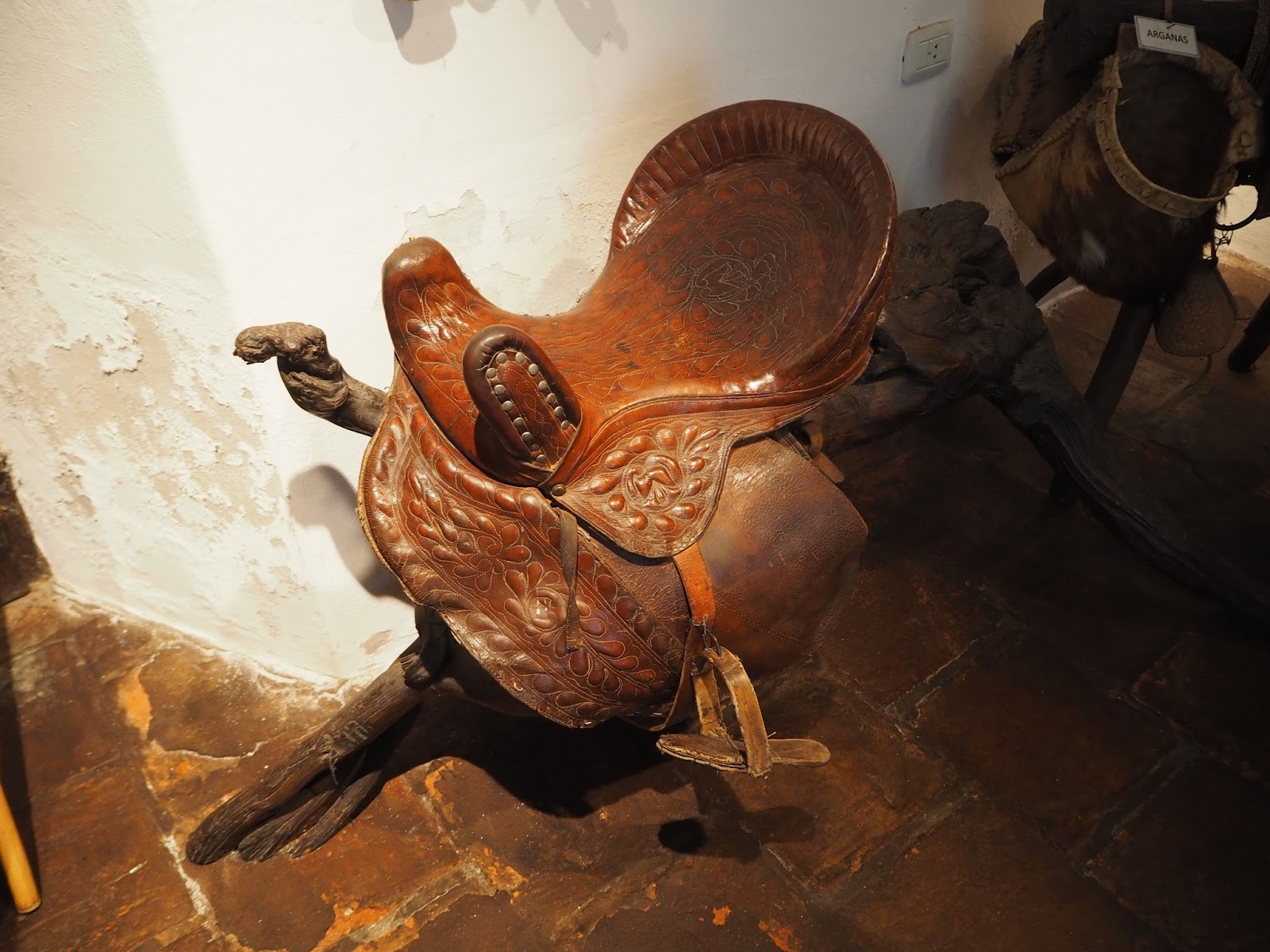
We had a look around a little folk museum, which turned out to be really small, and had very little in the way of information or explanations, and what was there, was only in Spanish.

Main Square, La Rioja


The city is known for its wine, which we resisted investigating further, and for its silver work and weaving, which we would have liked to have seen more of, but it wasn't really in evidence anywhere we looked.

There was a small artisan shop near the folk museum, which had a few things, but not very much.


Convento de Santo Domingo, La Rioja
The city is a major devotional centre, with the San Nicolas de Bari cathedral on the main square being a minor basilica, so we thought we'd take a look around them. In the event, we only saw the outsides, as they always seem to be closed whenever we passed. At the second attempt, we did manage to have a look inside the Santo Domingo Convent. This Dominican building, which was hand built from stone, is one of the oldest in Argentina, dating back to 1623.

Convento de Santo Domingo, La Rioja


The outside is simple but attractive, and the inside is equally unelaborate. It has a lovely courtyard inside, but that was closed off, so we could only peer through the gate. I was able to do so without issue, but when Nic tried, the dog in the courtyard came up and barked at him. Apparently he wasn't allowed to look!


Overall, the city is pleasant enough, with a few nice places to eat, but there really isn't much going on. However, it isn't really the city that people come here for, it is the parks that can be reached from here. And on the Monday, we took a tour out to two of them, which will be the next post.

Convento de Santo Domingo, La Rioja


Exhibits at the Folk Museum, La Rioja

Exhibits at the Folk Museum, La Rioja


Exhibits at the Folk Museum, La Rioja

Exhibits at the Folk Museum, La Rioja

Exhibits at the Folk Museum, La Rioja

Wine making equipment, exhibits at the Folk Museum, La Rioja

Exhibits at the Folk Museum, La Rioja

Exhibits at the Folk Museum, La Rioja

Exhibits at the Folk Museum, La Rioja

From the plane over the lakes, Bariloche

From the plane over the lakes, Bariloche

From the plane over the lakes, Bariloche

From the plane over the lakes, with the Lanin Volcano (3747m), Bariloche

Saturday, November 5, 2016

Lovely landscapes, though not much else, in Vang Vieng - but at least we didn't get shot at!

Vang Vieng
Our next destination in Laos was Vang Vieng. We were getting the normal bus this time, with only very slight trepidation after hearing about the one a few weeks ago that was shot at by bandits.

Apparently it was going along the same road we would be using, and they fired about 50 shots into the bus. Thankfully, the driver saved the day by being quick on the uptake, he swerved - which both moved him a little further away and made the passengers fall away from the windows - and got out of there as fast as he could.

Vang Vieng
I am pleased to say that our journey passed with no such excitement - just one poor woman who got terribly travel sick for a long part of the journey. It is apparently a route where locals are more prone to it, because of the winding roads as you pass through the mountainous karst region. It is beautiful scenery, if you're not feeling ill.

As is often the case around here, we weren't quite sure where we would be dropped off. Most information, and man at the bus station we got our tickets from, said it would be about 3km outside of town. When we got off, we weren't sure - and no one seemed to be able to tell us. A tuk tuk driver was very keen to tell us it was some distance away, and wanted to take us and the three girls we were chatting to, for what seemed like quite a lot of money.

Vang Vieng
Thankfully, the girls had an internet connection and were able to look up where we were on their phones. It turned out that the big carpark we were next to was in fact the old airstrip that runs behind both of our respective hotels. We were a five minute walk away. Needless to say, we didn't take the tuk tuk; sadly this was just another example of someone trying to take us for a ride - this time both literally and metaphorically!

Anyhow, Vang Vieng. We nearly didn't bother, as its reputation is the worst kind of backpacker hell. To appeal to the young backpackers that started coming to Laos, Vang Vieng set up the river for tubing (for anyone not familiar, that is going down the river on a large inflated tyre inner tube). They opened numerous pubs along the way, and very soon this was a drink and drug fuelled party town.

Vang Vieng


Not only is this very hedonistic behaviour contrary to the Buddhist way of life, and presumably quite galling to locals who have to get by on so little, it also resulted in numerous accidents, injuries, and indeed deaths.

So even though people were getting a nice little income from this, they did clamp down. You can still go tubing, and there are a couple of pubs you can stop off at, but you are no longer supposed to be allowed back on the water if you are drunk.

Vang Vieng
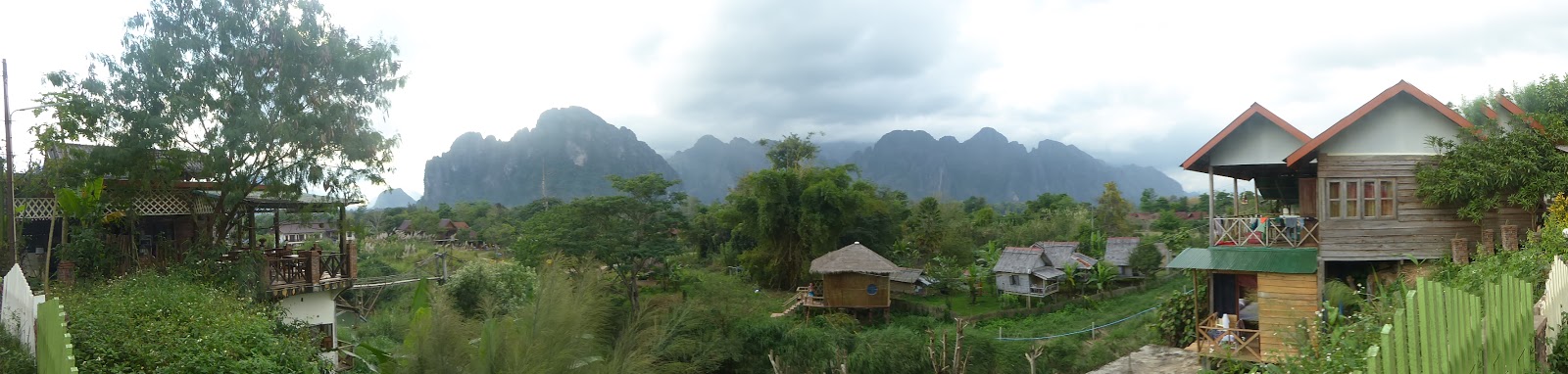
However, the town is very much a backpacker central, albeit that now the whole scene has calmed down considerably, and many people now spend their time exploring the scenery of the karst mountain area and the numerous caves to be found here.

There are still multiple bars, including one which constantly shows back to back episodes of Friends, and places where you can buy 'happy' drinks and pizzas. But alongside that, we saw posters asking tourists not be disrespectful by walking down the streets in their shorts and bikinis, and one piece of graffiti that was rather more direct and told tourists to go home.

Vang Vieng

I think if you are going to head off exploring, this is still a worthwhile place to visit, because the area is beautiful, but aside from that, there really isn't much here, and the place is still far too overrun with tourists to make it a place to come to really absorb the culture. It is a shame really, as this is really an awful example of tourists ripping the heart out of the places that the visit.

Mind you, some of the locals know how to party too. We were here during some music festival or other, which was taking place late into the evenings on the old airstrip, not nearly far enough away from our room. Not that we'd have minded had it been any good - we'd likely have been joining in - but most of it sounded truly awful.

You'd also find groups of local teens down by the river, with their huge sound systems in the back of their, often equally huge cars, booming out music. This blast of modernity was an interesting contrast to the very rickety looking bridge, which you can hear creaking when traffic passes over it.
Vang Vieng
Vang Vieng


Vang Vieng

Wednesday, November 2, 2016

Phonsavanh - town and bombies

Craters Restaurant (with old bomb casings), Phonsavanh
Our next place in Laos was Phonsavanh, and having looked at the various options for getting there, we booked onto the VIP bus. This included a pick up from our hotel, to take us out to the bus station. It arrived eventually, but of course they don't send enough out to pick everyone up, so I was sat on the back rail for the journey. At least my legs were inside - the next people to be collected had to cling on the outside. And ours wasn't the most overcrowded one we saw arriving!

Once at the bus station, we saw plenty of buses with names on to various destinations, but none labelled as Phonsavanh. After some confusion, we were ushered over towards a couple of twelve seater mini buses. We waited for a good half an hour before they told us to get on, and then it took them another thirty minutes or so to lash the luggage to the top and cover it with tarpaulins.

Then we waited again, until they decided that, as neither of the two buses was full, they didn't want to take both, only one. So they made the people from the other one get into ours. Which was all well and good, except that there were more people than seats. They squished four people onto the three seats at the back - which would doubtless invalidate their travel insurance in the event of an accident - and two other people didn't get to travel at all.


Map of bombing missions over Lao, Phonsavanh
They then had to change around all of the luggage on top, so by the time we actually left, we were about an hour and a half late. Not what I would call VIP - or even just acceptable - service.

Now I wouldn't mind this kind of thing if we were travelling on the normal buses, but this was another of those cases where they charge you way more that the normal kind of 'costs plus profit' fares, and still are late, overcrowded, and as two of our would-be passengers found, not even guaranteed to travel despite booking a seat. This is the kind of thing that made me unhappy with Laos, in a way that I hadn't found in Myanmar, Thailand or Cambodia.

Anyhow, after the obligatory lengthy stop at a place where they wanted you to spend money on food and drink so that they get a kick back, we made it to Phonsavanh. Our hotel sent a car to collect us, even though it was only just down the road. Of course the idea of this being that then we will use that driver for any trips that we want to do. In fact we did use him, as his prices were no worse than anywhere else. But we'll talk about our trip out in the next post.


Cluster bombs, as dropped in Lao, Phonsavanh
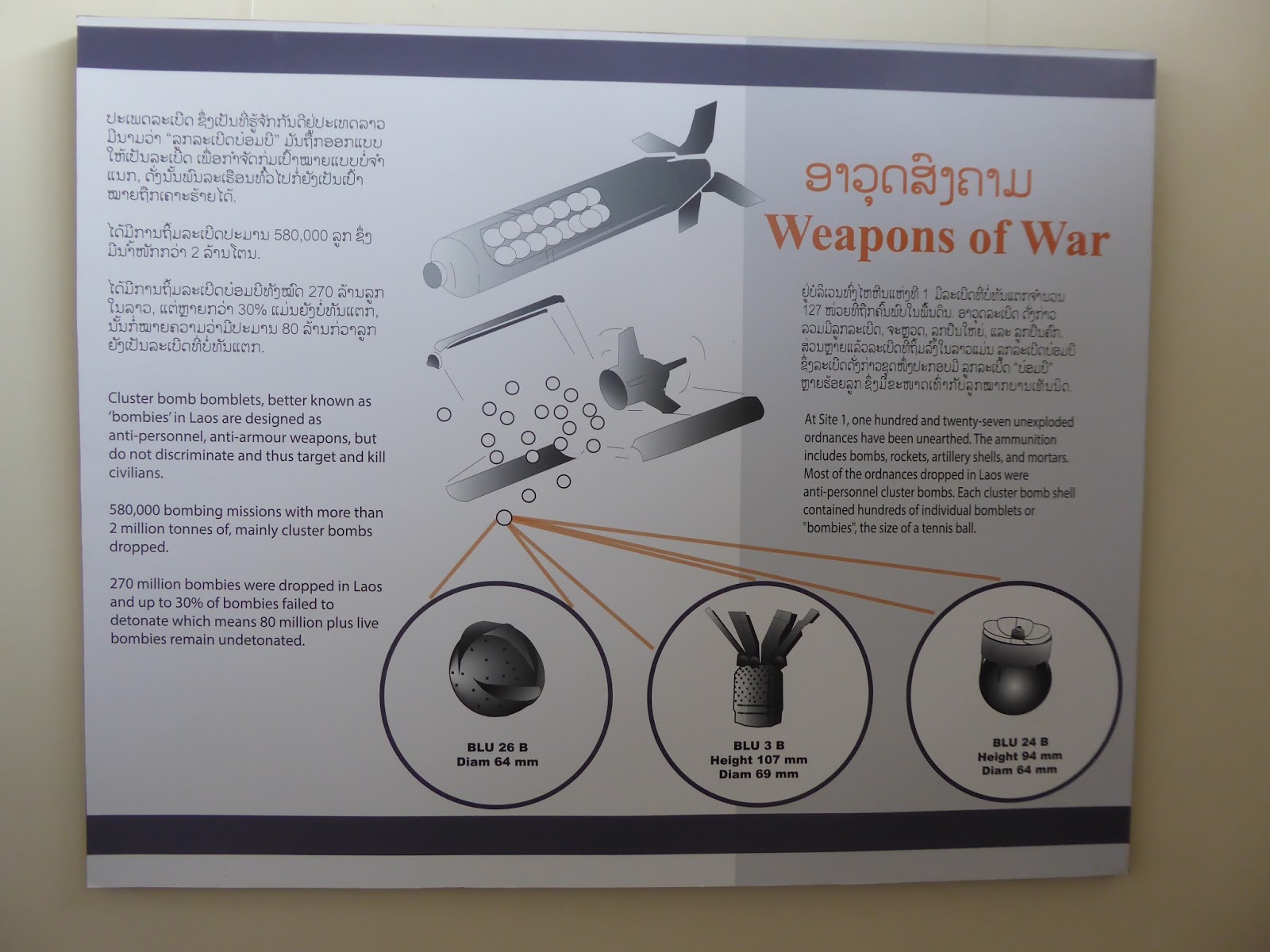
Phonsavanh is a strange little place. This area was the worst hit by the US bombing campaign, with some 580,000 airstrikes, dropping around 1.9 million tonnes of bombs in the region. To put that into context, that is around two thirds of the amount dropped by the allied forces during the whole of WWII.

Even leaving aside the questionable practice of dropping bombs on a country that you are not supposed to be fighting, the really shocking thing is that, apparently, many of the bombs dropping here were completely unnecessary. It is widely reported that many were dropped simply because planned raids on Vietnam were called off, and the bomber crews just jettisoned their payloads here, rather than having to go through a more complex procedure on returning to base.

The original town, like so many around here, was destroyed, so this new town was built in the late 1970s. There is one main street, plus a market up by the old airstrip, and then the rest is largely just residential. The main street itself bears testimony to that terrible bombing campaign. Old bomb casings have been repurposed for practical use and as decorative features, and there are restaurants called Craters and Bombies, although we preferred to eat in Bamboozle.

You will also find the Mines Advisory Group (MAG) Office-UXO Visitor Information Centre and the UXO Survivor Information Centre. We went in to the latter, and found it a really worthwhile visit. It is run by the Quality of Life Association (QLA) which is a local not-for-profit organisation that offers support to people who have survived, or been bereaved, through UXOs (unexploded ordinance).
UXO Survivor Information Centre, Phonsavanh

It had its beginnings in the World Education Laos Group in 2009, but in 2011, a number of Laos nationals, including some who were themselves UXO survivors, obtained funding to set up this organisation, specifically aimed at having Laos people help victims.

They provide a range of assistance. They provide first aid training to local communities, so that they can provide good initial care, in what can sometimes be a number of days before the person can get to a hospital for full treatment. They help victims to obtain suitable prosthetics, and arrange transportation to get the person to the clinic - something that might otherwise prevent them receiving it. They provide psychosocial support, including peer group support, to help the individual through the psychological and social issues that they may face as a result of their injuries.

There is plenty of information about the bombing and those awful little round bombies that were dropped in the cluster bombs and now cause so many injuries and deaths every year. If you visit, do take the time to watch the film upstairs.

The countryside is still littered with the bombies, and accidents happen regularly. Many happen when people are farming their land, and hit one of them, often causing loss of feet and legs. Other victim are children, who pick them up like a ball, and play with them, often leading to the loss of hands, arms and maybe their sight. In the 19 years from 1996 to 2015, there were over 500 deaths from UXO in Laos, with about a quarter of those in this region. Over the same period, there were over twice as many people who survived but were injured, making it terribly difficult for them to farm and sustain themselves.

The items for sale in the shop are mostly made by the women who have lost husbands and sons to the bombies, and so have little other means of making a living for themselves. The QLA arranges for them to be trained in handicrafts, and to receive the materials needed, so that they can make these items for sale here. They receive a fair payment for the items sold, with the rest going to the work of the organisation to support the victims.

They do a lot of really good work here, and they do it on a very low income, so buying a few souvenirs, or making even a small donation, can go a long way to helping the victims.

Thursday, May 12, 2016

Whistler - First Nations centre and the Rocky Mountaineer (Throwback post)

Whistler
Our second day in Whistler we visited the Squamish Lil'wat Cultural Centre.  Here, representatives of these two First Nations tribes guide you around the exhibits that show us their traditions and culture, as well as what their homes are like and the activities they do.


Whistler
It is interesting to see the similarities and differences between the two tribes.

We thought that the centre did a good job of explaining the way of life, and was all the more effective for being run by the communities themselves.


Whistler
Whistler

Whistler
We also took a bit more of a look around the town. There isn't a great deal here; there are a number of outdoor/adventure shops so that you can stock up on anything you've forgotten, and the usual souvenir shops.
Whistler
We did like the look of the toffee apple shop, but managed to resist, as while they look great, toffee apples are fine until you get to that boring apple bit!

Whistler
Whistler
We also noted all of the bins were bear proof, which was a timely reminder to keep an eye out when we were walking between the two areas of town along the edge of the woods.


Rocky Mountaineer
In the afternoon, we stepped onto the Rocky Mountaineer for our trip back to Vancouver.  We were looking forward to some great scenery and a bit of First Nations storytelling on the way.


Rocky Mountaineer

Whilst I imagine that the Rocky trains that go around Banff and Jasper probably do deliver on their expectations, sadly this train doesn't.


Add capRocky Mountaineertion
The only storytelling was by the very definitely not first nations steward; it was OK, but nothing special, and much of his patter assumed that everyone had been on the train up in the morning.
Rocky Mountaineer

And the scenery just wasn't up to much.  Most of the journey was through thick wooded areas, so you could see very little, even if there was anything to see.  There was one good section through a ravine, but that would have been fleeting had we not had to wait there for an unscheduled stop.


Stawamus Chief, Rocky Mountaineer
The other area of interest was the sighting of the Stawamus Chief, a 700m granite rock in Squamish, which is important in First Nations folklore.  The white patch shaped like a witch on a broomstick is supposedly the imprint of a witch that blew into the side off mountain; children are told that if they are naughty, the witch may be able to fly again. Unfortunately as we we passing this section, a huge freight train passed next to us, completely blocking our view for most of the time.


Rocky Mountaineer
In our view, the train just isn't worth it.  It takes far longer than the sea plane, costs more and doesn't deliver the same views.


Rocky Mountaineer

Rocky Mountaineer


Rocky Mountaineer


Rocky Mountaineer


Vancouver

Vancouver