Welcome to our travel blog. We are Tabitha and Nic. In 2011 we 'retired' in our early 40s and set off to travel the world. We spent our first year in South America and have been lucky enough to make two trips to Antarctica.

Our blog is a record of our travels, thoughts and experiences. It is not a guide book, but we do include some tips and information, so we hope that you may find it useful if you are planning to visit somewhere we have been. Or you may just find it interesting as a bit of armchair travel.


Showing posts with label Che Guevara. Show all posts

Wednesday, August 23, 2017

Jesuit Estancia and Che's House, in Alta Gracia

Main House of Jesuit Estancia, Alta Gracia
Whilst in Cordoba, we took a day out to go to the to the Jesuit Estancia in Alta Gracia, one of five that were established in the areas surrounding Cordoba to provide supplies and income to their city headquarters. It was only about an hour away on the bus, so we could get away with leaving late morning, rather than having to set off at the crack of dawn.

When we got there, we checked in at the tourist information office, which was in the old clock tower, put up to mark the town's 350th anniversary, to pick up a map, and they also gave us the opening times of the places we were interested in visiting. This was helpful, because unlike in the big city of Cordoba, we were back in the land of siestas. As the Jesuit Estancia was going to be closing soon, we decided to take a stroll around the square, Plaza Manuel Solares, and then have an early lunch before starting on the tourist bits.


Clocktower, Alta Gracia


We opted for a parilla on the square called Trattoria Oro, which if I am honest, didn't really look too promising. The Italian sounding name, the rather uninspiring looking frontage, and an old fashioned and slightly ragged interior, all suggested that the food would be more about sustenance than enjoyment.

However, one thing that we have learnt in Argentina, is that the old phrase 'you shouldn't judge a book by its cover' could have been coined for restaurants here. As it turned out, not only could we get food choices that were good for our eating plan, it tasted great too.


After lunch, we had a little stroll alongside the Tajamar, a man-made lake that once acted as the reservoir and irrigation source for the Estancia.


Church of Our Lady of Mercy, Alta Gracia

The Estancia, or ranch, would have taken up much of the surrounding area, with both pastoral and arable farming, raising cattle and other animals, as well as growing crops of cereals and vegetables.


There would have been flour mills, and workshops, for trades like blacksmithing, textiles and carpentry, as well as accommodation for the 310 black African slaves and other workers that would have been here.


Church of Our Lady of Mercy, Alta Gracia

The land was given to Juan Nieto by the King of Spain in 1588, and was donated to the Jesuits in 1643 by Alonso Nieta de Herrera, the widow of Juan Nieto's daughter, when he joined the Order after her death. It remained with the Jesuits until their expulsion in 1767, after which it changed hands a number of times before 1868, when Manuel Solares bequeathed it to establish a town here.


Main House of Jesuit Estancia, Alta Gracia


The Jesuit church, Our Lady of Mercy, is now a public church for the town, and the main house is the museum that we have come to see.


The museum has a number of rooms that are furnished as they would have been at various points throughout the building's history, not just from the Jesuit period. Indeed, whilst there is some information about the Jesuits, there is less focus on that than I had expected.


Villa Nydia, Casa de Che Museum, Alta Gracia


Aside from the Jesuit connection, Alta Gracia has a number of other museums, but we only had time for one more, and we opted to go to see the house that had once been home to Ernesto Guevara, or Che.


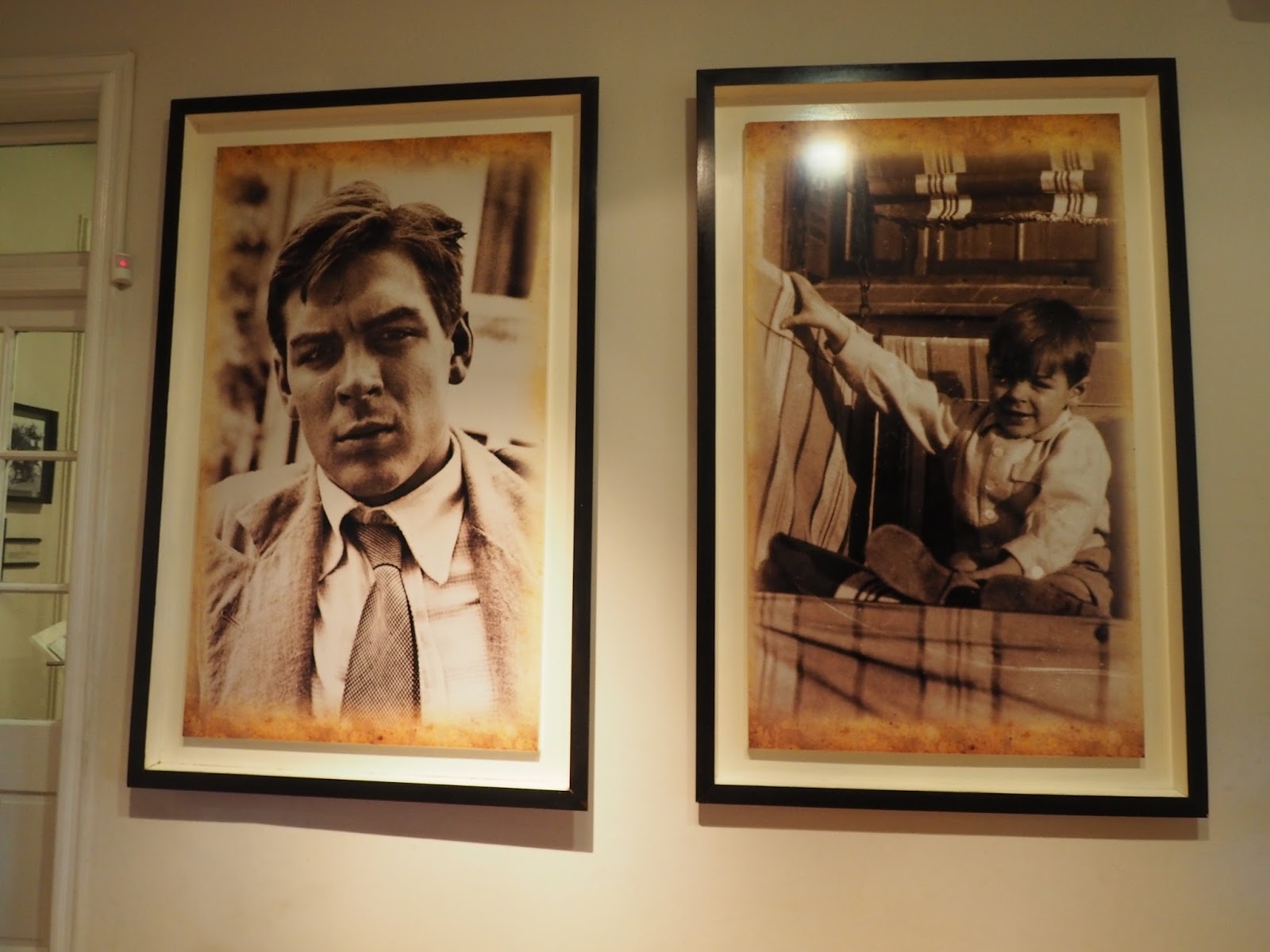
Ernesto came from a middle class background, and his parents moved to the town in 1932, when he was four years old, in the hope of helping his asthmatic condition.


Ernesto's room, Casa de Che Museum, Alta Gracia


He lived in Alta Gracia with his family, including his four younger siblings, for eleven years, after which the family moved to Cordoba, and then Che went to medical school in Buenos Aires.

During their time in Alta Gracia, they spent some of the years (1935-7 and 1939-43) in this house, Villa Nydia.


The kitchen, Casa de Che Museum, Alta Gracia


There are a number of exhibits from his childhood bedroom and the literature that he read, to tales of his exploits after leaving here, including is infamous motorcycle trips, where he first saw the inequalities in the countries of South America, leading to his eventual role in the overthrow of Cuba with Fidel and Raul Castro.

Che is obviously a hero to many people, even though many of them actually know very little about the man, his beliefs or his actions.


Ernesto as a boy, Casa de Che Museum, Alta Gracia


I personally have yet to learn enough about the man to make a decision about what I think of him overall, so it was interesting to gain a little more information about his childhood background and formative years.


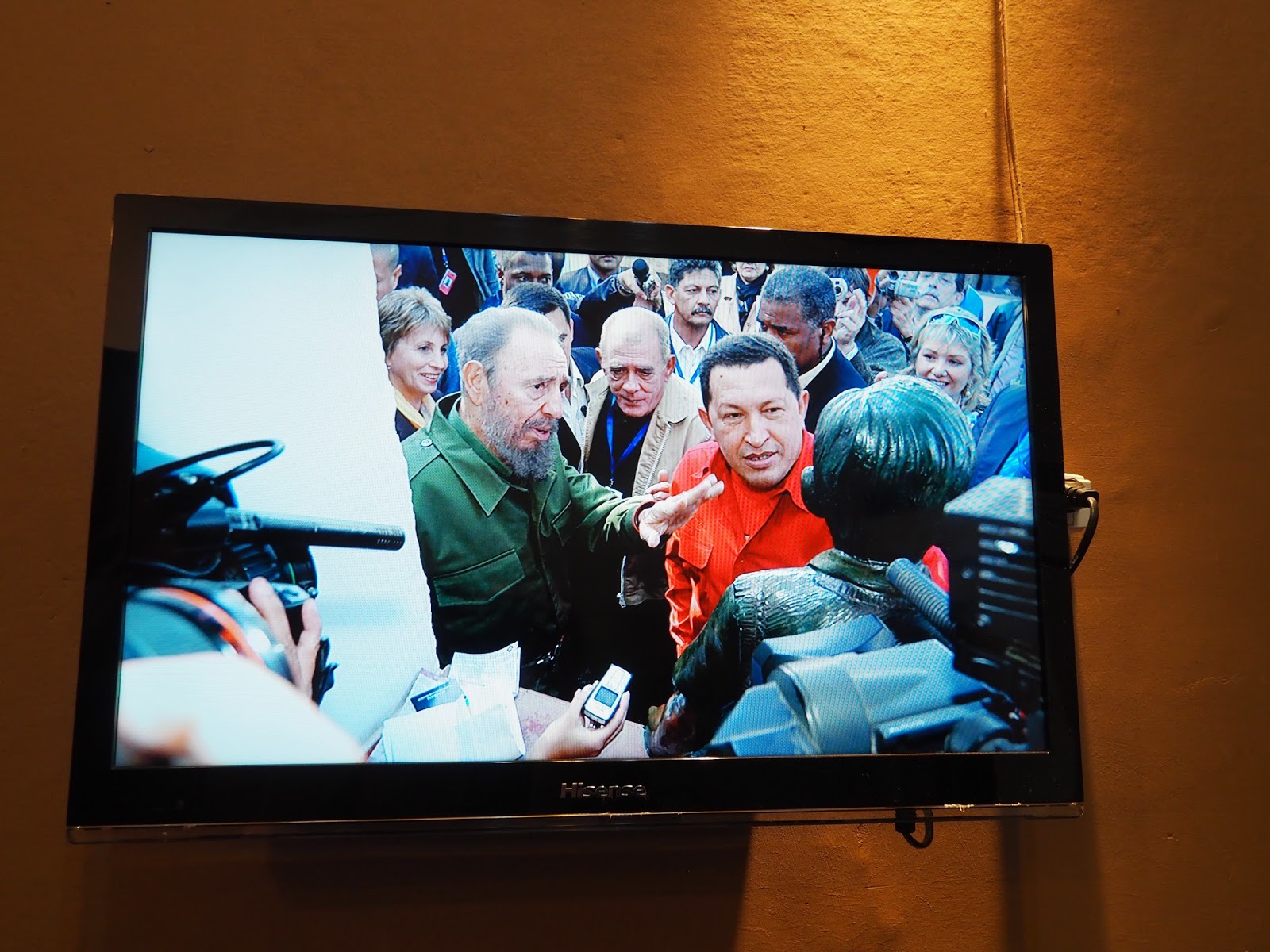
The house, with its statue of little Ernesto sitting on the balcony, saw its visitor numbers rise dramatically from around 5000 a year, to around 100,000 a year after a couple of famous visitors were here in 2006. Fidel Castro and Hugo Chavez came here together on 22 July 2006, and the resulting coverage saw numbers boom. There was a steady trickle when we were there, but I suspect it is a little off the main tourist route for many people.


Fidel Castro and Hugo Chavez visit the Casa de Che Museum, Alta Gracia

Fidel Castro and Hugo Chavez visit the Casa de Che Museum, Alta Gracia
Family photos of Che, Casa de Che Museum, Alta Gracia

Photo of Che at medical school, Casa de Che Museum, Alta Gracia


Motorbike like that Che used on his trips, Casa de Che Museum, Alta Gracia


Church of Our Lady of Mercy, Alta Gracia


Main House of Jesuit Estancia, Alta Gracia
Father Domingo Viera, Alta Gracia


Main House of Jesuit Estancia, Alta Gracia

Main House of Jesuit Estancia, Alta Gracia

Main House of Jesuit Estancia, Alta Gracia

Main House of Jesuit Estancia, Alta Gracia

Main House of Jesuit Estancia, Alta Gracia

Main House of Jesuit Estancia, Alta Gracia
View of Clocktower from Jesuit Estancia, Alta Gracia


Wednesday, January 23, 2013

Havana - and the second old car

The next afternoon the four of us hired one of the big old open top Cadillacs for a drive around the city. This car was in somewhat better shape than last nights, although Russell had for some reason picked a bright pink one!

We drove around the old town, seeing as we passed the old churches, the tree that tradition says people have to walk around on a particular day for luck, and the old town fortifications.

We drove along the Malecon and watched people getting wet as the waves splashed over the sea wall onto the pavement. It seemed to be part of the walk to get wet - perhaps because it is hot no one cares about a quick soaking.

Our first stop was the Hotel Nacional, which was USA built in the 1920s with art deco and arabic influences, and was tremendously popular as a casino and hangout for the rich and famous.  The Mafia bosses used this place for meetings.

After the revolution, the US management left and the hotel was state run.  This is one of the few places that you can see any kind of tribute to Fidel Castro as there is a display of pictures in the lobby here. It is interesting as most longstanding unelected leaders have statues of themselves everywhere, but Fidel has none of that. There is one plaque on a wall in Havana which celebrates him but that is it, and even that is small, understated and on a corner of a building.

We stopped for a while in the Plaza de la Revolucion, which is a huge (72,000 square metre) square that is surrounded by state buildings including the office that was Fidel's and is now used by his brother Raul. This is where the big parades happen. The main structure is a 109 metre high monument to Jose Marti, with rather dwarfs the 18 metre statue of him.

Two of the buildings have large faces on them. One is the Ministry of Communications building with the face of Camilo Cienfuegos, the other is the Ministry of the Interior building with Che Guevara. We had half expected that taking photos wouldn't be allowed, but in fact there was no problem at all.

We drove through a leafy area full of big old buildings, one of which was the British Embassy.  It looked quite impressive, but we were amused to see that it was next door to that of North Korea.  Not something that would happen in most countries.

Of course one country that does not have an embassy here is the USA.  But we were surprised to see that it does still have a presence in the form of the United States Interests Section.  But just in case the US should start to feel too comfortable here, Fidel Castro has created the huge Plaza de la Dignidad next to it with a large anti-imperialist stage where the columns bear the names of revolutionary heroes and North Americans who fight for social reform.  About five years ago, around seventy huge flagpoles were erected right in front of the building to hide the anti castro propaganda that President Bush in his usual diplomatic way, was issuing from there.  President Obama stopped it, but the flags remain.

Our last stop was rather less grand. The John Lennon park is small and leafy, with is a wooden bench where you can sit down next to a bronze John for a photo or a rather one sided chat if you feel so inclined. The writing on the ground is the Spanish of 'You may say I'm a dreamer, but I'm not the only one.'

The cadillac trip is a very touristy thing to do, but it was a bit of fun, and with four of us, the price isn't too bad.

After the trip we stopped off at the Hotel Park View and had some of their excellent small plate food and lovely cocktails. The hotel isn't cheap, but the food and drink in the ornate lobby is reasonably priced and very good. They also have a decent wifi connection - though you do have to pay for it.

Appetites satisfied, we went to a nice bar that Nic and I had found the day before. The Monserrate is a fairly small and understated bar, but the drinks are good and they have excellent live music all evening. Another good evening.

Sunday, January 20, 2013

What would Che say?

Whether you consider Che Guevara to be a revolutionary freedom fighter hero or a terrorist villain, I think most would have to accept that he genuinely believed in the communist ideals that he fought - and in the end died - for.

So what would he think of Cuba now?

In his day, communism had a couple of mighty super states, but Russia and China have long ago embraced the unevenly distributed wealth of capitalism, and there now are few places that can genuinely claim to be communist. Can Cuba?
 
Well it is still a very state led country, and there are certainly still a lot of elements of communism that are going strong. Many people live in homes owned and provided by the state. Of course lots are in a terrible state of repair. A recent documentary that we saw suggested that people can wait over fifteen years for repairs to be done. And it is difficult to do your own maintenance or improvements because the materials and services are controlled by the government so not only are the items expensive to get privately, but if you are caught having made improvements that you can't show were approved and how you paid for them, then the work can be demolished.
 
The Government issues ration books which you can take to a State run store for free food staples such as bread, sugar, oil, and matches. These stores also sell other foods cheaply, but they are not the best quality goods and choice is very limited. People who can afford to, supplement their shopping elsewhere where prices are a little higher but there is more available.
 
As for work, you will be given a job to do for the State with an average wage of around £15 month. The doctors here may be well trained, but they still don't get paid much.
 
Internet access is highly constrained and there have been significant blocks on trading with capitalist countries, which severely limits the flow of consumer goods into Cuba, hence the abundance of worn out old Cadillacs and the old fashioned or handmade furnishings. And as a matter of principal, Castro has never cashed any of the cheques that the US pay for their lease on the Guantanamo Bay area
 
So that all sounds very communist so far. Even down to them having high levels of incompetence and corruption amongst their public workers - because after all, if you have a guaranteed job, and you all earn the same, where is the incentive to be efficient? Sadly, the communist ideal of fairness and equality sounds good, but in reality most people only strive when they can achieve something beneficial to them, which communism just doesn't give you.
 
And no country can sustain inefficiency. In the heydays of communism, Cuba's big communist brother the Soviet Union used to help out by buying entire crops of sugar at inflated prices. But when newly capitalist Russia stopped doing that, Cuba's economy hit trouble.
 
So Cuba embraced tourism; let a lot of wealthy people from capitalist countries come and spend their money in government owned and run hotels, restaurants and tour companies. Give them their own currency and keep them apart from the locals, partly so they don't know how much more they pay for the same things, and partly to stop the locals getting capitalist ideas.
 
Alongside the export of rum and cigars, the influx of tourism meant that capitalism was helping keep communist Cuba afloat.
 
But more was needed, so gradually Castro started allowing people to apply for licenses to work independently on a list of approved work areas. So people were starting to work for themselves, paying taxes to the State but still making more than people around them. The documentary we saw showed a man who was a fully trained doctor earning more money in the street from buying and selling sinks, piping and whatever else he could lay his hands on.
 
Many of the new self employed work in the tourist areas. They run the Casas Particulares, have small restaurants, drive taxis and bici-taxis, or sell souvenirs. These people not only don't have the wage restrictions of state workers, but they also have regular contact with we tourists. They can charge us more, get tips from us, and get access to the more valuable tourist currency. So they are making much more than those working for the state.
 
In a population of just over eleven million, there are already over 400,000 people licensed to work privately. Doubtless many more are doing things like driving a 'taxi' in their spare time to earn extra. And the people who are on their £15 a month resent this. They see these newly richer people with their newer cars, nicer housing, and electrical goods, and they want it too.
 
Does this sound like communism - or does it ring bells for those of us from capitalist countries? We certainly felt that Cuba had gone too far down the path of capitalism to turn back, not that it could afford to anyway, and now it is only a matter of time before communist Cuba is a thing of the past.
 
So Che could be forgiven if, were he alive, he were feeling a bit aggrieved.
 
But if this rise of capitalist style wealth for some was not bad enough, then look at the blatant commercialism of his own name in Santa Clara. If you read the Santa Clara blogposts then you know the link already, but everywhere you go people are trying to make money from the connection.
 
Che t-shirts, Che books, Che postcards, Che hats, Che lighters, Che light shades, Che jewellery, Che sweets, Che just about anything you could ask for!  In the streets people are selling coins and banknotes that had a picture of Che, or his signature from when he was the treasurer after the revolution.  And even if people aren't selling Che, they are using the tourism that he generates to beg for money or soaps.
 
Surely Che must be turning in his beautiful mausoleum.

Friday, January 18, 2013

Che Guevara in Santa Clara

Students and money makers aside, Santa Clara's main claim to fame is the connection to Che Guevara, so we figured we had to fit in a few of the Che sights.
The link to Che comes about because it was here that in December 1958 he masterminded a defeat of General Fulgencio Batista's military and the taking of Santa Clara for Fidel Castro's revolution.

His plan to derail the armoured train was successful and Che's men were able to capture the soldiers, weapons and ammunition before they could mount a defence. The taking of Santa Clara was hailed as a tipping point in the success of the revolution and cemented Che as a hero.
The site of the derailment is now a memorial to the event, displaying the old train carriages and the tractor used to derail them. A modern looking sculpture represents the train tracks that were displaced.
Somewhat smaller is the nearby statue, in which Che is carrying a child. What makes it interesting are all the little details; his belt buckle has a group of tiny people on it, there is a small motorbike, and revolutionaries climb over him.
But the main monument is the mausoleum. Che died in Bolivia, executed on 9 October 1967 for his participation in an attempted uprising there. Thirty years later, Fidel Castro had the bodies of Che, and some of the revolutionaries who died with him, brought to Cuba for burial there. Later, the bodies of others of his comrades were brought over too and there are now thirty of them in the mausoleum.
The place is huge, with a statue that is over twenty feet high standing atop a plinth about three times that. The monument as a whole celebrates different aspects of his life, but clearly the overriding aspect is of his part in the Cuban revolution. The scale of the site and structure is clearly intended to reflect the high esteem that Fidel Castro held Che in.
The burial tomb itself is a rather more understated affair. No one is allowed to take any bags in with them, no photographs are permitted and we were watched while we were in there; Che's final resting place is clearly well looked after and protected.

'We want them to be like Che'
Free to get in to - it would have seemed very wrong had they been charging I think - it is built within the main monument and feels very serene. With dry stone walls and a rolling slatted wooden ceiling, it resembles a mountain hideaway rather than a tomb, with the eternal flame adding an unexpected cosy warmth. The thirty people interred all have a small plaque marking them, and the one for Che is identical to the rest, no larger or more ornate than the others. As it should be for a staunch believer in communism.