Welcome to our travel blog. We are Tabitha and Nic. In 2011 we 'retired' in our early 40s and set off to travel the world. We spent our first year in South America and have been lucky enough to make two trips to Antarctica.

Our blog is a record of our travels, thoughts and experiences. It is not a guide book, but we do include some tips and information, so we hope that you may find it useful if you are planning to visit somewhere we have been. Or you may just find it interesting as a bit of armchair travel.


Showing posts with label wines. Show all posts

Thursday, March 9, 2017

Ligatne, Latvia - Storks, Spoons and Soviet bunkers

Cellar Caves, Ligatne
While we were staying in Cesis, we drove out to the Ligatne area. One of the things that we were aiming to see was the Ligatne Soviet bunker, but we only set off for there in the afternoon, and then took wrong turn, so by the time we realised, corrected and got there, we had missed the 3pm only tour of the day.

Our wrong turn, which had taken us down gravel and eventually sand 'roads', actually took us out to a leisure complex that has lots of camels and alpacas, so at least it was an interesting diversion.

As we weren't going to the bunker, we checked out a few of the other sights in Ligatne instead. We started with the Cellar Caves. There are some 333 cellar caves, of varying sizes, carved into the sandstone hillside.


Cellar Caves, Ligatne


The earliest date back as far as 1770, while the newest are as late as the 1970s. It is possible that some people lived in them, perhaps hiding from authorities, but in the main they appear to have been used as storage cellars. They aren't very exciting, but then what can you really expect from caves!

What was more interesting, were some of the more up to date contents of a few of the caves. They have used some of them as little shop fronts to sell locally produced good such as honey, cheeses, turned wood and, our favourite, some interesting fruit wines. Alongside standards like apple, pear, and blackberry, they also had rhubarb and cloudberry wines as well.  We took a couple of bottles away with us.


Wild boar, nature walks, Ligatne


After the caves, we visited the local Nature Walks. This was a specified route through the forest, where you were supposed to be able to see various animals along the way. The enclosures that we passed were a reasonable size, but we didn't see anything in most of them.


Wild boar, nature walks, Ligatne


We were rather disappointed with the bear, as it had a lovely big outdoor enclosure, but had for some reason, been locked up in a small section of his building. He certainly wasn't happy, and was being quite vocal about it, which we hoped was a sign that he wasn't usually cooped up like this, but still.

Aside from the grumpy bear, we just saw some owls and a few boar, and the walk wasn't especially scenic, so overall we weren't that impressed.

Araisi windmill, Ligatne


The drive back along the country roads did have some nice scenery though, and being quiet, we could slow down to admire it. We finished off the day with a stop at the Araisi windmill. It is only from the 19th century, but it is nice little stop off.


Storks at Araisi windmill, Ligatne
The guy who looks after it came out of his house on his mobility scooter to let us in and give us a leaflet telling us a bit about it. His huge dogs were also quite keen to say hello, and thankfully friendly.


The windmill was fine, but we spent just as much time watching a couple of young storks next to it.


While one was content just to lay in the huge bundle of twigs that was its nest, and presumably wait for the adults to return with the next feed, the other was busy trying out its wings.

We watched it for quite a while, flapping its wings in the wind, almost, but not quite, daring to take that leap off the edge of the nest. Eventually, we had to tear ourselves away, left to wonder whether or not it finally plucked up the courage.


Krimulda Manor, Latvia

The next day, after our visit to Sigulda, we had another attempt at the Soviet Bunker. But first we stopped off briefly to see Krimulda Manor.


There was a castle here initially, from 1255, but the Polish took over the place in 1566, and when the Swedish kicked them out forty years later, they destroyed the castle and village, so that the Poles couldn't return.


Krimulda Manor, Latvia


A couple of hundred years later, Prince Johann Lieven bought the grounds, and built the manor house in around 1822. The Latvian Red Cross turned the manor house into a TB sanatorium in 1922, and it is now officially a rehabilitation centre, although it seems to be more hotel in style. As it is private, we couldn't go in, but it is a nice building, and the mostly rundown outbuildings are interesting to take a look around too.


Soviet Bunker, Ligatne


From there, we finally made it to the old Soviet bunker. We got here in plenty of time for the tour, which was good, as the car park fills up, and I didn't fancy having to squeeze around the huge lumps of concrete that were inconveniently positioned for some of the spots!


Soviet Bunker, Ligatne


They run tours in Latvian, Russian and English, and the English speaking guide was pretty good. He had a good sense of humour, which confused a few non-native English speakers when they took him seriously.

It was quite a good tour, with just the right level of information, not too much but interesting and informative.


Soviet Bunker, Ligatne


Of course, it never actually operated during the cold war, as although they started it in the 1960s, it wasn't finished until 1982. It remained a secret until after Latvia gained independence, hiding its existence under cover of the hotel above it.

The bunker was intended for the communist elite, and was planned to house 250 people for three months, in the event of a nuclear or chemical attack. The rooms are fun to look around, as they really are relics of the past. As the guide said, there was no point in them having fancy new technology that they couldn't fix if it went wrong, as they couldn't just call out an engineer to a secret bunker.


Soviet Bunker, Ligatne


We were told that most Latvians would have had access to a bunker of some sort, but it sounded like those bunkers may have been about as much use as a chocolate teapot in the even of an actual attack.

Trying on gas masks was fun. I think we looked a bit like the Ood from Doctor Who! And yes, there are photos further down.

After the bunker, we made our way over to Ausligatne to check out the wooden spoon workshop, which is also where they make the wines that we tried in the caves. The guy who makes the spoons wasn't around, but we had an interesting chat with his sister, who also works there, and we bought ourselves a couple of nice pieces.


We really liked the Cesis and Ligatne area. The Gauja National Park has plenty to see and do, including some good activities for families. You do need your own transport to get around though, if you want to get out to all of the smaller places.

Araisi windmill, Ligatne


Araisi windmill, Ligatne

Araisi windmill, Ligatne


Storks at Araisi windmill, Ligatne


Storks at Araisi windmill, Ligatne

Storks at Araisi windmill, Ligatne

Storks at Araisi windmill, Ligatne


Krimulda Manor, Latvia


Krimulda Manor, Latvia

Krimulda Manor, Latvia

Soviet Bunker, Ligatne


Soviet Bunker, Ligatne

Soviet Bunker, Ligatne


Soviet Bunker, Ligatne


Soviet Bunker, Ligatne


Soviet Bunker, Ligatne


Soviet Bunker, Ligatne

Soviet Bunker, Ligatne

Trying on gas masks, Soviet Bunker, Ligatne


Tuesday, August 16, 2016

The wines of Jerez aka Sherry (Throwback post)

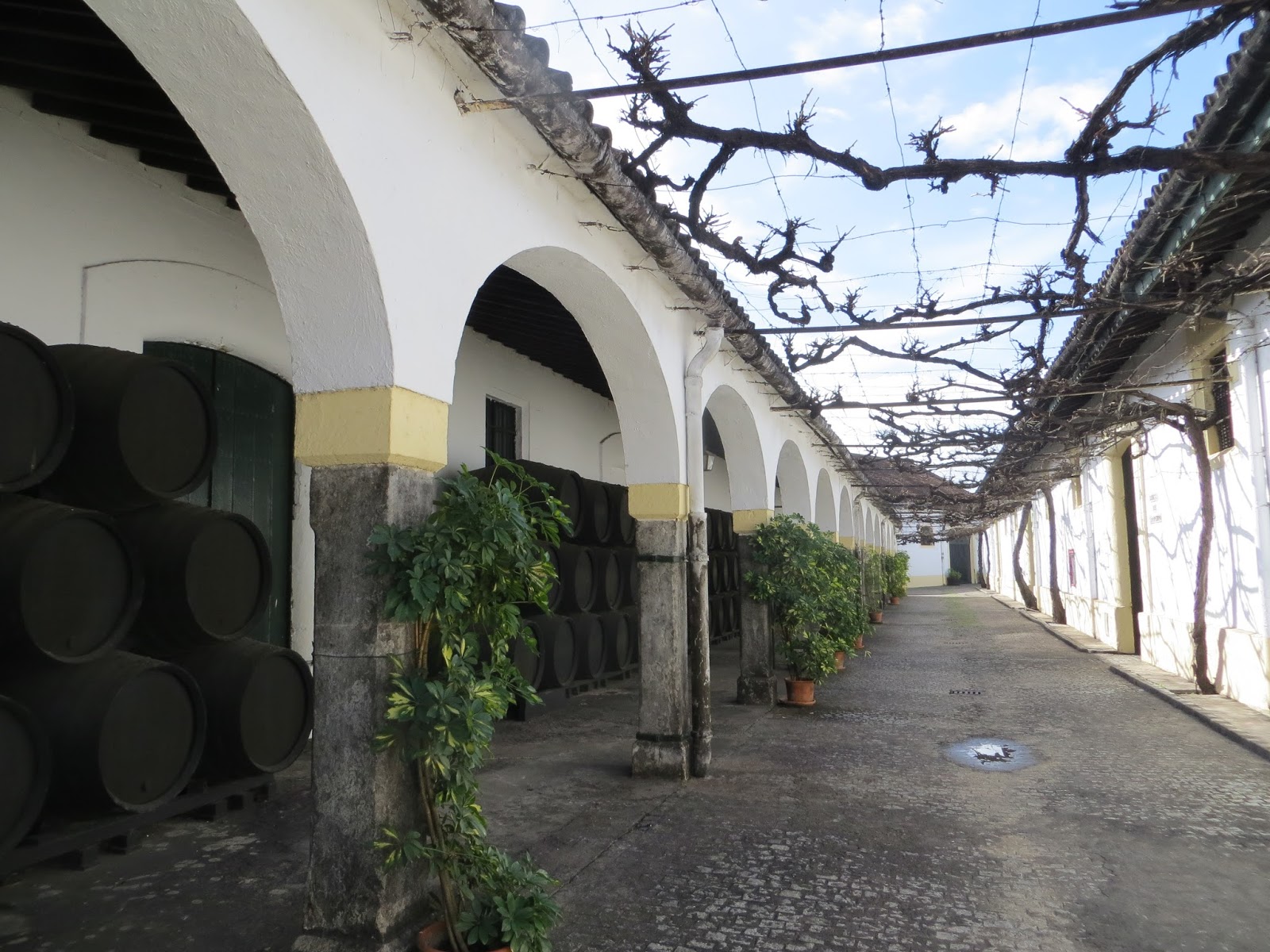
Bodegas Fundador, Pedro Domecq, Jerez
Wait! Don't just stop reading because I said the word 'sherry' - you might be surprised; you may even find your new favourite drink.

Sherry seems to be one of those things where people hear the word and immediately recoil, with thoughts of that dreaded bottle that hung around in your great aunt's drinks cabinet to be brought out every Christmas, and tasted vile. British soap operas love to make it the favoured tipple of the old spinster or widow, which helps to cement its fate as something to be avoided at all costs.

Jerez


But hear me out for a moment, because sherry really doesn't have to be like that. For a start, that bottle that has been hanging around open for years would taste terrible - it's gone off. Depending on what type it is, an open bottle of sherry can last between a few days and a few months, but it is not a spirit, it does not last indefinitely. Throw that old open bottle away.
Jerez

I mentioned types. Sherry is just our translation of Jerez, and is used as a generic term to refer to the wines of the Jerez and the other two towns in the sherry triangle (Sanlucar de Barrameda and El Puerto de Santa Maria). The style of those wines is actually much more varied that you might expect, ranging from very dry, to very sweet. I suspect most people that drink white wine, would find something in the range that they would happily drink.

They have been making wines in the Jerez region for around 3000 years. The trade survived the Moorish period of around 550 years, when the consumption of alcohol was forbidden by the Koran, by also distilling the grapes for ointments and perfumes, and making raisins for eating.

Jerez
Once the Catholic reign began in 1264, the vines became an important crop for the region. We British in particular, started buying the wines in large quantities, with Henry I agreeing a trade of the sherries for wool. Later, the marriage of Catherine of Aragon to King Henry VII's eldest son Prince Arthur, and her subsequent marriage, (after Arthur died and the Pope annulled the first marriage,) to his brother Henry VIII further increased the British interest. By the way, I don't know about you, but I did not know that she was married to Henry's brother first.

Bodegas Fundador, Pedro Domecq, Jerez

Sherry became traded around the world, but remained popular in England, with Queen Elizabeth I, Francis Drake and William Shakespeare all said to be devotees. In the late 1600s, its trade was boosted with the prevalence of the port of Cadiz, with the ruling required that a third of the cargo be from the area.

Of course these were turbulent times, and in order to make sure that the newly formed United Kingdom continued to get its sherry, British wine merchants started to establish their own businesses in the region. Even today, the UK remains a huge importer of sherry wines - it is actually quite hard to buy the ubiquitous Harvey's Bristol Cream in Jerez, as it mostly goes abroad.

Bodegas Fundador, Pedro Domecq, Jerez

Sherry is unlike most other wines, in that it is fortified, which means that alcohol is added while the wine is being made. This both makes the wine more resilient, especially for long transportations, and means that the wine maker can get more variation during the aging process.

Bodegas Fundador, Pedro Domecq, Jerez


There are three main categories of sherry. The first is Vinos Generosos, which are the dry wines, Manzanillo, Fino, Amontillado, Oloroso and Palo Cortado, made from the Palomino grape. The last of these is only produced in small amounts, and it happens of its own accord when a Fino goes slightly astray, with extra yeast activity.

Bodegas Fundador, Pedro Domecq, Jerez

The Palo Cortado is becoming very a popular type but, like the Fino and Manzanillo, it is too dry for me. These are probably the sherries to go for if you like your white wine to be a sauvignon blanc. If you're  more into the fuller chardonnay, then you probably want the amontillado or oloroso. Personally, I like a nice rich flavour, so tend to go for the latter two, but I would choose a more aged one.

Bodegas Fundador, Pedro Domecq, Jerez

The next category is probably the one that we most associate sherry with in the UK, it is the Vinos Generosos de licor, which are still the wines above, but they have had a little of the third category ,a sweeter sherry, added to them.

The Pale Cream is the Fino, so it still has those fresher flavours, but a bit of sweetness too. The Medium has a very broad spectrum, but is typically the more rounded amontillado base. Then the Cream is the richest and sweetest, using the oloroso. The famous example of these is Harveys Bristol Cream, although it actually blends a number of the different wines together. We discovered here that all of these category should be served chilled, and the Creams should have a thin slice of orange, to really bring out the flavours.

Bodegas Fundador, Pedro Domecq, Jerez
The final category is the Vinos Dulces Naturales, the naturally sweet grape varieties of Moscatel and Pedro Ximinez (PX). The former has a lighter, slightly floral sweetness. It can actually be made as a fairly dry wine, in the same way that a Riesling can be dry or sweet, but typically it will be along the lines of the lighter , more elegant dessert wines.

The PX on the other hand, whilst still varied in its range, can be incredibly rich and sweet. This is probably a bit of a marmite factor - you either love it or hate it. I love it. I would liken the richest of them to drinking liquid raisins, or Christmas pudding. This is the stuff to go for if you like the richer dessert wines or a good tawny port.

Bodegas Fundador, Pedro Domecq, Jerez

If you have been tempted to try some sherry, and want more description of the different types, then the website in this link is a good starting point for a bit more information: http://www.sherry.wine/
Bodegas Fundador, Pedro Domecq, Jerez
Sherry was one of the reasons we decided to come to Andalucia, and certainly why we came to Jerez, so of course we drank quite a lot of it here. We tried quite a lot just in the bars, but we also popped along to a few of the many wineries.


Lustau, Jerez
Our favourite was the Lustau winery, purely for the wines themselves. The winery, like many here, looks a little down at heel from the outside, but again like many, is charming inside. The tasting was formal in agenda, but relaxed in style, and the wines were definitely our favourites. We came away with about six bottles.


Sandeman, Jerez
While we were up at the horses, we tried the Sandeman winery next door. The tasting room here is huge, set up for the many coach parties they receive. There is a short tour, and then the wines are given to you with tasting notes after a brief explanation. They are generous with both the number and the pour, and you can try the brandies too. Whilst we enjoyed the wines here, they weren't ones we would particularly chose.

Another was Bodegas Fundador, Pedro Domecq, which includes the brand names of Harveys and Terrys. This is a lovely winery, and being here out of season, we had the place to ourselves. They gave us a very interesting, informative and relaxed tour, which was a great introduction to the making of the wines.

Nic ready for wine at Sandeman, Jerez
Now I suspect that this doesn't usually happen, but for the tasting, they poured us a very generous first one, then left us with the bottles and let us pour our own, for both the wines and the brandies. We tried very hard to restrain ourselves, and largely succeeded, except for the Pedro Ximinez, where we succumbed to extra large pours and seconds! We did buy some wines though, so that's not so bad.

Sandeman, Jerez

On which point, try to space out the tastings. We only did one a day, so we managed fewer wineries, but to be honest, we would have been in a pretty bad state if we had done multiple ones.

So there you have it. Sherry. Give it a try some time.

Sandeman, Jerez