|
| Makuuchi entrance |
 Back in early February, we had struggled through the patchy internet access in Myanmar, to join the huge numbers of people trying to book their tickets on the first day they went on sale; they sell out fast. But we were successful, and managed to get tickets to day 13. We opted for the seats, which we figured that, although a bit further back, would be more comfortable that sitting on the floor with very limited space.
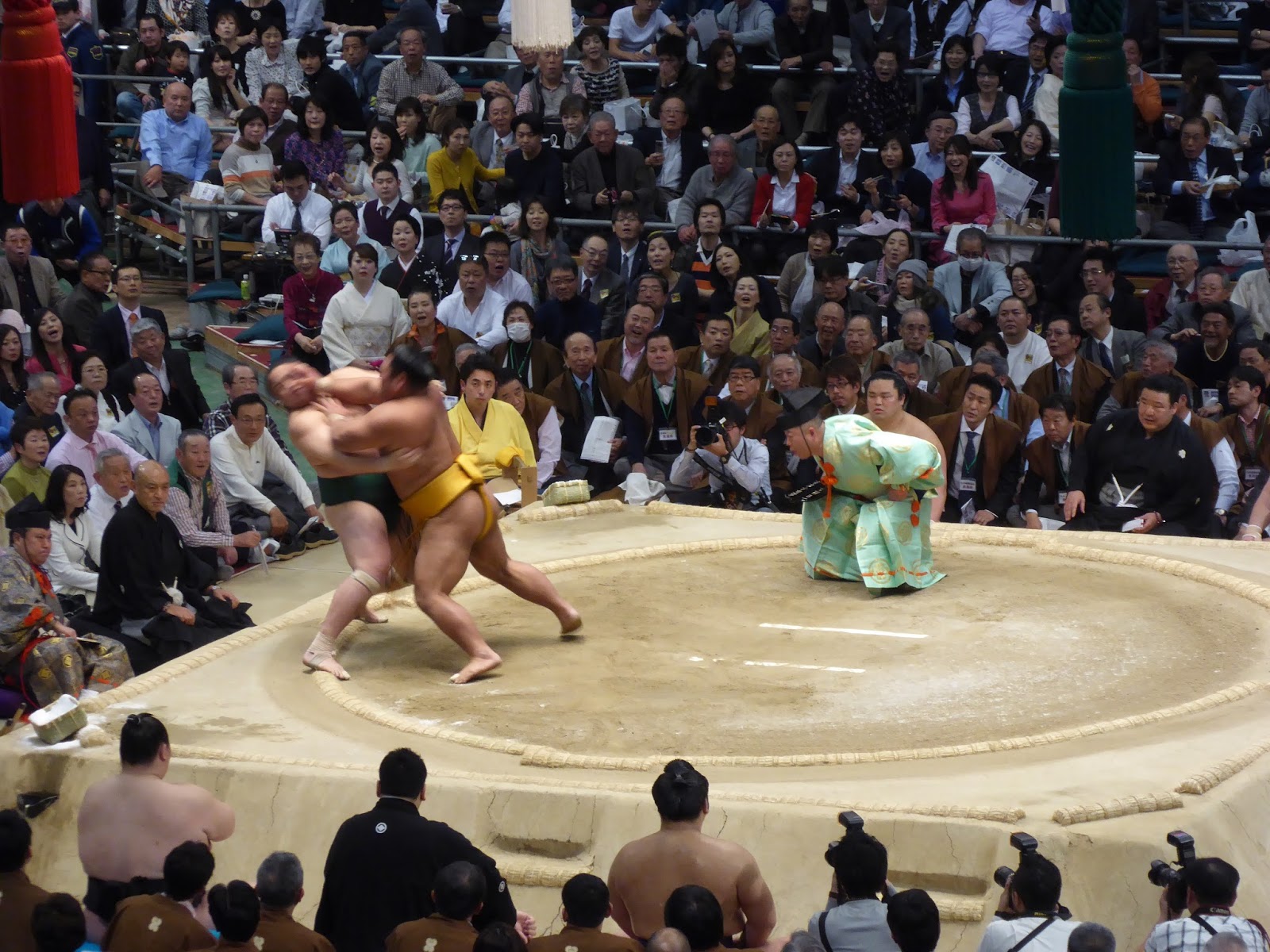
 The purpose built arena has the raised dohyo - the ring - in the middle, with the five judges sitting on the first ring of floor cushions. The ring is considered sacred, so spectators must not enter it, or even pass between the judges and the ring.
 The next rows of individual floor cushions, the ringside seats are the most expensive but, along with the judges seats, also the most risky. It does happen that one - or even both of the wrestlers - can come right out of the ring and land on top of the judges and front few rows; and most of those guys aren't lightweights!
 Then there are the box seats, square sections with four floor cushions. You buy the box and it's up to you how many people are in it. Personally I would want the box for two, but most contain the full four, and they bring along who picnics, including their full tea paraphernalia. The venue will also deliver you food and full tea sets.
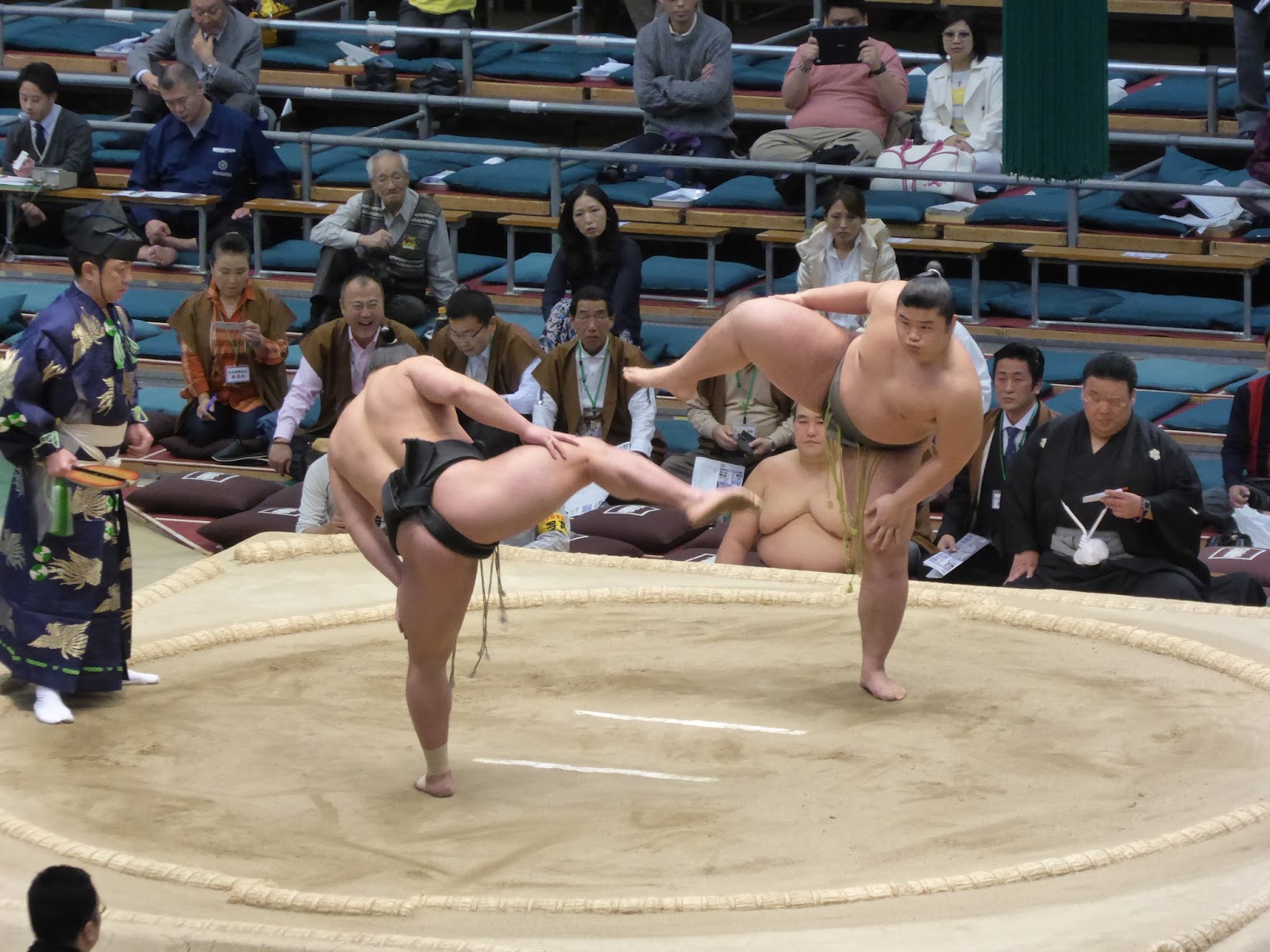 Sumo goes back around 2000 years to the Shinto period, and is very regimented and hierarchical. The Sumo wrestlers join one of the stables, where they live and train according to strict rules. They must wear their hair in the chonmage, or topmost, which comes from the Edo samurai style. Their eating regime is designed to put if weight and mass; they have no breakfast, but a huge lunch of stew and beer, followed by a fiesta.
 There are six levels of Sumo, set out in the banzuke. Your rank is based on your performance in the six grand tournaments held each year, and you can be promoted or demoted depending on how well you do. Your ranking affects what time you get up to train, the quality of clothes you are permitted to wear, and the jobs that you have to do.
 The bottom four levels (jonokuchi, jonidan, sandanme, and makushita), have to get up earlier for their practice, do more chores, and act as assistants to the stable master and the sekitori - the Sumo in the top two tiers.
 The sekitori levels are the juryo, and the elite makuuchi. The top makuuchi tier are further split into the run of the mill maegashira, who are given their own rankings, and three tiers of san'yaku, those who have won titles. The san'yaku ranks are, in ascending order, komosubi, sekiwake and ozeki.
 |
| Juryo entrance |
 In the tournament, the bottom four ranks fight in the morning, then the juryo fight at 3pm, and the makuuchi at 4pm. A group of elders decides who fights who. We watched the end of the lower ranks bouts, and all of the latter two. They fight one bout per day, so their tournament score is based on their win to loss ratio out of the fifteen bouts.
 |
| Makuuchi entrance |
 When they enter for the bout, the wrestlers are announced in a kind of singing voice, and then there is a lot of ritual, which increases as the ranks go up. They will crouch to face and welcome each other, clap their hands to ask the gods to accompany them into battle, stamp to squash bad spirits, lift their arms and legs to show they are unarmed, sip water to clear the body, and throw salt for purification. This can go on for almost five minutes in the top ranks.
 |
| Hakuho v Terunofuji |
 |
| Hakuho v Terunofuji |
 |
| Hakuho v Terunofuji |
 |
| Hakuho v Terunofuji |
 |
| Hakuho v Terunofuji |
If Terunofuji were to win, not only would it be a major upset, but if he could win his last two bouts, and Hakuho lost his, then he would take the title. So both had everything to fight for.
 |
| Terunofuji beats Hakuho |
 |
| Cushions being thrown |
 |
| Final ceremony |