Welcome to our travel blog. We are Tabitha and Nic. In 2011 we 'retired' in our early 40s and set off to travel the world. We spent our first year in South America and have been lucky enough to make two trips to Antarctica.

Our blog is a record of our travels, thoughts and experiences. It is not a guide book, but we do include some tips and information, so we hope that you may find it useful if you are planning to visit somewhere we have been. Or you may just find it interesting as a bit of armchair travel.


Showing posts with label bullfighting. Show all posts

Thursday, August 4, 2016

Ronda - bridges, baths and bullrings (Throwback post)

Ronda
Ronda is a pretty little town that is well up on the list of Spanish tourist destinations. People flock here to see the old architecture and, in particular, the rather impressive sight of the Puenta Nueva Bridge spanning the 100m chasm of the El Tajo Gorge.


Ronda
I suspect that the Facist-oriented Falangists, on the rebel Nationalists side in the Spanish Civil War, may not have been so keen on the view.  The Civil War, in 1936-39, saw the Nationalists rise up against the incumbent Republicans, with General Franco as their leader.
Ronda
Ronda

While the eventual winners, the Nationalists, are said to have killed significantly more people with ther 'policy of terror', it is rumoured that here in Ronda, the Republican side threw the Falangists off the cliffs. This was later included as a scene in Ernest Hemingway's For Whom The Bell Tolls.


The name Puenta Nueva, or New Bridge, is a little misleading these days, as it was actually constructed in 1793 to link together the two parts of the town on either side of the gorge. The north side has the newer area of town, while the south has La Ciudad, the older area.

Ronda
The older side is certainly worth wandering around. As you would expect, it has some of the more touristy shops, but a few nice ones too.

One in particular held our attention for a while, as it had a number of old wooden doors and window shutters for sale, some of which, like those that still remain on a few of the buildings, were beautiful.

We considered them, but sadly decided that the prices were too inflated, probably as a result of this being such a popular tourist destination.
Palacio Mondragon, Ronda

We took a look in the gardens of Palacio Mondragon, which were pleasant enough, and we have read that the house itself is supposed to be good too if you are there when it is open.


Plaza Duquesa de Parcent, Ronda

Ronda
Ronda


There is also a rather nice square, called Plaza Duquesa de Parcent, which has a convent, a couple of churches, and an unusually attractive council building.


Arab Baths, Ronda
Arab Baths, Ronda


If you can face the walk back up the hill, it is well worth walking down to the Arab Baths, a 13th century Moorish Hammam, that is very well preserved. We found the self guided tour interesting and informative.


Arab Baths, Ronda

Ronda
The other thing that we did here was a little more controversial for us. I have said in an earlier post that we are absolutely not fans of bullfighting, but we do recognise that it is an important aspect of life in Andalucia, and as such, it isn't something that we feel we can simply ignore. That is especially the case here, as Ronda is considered the birthplace of the modern corrida, or bullfight.
Bullring Museum, Ronda

It was here, in the early 1720's that bullfighter Fransisco Romero started both the use of the muleta (the red cape of a stick that is used towards the end of the fight to conceal the sword) and the practice of fighting the bull on foot, rather than on horseback.

The bull ring here is still used once a year for the Feria Goyesca, where they celebrate the bullfight and the works of Fransisco Goya, as participants dress in the style of clothes that were worn in his paintings. However for the rest of the year, the bullring is just a museum.

Bullring Museum, Ronda

So, despite our misgivings, we decided to visit the museum. It is actually quite good, although some of the information could be better. When you look at the costumes, artwork and other accoutrements of the sport, I can understand some of the appeal it has. The flamboyance and flair is undeniable, and were it not for the fact that they bleed, tease and kill a bull, I could probably quite enjoy it. But it does involve all of those things, so I remain firmly against it.


Bullring Museum, Ronda

Bullring Museum, Ronda

Bullring Museum, Ronda
Ronda

Ronda
Ronda
Ronda


Ronda
Ronda
Ronda

Tuesday, July 26, 2016

Granada - Town and Tapas (Throwback post)

Granada
From Malaga we were on to Granada, which is one of those places that is very famous for a particular thing, in this case the Alhambra. I always worry when something is so hyped as that, as you never know whether it will match up to the expectations. But you'll get to see what we thought of that in the next post - for now, we're looking at the rest of the city.

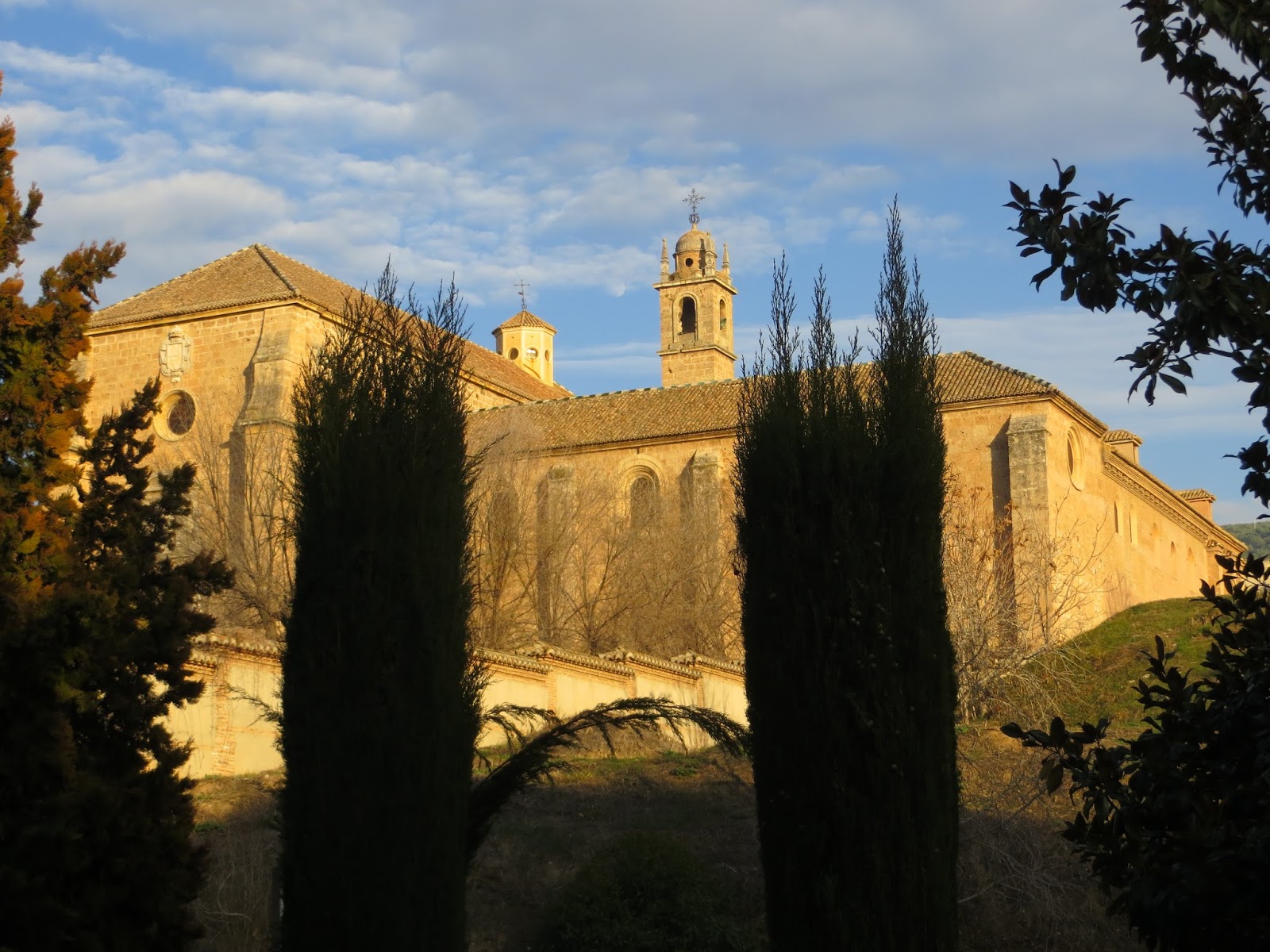
San Jeronimo Monastery
We did something in Granada that we don't very often do - we took one of the sightseeing buses. We wouldn't usually bother with them, because you generally have to fit more than we like to into one day, and we can happily get around on local transport.

San Jeronimo Monastery
But on this occasion, we wanted to go to a couple of places a bit further out, with fewer transport options available, and it actually wasn't a bad price. So we hopped on board and listened to the commmentary as we passed through the 'in town' section, before jumping off at the San Jeronimo Monastery.
San Jeronimo Monastery

The Monastery was built around the start of the 16th century, by the Catholic monarchs Isabella I of Castile and Ferdinand II of Aragon. It is in the Renaissance style, and has a very impressive alterpiece.

San Jeronimo Monastery

The inside is obviously good, but not particularly to my taste. I did however really like the courtyards, with their arches and orange trees.
San Jeronimo Monastery

San Jeronimo Monastery

Cartuja Monastery
Back on the bus, our next stop was another monastery, this time the Cartuja Monastery. Built around the same time as the last one, this one is in the Baroque style. Again, it is impressive inside, and again, not really my kind of thing. No photos allowed inside this one.

Cartuja Monastery
Cartuja Monastery
Cartuja Monastery
What I did love seeing here, and was allowed to take a photo of, was a peach tree in the courtyard. That is my first peach tree sighting, and little things like that can make me surprisingly happy!
Granada Bullring
At this point, our sightseeing bus let us down. We saw the one we were planning to get go past, quite a bit ahead of schedule, and there was a huge gap to the next one. Rather than just stand around in the sun for ages, we decided to walk on to the bull ring. It wasn't necessarily on our list of things to see, but it was on the bus route, so we could get on there instead.

Granada Bullring
The bull ring here is massive, built in 1928, with a capacity of 14,500. We didn't go inside though, as it is still used for bullfights, and we can't condone that. Bull fighting is one of those difficult areas where it can be hard to draw a line between respecting the culture and traditions of another country and the rights of the animal. But whilst I may not feel I can try to prevent it, I can certainly boycott anywhere that makes money from it.

St Nicholas Church, Granada
I suspect I would find it marginally less unpalatable if it were at least a fair fight, rather than them bleeding the bull first to sap its strength. At least then, the skill of the matador against a fully fit and healthy bull could be something to be admired. I still don't think I could support an event where the aim is to kill an animal for fun though. I have to admit that I was rather pleased to see in the news recently that one of the bulls had managed to turn the tables and kill the matador.


View from St Nicholas Church, Granada
Anyhow, enough of that, on with the tour. That was our final stop on the bus, but we did get a local bus up to the Saint Nicholas Church, where there is an excellent spot to get a view of the Alhambra and Generalife.

Albaycin, Granada
We walked back down through the old Arab area of Albaycin, with its multitude of little white buildings and, as you get further towards the bottom, teahouses and shops selling colourful lanterns and other Moorish souvenirs.
Albaycin, Granada
Albaycin, Granada
Albaycin, Granada

Granada Cathedral
Finally, on the tourist trail, we popped inside the Cathedral. We also took a wander around the nearby shops - when they weren't inconveniently closed for length siestas that is.

Granada Cathedral
I understand the idea of a siesta traditionally, but I can't see why it is necessary in the winter months, when it really isn't all that hot

Granada
Of course, after all of that sightseeing, we need to be fed and watered, and Granada is just the place to do that cheaply. The drinks aren't exactly expensive anyway and, if you go to the right bars, (which is most of them,) then with every drink you buy, you get a free tapa. they aren't the most exciting ones - they are often tostadas and montaditos, but they will certainly leave you well fed.

Bodegas Castenada, Granada
Unfortunately, with my tricky eating habits, I often found I couldn't eat what can, often due to a large dollop of mayonnaise being included. Many places were pretty good with that, and if I told them I couldn't eat it beforehand, then would adapt it slightly.

Bodegas Castenada, Granada
A couple were excellent, and went above and beyond to check everything and if necessary, give me something completely different, or even just me choose. But quite seriously, if you are someone who will happily eat most things, then don't bother buying meals here, just buy drinks and eat for free.

One place that sadly didn't offer anything much in the way of free tapas, but was a lovely little old style bar, with great Spanish wines served direct from the barrels, was Bodegas Castenada, close to where we were staying and not far from the Cathedral.

Bodegas Castenada, Granada
We also discovered that you could also bring along your own plastic bottle to get filled with wines for takeaway, at a ridiculously low price. We had to buy a bottle the first time, but after that we were sorted for drinks back at the flat.