Welcome to our travel blog. We are Tabitha and Nic. In 2011 we 'retired' in our early 40s and set off to travel the world. We spent our first year in South America and have been lucky enough to make two trips to Antarctica.

Our blog is a record of our travels, thoughts and experiences. It is not a guide book, but we do include some tips and information, so we hope that you may find it useful if you are planning to visit somewhere we have been. Or you may just find it interesting as a bit of armchair travel.


Showing posts with label earthquake. Show all posts

Thursday, March 30, 2017

Off to Assisi .... no, make that Arezzo!

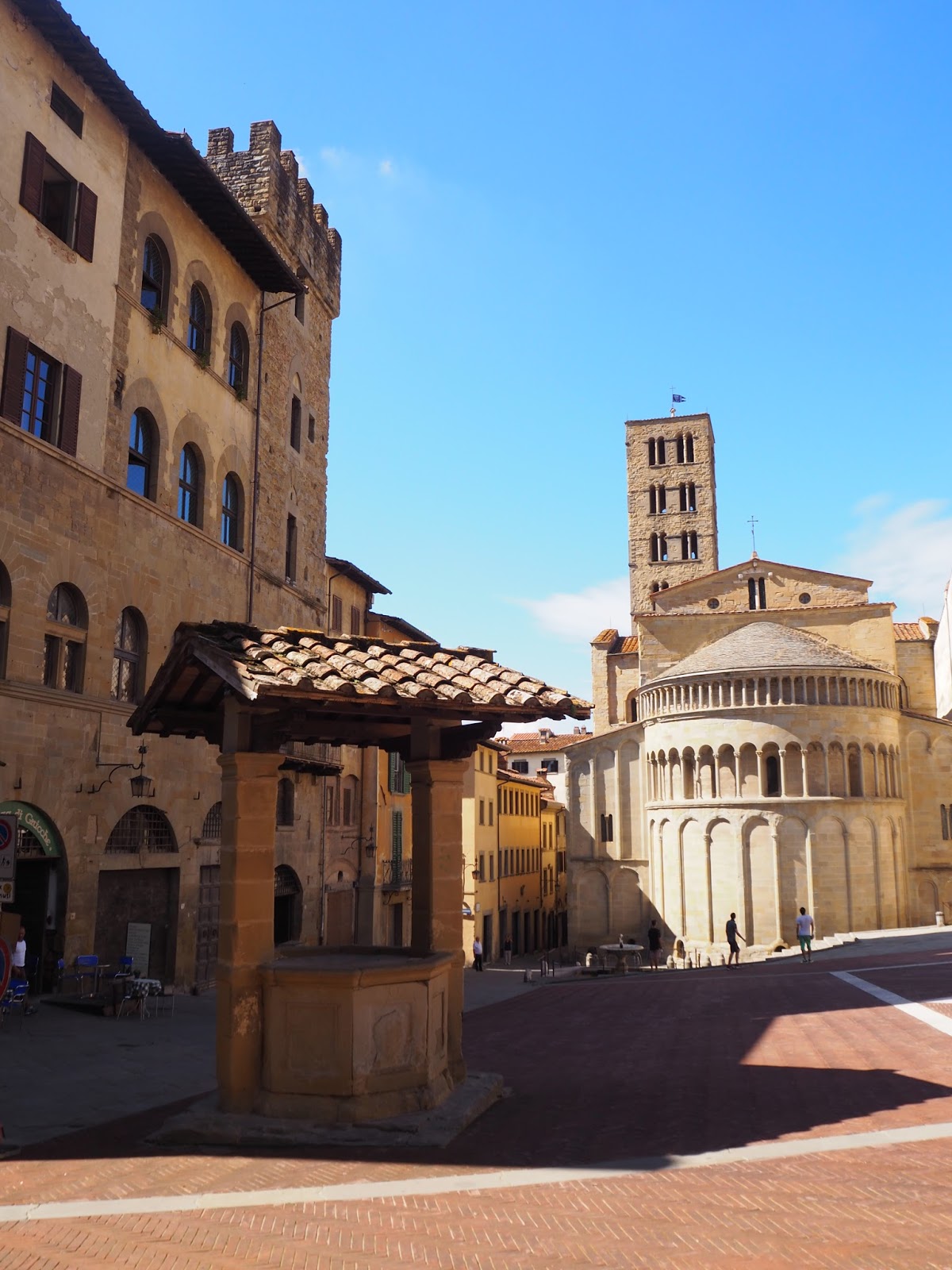
Piazza Grande, Arezzo
At the end of September 2016, we spent a week in Italy, with Nic's mum. She had expressed an interest in visiting Assisi, and as we had never been there or elsewhere in Umbria, we said that we would be happy to arrange it and accompany her.

We decided on September, so that it wouldn't be as hot or as busy as the height of summer, and booked a little apartment in Assisi. Our plan was to pick up a hire car at the airport in Florence, so that I could drive us around to some of the smaller towns and villages in the area.

Aside from my slight nervousness about driving in Italy - we've all heard the stories about scary Italian drivers after all - everything was looking good, until August, when a huge earthquake struck the region we were planning to go to.

Arezzo


The earthquake was devastating, killing about 300 people and decimating whole towns, including a number of those that we had planned to visit while we were there. We didn't want to cancel the trip entirely, but equally, we didn't want to be in the way of rescue and recovery efforts. That, together with the frequent and spreading aftershocks, suggested that a week’s stay in Assisi might not be best, so we decided to alter our plans a little.


Church of Sant' Agostino, Arezzo


We changed our base to Arezzo, in Tuscany, a short enough train ride away that we could still have a decent day trip to Assisi, and not far by train from Florence, so we no longer needed the hire car. So we were back on track.

And then I put my back out. Based on previous times that I had hurt my back, we figured that with a bit of luck, it would have healed sufficiently, so I still went. Getting there was something of a trial, with me leaning heavily on my wheely suitcase, with Nic having to take over every time it needed lifting, even just up or down a kerb. Between that and taking his mum's case whenever there was a flight of steps or a bigger lift to do, Nic got quite a workout!


City Walls, Arezzo


It was slow going, as I could only manage a snail's pace, but we got there in the end, and after settling in to our very nice flat, I edged my way back down the two large flights of stairs, and withy my walking pole put to good use as a walking stick, we crawled our way a couple of blocks to a nice little restaurant for dinner.

And that was as much as I got to see of Italy. By the time we got back from dinner, my back was so seized up and painful, that it was quite evident that I wouldn't be going anywhere soon, especially as I wanted my back to heal in time for our return journey, and more importantly, our next trip.

So for the rest of the trip, it was Nic and his mum on their own, while I was confined to the, thankfully very comfortable, flat. I didn't even manage to get an ice cream! At least, as Nic pointed out, we can go back to these places easily another time.
Arezzo Cathedral, Arezzo


Which means that the photos you will see are Nic's - yes, I trusted him with my fancy new camera - and he was in charge of the blog writing too. However, while he did a good job with the photos, his draft blog on Assisi only had one sentence about the Basilica, and spent more time talking about the pizza, so I have demoted him to just a contributor, and have reclaimed most of the writing!


Arezzo Cathedral, Arezzo
With everyone feeling a little tired after our travel day, and Nic being a little concerned about leaving me alone in the flat in my immobile state, he and his mum stuck to Arezzo the first day, rather than going any further afield. They left me nicely set up for the day, with things to eat and drink within easy reach, and set off into town.

Arezzo isn't huge, at least the main parts that you would want to see and use as a tourist. We had chosen it partly for its good transport links and also because it also seemed to have some character in the form of a central medieval area. And it didn't disappoint in terms of its historic character. It doesn’t have the not-know-where-to-look-nextness - Nic assures me that this is a proper word! - of the first tier of Italian tourist cities, but it is also slower, less crowded and feels more focussed on locals than tourists. It is also likely somewhat cheaper, and still has plenty enough places to eat and drink.

Arezzo


We were staying in the lower area of Arezzo, near to the train station, so to get to the main attractions, you follow the slopes upwards. They couldn't get into the old roman amphitheatre, as it was closed, but spent a leisurely few hours wandering Arezzo's narrow streets, with the useful tourist map of major sights in hand, punctuated by lunch.


Sadly, a lot of the medieval centre was destroyed in World War II, but there is certainly still enough here to be impressive, perhaps because, as a goldsmithing town, it was once one of the wealthiest in Tuscany.


Piazza Grande, Arezzo


Arezzo has quiet and shady lanes to explore without crowds, as well as the main shopping and eating areas amidst the old buildings of the centre.


Its main square, the Piazza Grande, is highly unusual, as it has a pronounced slope, which is apparently designed to drain the water when it rains. They had lunch there, which was surprisingly good considering the location, and the restaurant seemed to have far more locals there to pass the time (slowly) than it did tourists.


Church of Santa Maria della Pieve, Arezzo


After lunch, they walked up to the top of the city where, over the city walls, we could see olive groves and the landscape beyond. Arezzo Cathedral sits on top of the hill. Although it was started in the 1300s, it took around two hundred years to complete, and even then, they didn't add the bell tower until the twentieth century.


The 12th century Church of Santa Maria della Pieve is the oldest of the churches, having been renovated in the thirteenth century, but with some aspects dating back to 1216. It has an impressive façade, and an interesting bell tower, which dates to 1330.


Church of Santa Maria della Pieve, Arezzo


Throw in a number of attractive towers dotting the skyline and more than a few decent churches to dip into - mostly quick visits unless you like the art a lot - and you have a pleasant but not over-taxing day. It would be a fine day trip for those staying within easy reach and wanting a less hectic place.

 
Piazza Grande, Arezzo

Arezzo Cathedral, Arezzo


Arezzo
Church of Santa Maria della Pieve, Arezzo


Church of San Michele, Arezzo

Arezzo
Arezzo

Wednesday, August 24, 2016

Christchurch – The 2011 earthquake

Christchurch
Our final place in New Zealand was Christchurch, and we were staying with some friends who we met when they were our first Airbnb hosts in London, back in 2012, before they emigrated.

Visiting Christchurch felt slightly strange, as the city is still showing the scars of the devastating earthquake that hit it in 2011.
Christchurch


Driving into town, there are building works everywhere, as they work to rebuild the city. It felt a little odd to park in a clearing where you know that a building once stood; the rubble on the ground and a small section of graffiti covered wall are all that remain of it now.


Christchurch
Earthquakes are neither new nor unusual in New Zealand. It apparently has some 15,000 a year, although only (only!) about 100-150 of them are big enough to actually feel. Christchurch has had its share over the years. One in the early hours of September 2010 was pretty bad, hitting 7.1 on the richter scale, but due to the time, and the strict building laws, the city and its people were relatively unscathed. That wasn’t the case just under six months later.

Old Cathedral, Christchurch

The earthquake that hit the city at 12:51 on 22 February was an aftershock from September and only 6.3 on the richter scale, so could have passed by with only limited damage, but for the fact that it hit a shallower faultline and for effects of the liquefaction.
Christchurch


The fact that this quake was less deep, only around 5km below the surface, means that the ground motion was around four times faster than previously, so caused far greater damage.

That motion also caused the liquefaction, which is basically where the waterlogged layers of silt and sand below the ground's surface are shaken so badly that they turn into liquid. That sludge moves, causing foundations to collapse. Where there are cracks in the ground, the sludge rises up and, together with the sewage from the inevitable broken pipes, floods the area and homes. The ground in some places becomes like quicksand.


Christchurch
As a result of this, the destruction was terrible, and many people were caught up in it. Between the falling buildings, and the fire that followed, 185 people lost their lives, 130 of them in just two office blocks that collapsed. Some of the suburbs worst hit by the liquefaction may not be re-occupied for many years.

Around the city, you can still see the notes left on buildings by the search and rescue teams to record that they had been cleared.

Quake City, Christchurch
If you are in Christchurch, I would highly recommend a visit to Quake City. It may sound a little like a Disney ride, but in fact it is an excellent exhibition about the earthquake, giving some really good explanations, and telling the story of what happened that day.

Christchurch
I suggest allowing plenty of time, because whilst it is small, one of the most compelling elements is the string of videos with survivors, rescuers, and the families of those who died.

Whilst obviously moving, it isn’t overly graphic or gloomy, and is done in a very tasteful way. It does, however, give you an excellent insight into what it was like to be there. In our opinion, it was well worth the time spent watching.

Snapa Crapa, Christchurch
On a lighter note, we also learned about the Snapa Crapa. After the September quake, many sewage lines were damaged, making inside toilets unuseable, so residents created temporary longdrop toilets in their gardens. Some of them became quite elaborate and inventive. The Snapa Crapa was one entry in the 'Show Us Your Longdrop' website competition.

RE:START, Christchurch


One thing that we noticed around town, was the ever present sight of shipping containers. If there is a shortage of them anywhere else, you know why – they’re all here.
Re:START, Christchurch


They are used as offices on the building sites, they are acting as supports for the facades of buildings where the rest of the structure has been demolished, and most interestingly, they have been used to create Re:START, a temporary shopping and food area.

Cardboard Cathedral, Christchurch
Another temporary structure, that has garnered huge interest, is the cardboard cathedral. The city’s old cathedral was partially destroyed in the quake, and is unsafe; the plan is to rebuild it eventually, but given the scale of the works needing to be done here, that is some way off, and it is currently deconsecrated.

The Cardboard Cathedral was intended as an interim solution, although having proved to be so popular, it is now expected that it will be used as the local church once the old cathedral is finished. It is, as the name suggests, made largely from cardboard. There are obviously some other materials used – more shipping containers for one thing – but the inside is definitely cardboard. It looks very impressive.

From outside, you can see that there is a definite twist in the outline of the building. This isn’t the cardboard collapsing, it is part of the design by Shiguru Ban.
Cardboard Cathedral, Christchurch


185 Empty White Chairs, Christchurch

Near to the cathedral, is the most poignant reminder of the earthquake. It is a simple idea – 185 white-painted chairs, of varying sizes and types. These empty seats, all looking towards the cardboard cathedral, provide a very effective memorial to those who died.

Sunday, July 31, 2016

Napier - Earthquakes and art deco

Haku Falls, New Zealand
After leaving behind the not-so pleasant smelling Rotorua, we drove down to Napier, with a couple of quick stop offs along the way. 

The first was at the Haku Falls on the Waitako River. The name is Maori for foam, and you can see why they called it that. Apparently 200,000 litres of water goes over the nine metre drop every second. That is the equivalent of five Olympic swimming pools worth of water every minute.

Haku Falls, New Zealand

Lake Taupo
The second stop was at Lake Taupo for lunch and a look around. There wasn't a great deal here, but it was interesting to see an aeroplane at McDonalds.

Lake Taupo
Lake Taupo


Napier
After lunch, we soon arrived in the beautiful art deco town of Napier. This being New Zealand, with around eight major fault lines running through North Island alone, it is perhaps not surprising that the town was destroyed in an earthquake. Not when we arrived - just previously.

The 7.8 magnitude Hawkes Bay earthquake struck at 10:47am on 3 February 1931. It lasted only two and a half minutes, but in that time many of the buildings in the centre collapsed, caving in on those inside, and raining down the masonry of their ornate edifices on those outside. 258 people were killed, including 161 in Napier, and 93 in Hastings.

Napier
After the quake, came the fires. Chemists in the central business area caught alight, and the fire spread vigorously. That it was brought under control within 36 hours was a testament to the hard work of those involved, as water pressure was ridiculously low and attempts to pump sea water failed when the shingle blocked the hoses. Eleven blocks of the town centre were gutted.

Napier
With insurance companies not paying out for earthquakes, much of the money for rebuilding came from the charitable donations that flooded in. Rather than rushing the rebuild of the town centre, they took the opportunity to do it in a planned way over several years. In the meantime, a temporary shopping area called Tin City was put up.

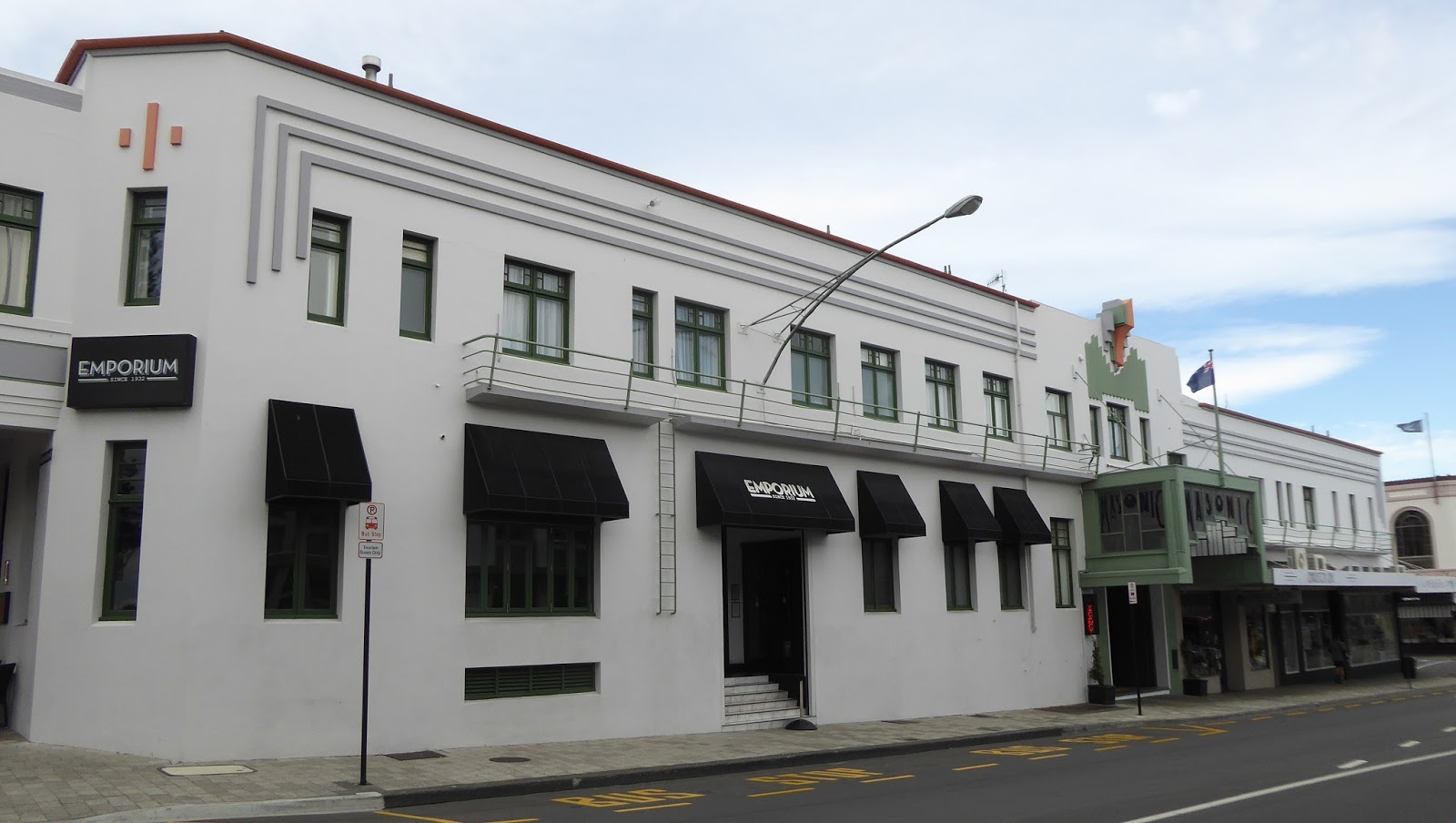
Being the early thirties, the architectural style was art deco, and that is how the town was rebuilt - a world away from the fancy stonework that killed so many people when it crumbled in the quake. It has made Napier a real destination for art deco fans.

Napier
The quake also presented another opportunity for Napier to improve itself, as it raised the ground level elements slightly, including the seabed near the shoreline, permanently pushing the sea further out.  The town took advantage of this to build a new Marine Parade with gardens and other facilities.

Napier
As someone who likes art deco, I enjoyed being in Napier. You can take guided tours around the town, or do as we did, which was to buy the tour route and notes from the Art Deco Centre.


Napier

Napier
Napier


Napier
Napier


Napier

Napier
Napier


Napier


Napier