Welcome to our travel blog. We are Tabitha and Nic. In 2011 we 'retired' in our early 40s and set off to travel the world. We spent our first year in South America and have been lucky enough to make two trips to Antarctica.

Our blog is a record of our travels, thoughts and experiences. It is not a guide book, but we do include some tips and information, so we hope that you may find it useful if you are planning to visit somewhere we have been. Or you may just find it interesting as a bit of armchair travel.


Showing posts with label sake. Show all posts

Saturday, May 7, 2016

A walk down 'Sake Brewery Street' and a beer festival

Saijo, Hiroshima
Hiroshima isn't only known for its dramatic past and lousy baseball team; the area also has the accolade of being known as Sake Town. There are a couple of towns near to the city that are very well known for their excellent sake, and we took a train out to one of them.

Saijo, Hiroshima
Saijo is only a small town, but it is home to eight sake breweries, seven of which are in one street, Sakagura-dori, or Sake Brewery Street. We visited the breweries that were open, and tried plenty of different sakes. Most weren't really our favourites, (we seem to like those from the Kyoto area best of those we tried,) but they were definitely good quality, and are regular prize winners.

Saijo, Hiroshima
The secret is apparently in the water. The quality of the water is an essential factor for good sake, and you will generally find breweries exist only where the water is good. The water here is known as miracle water, and is called shikomi-mizu, a medium hard type that is perfect for sake.

Saijo, Hiroshima
It varies slightly at the different points along the street where the breweries are, so the sakes are a little different too. The breweries make efforts to preserve the local forests and mountains through which the waters come to develop their sought after qualities.

Saijo, Hiroshima
Some of the breweries have excellent buildings too, and it is lovely to see all of the tall brick chimneys marking the sites. It would be great to be here in October for the sake festival.

Matsuo Shrine, Saijo, Hiroshima
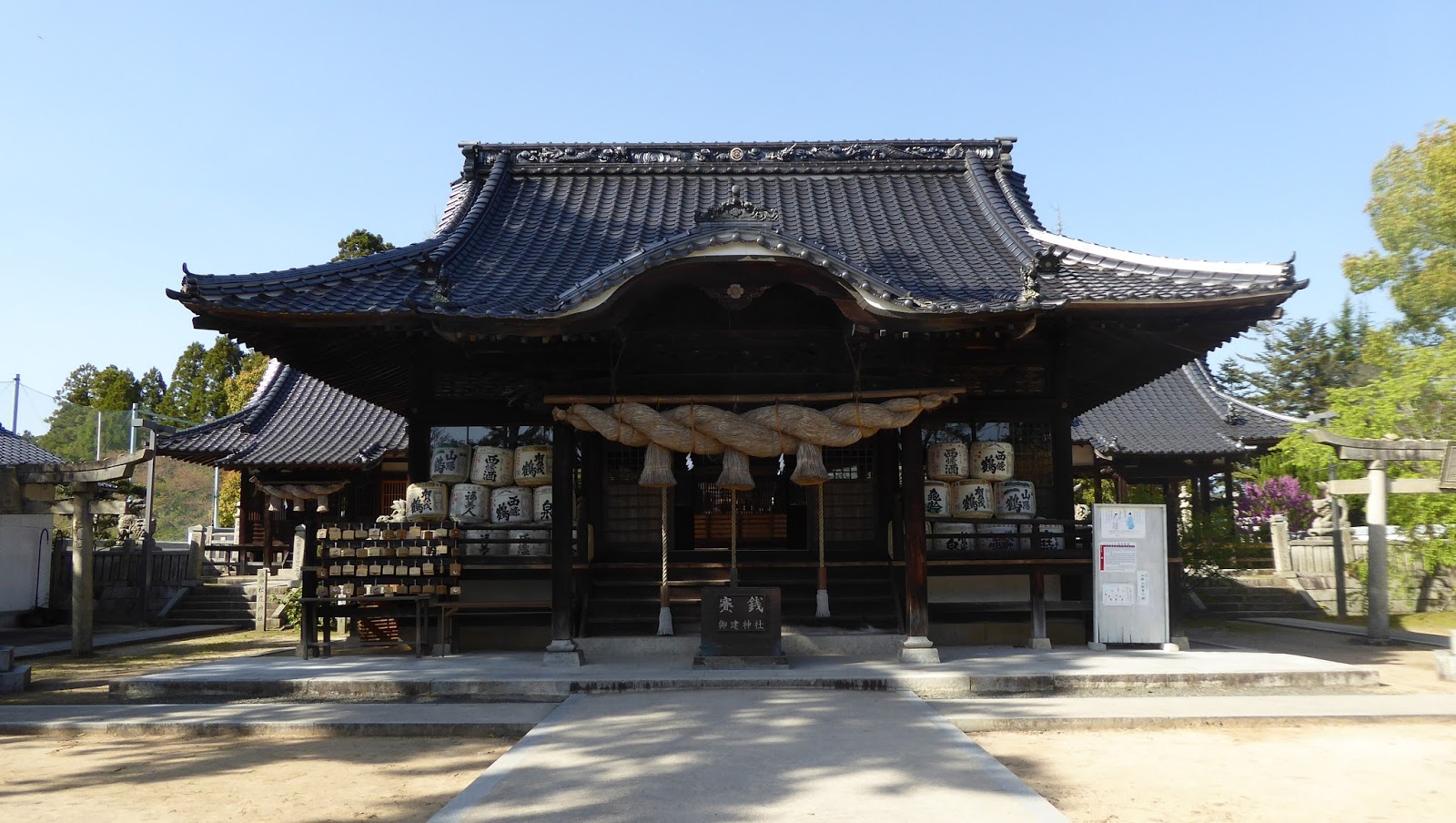
And of course, in a town where sake is so important, there has to be a shrine dedicated to the stuff, the Matsuo Shrine.


Matsuo Shrine, Saijo, Hiroshima

Matsuo Shrine, Saijo, Hiroshima
 
Hiroshima Beer Festival
Back in Hiroshima city, we had an opportunity to partake of alcohol of another kind, as we happened to be in town for the Hiroshima beer festival. We were pretty impressed with some elf the Japanese brews on offer, taking a particular liking to a smoky beer from Fujizakura Heights.


Hiroshima Beer Festival

Hiroshima Beer Festival


Hiroshima Beer Festival


Thursday, May 5, 2016

Granville Island and the Magical Duck Island (Throwback post)

Granville Island, Vancouver
Granville Island is worth a visit while in Vancouver, especially if you want to buy any of the local arts and crafts.  The island is home to various studios and shops covering a broad range of specialities.


Granville Island, Vancouver

It is also a good place for food and drink, as there is a great little wine shop here, and a fairly well stocked food market.  It also has the excellent Edible Canada bar and restaurant and the Granville Island Brewing Company.  The latter is not licensed to sell alcohol, only to let you buy a few small tasters, but it is a good opportunity to try out those in the range that you don't often see in the bars

Granville Island, Vancouver
Our other alcohol tasting on Granville Island was in the form of sake, at the Artisan Sake Maker.  Not what we had expected to find here, but then we hadn't realised that Vancouver had such a big Asian population.  Masa Shiroki set up his sake winery in January 2007, fermenting his own rice and bottling it by hand.  Rather than sticking to the usual Japanese process of making one batch per year, he makes small batches throughout the seasons, to create different tastes that will go with the more varied North American foods, and so is better suited to the local market.
 

He uses premium Junmai rice, originally imported from Japan, but now grown by him in British Columbia. The quality of the sake depends on how much the grains of rice are polished down.  The more that is taken off the outside, the better the sake.
Magical Duck Island, Vancouver

We did a tasting of a few different styles, with lots of helpful information from the woman serving us.  We liked them very much, and would certainly recommend giving them a go.


Granville Island, Vancouver
We also ventured out to the Richmond Park night market. The market bit was rubbish in our opinion, as it was just a lot of mass produced that, but it did have a lot of food stalls, some of which were quite interesting.


Magical Duck Island, Vancouver
Nic started practising for Asia, with the Bakudanyaki, an interesting, but apparently enjoyable mix of seafood, cabbage a rice cake.


Magical Duck Island, Vancouver
I opted to try the Dragon's Beard Candy, a kind of filled candyfloss. Not as adventurous admittedly, but it was fascinating to watch them make it.


Magical Duck Island, Vancouver
The other notable thing about the market was the array of ducks around. They were doing this magical duck thing that had been trending around Asia, so they had the big duck, and a selection of smaller painted ones.


Magical Duck Island, Vancouver
There was some kind of gamecard that you could do, which involved getting stamps from different stalls. I guess that's one way to boost sales.


Magical Duck Island, Vancouver

Magical Duck Island, Vancouver
 

Wednesday, April 20, 2016

Kanpai! in Kobe and Nara

Nihonshu in Kobe
Japan doesn't really have bars or pubs like we do in the UK. There are some, typically run by and aimed the British, Irish and Australians, but in the main, the bars are small - sometimes tiny.

It can be a worrying thing going in, because you generally can't see inside, so you never know what you're walking in to. Will it be empty? Will it be filled with those austere looking black suited businessmen, who clearly don't want you bulky foreigners taking up the tiny space there is? Will there be a grumpy bartender, who will pretend he doesn't understand what you are asking for?

Nihonshu in Kobe
All of those things can be pretty off-putting, but you shouldn't let that stop you, because if you go in and that is what you get, you can always leave, but if you don't go in at all, you are likely to miss out on some great evenings.

We were nervous about walking in, and I must admit we favoured places where we could get a hint of what might be hiding behind the curtain. But we were glad we did, as we almost invariably found people welcoming and friendly, and we had some lovely experiences.


Shochu in Kobe
In Kobe, we wandered around the town for a while before deciding on a place down a back street that had lots of brightly labelled shochu bottles in the window, and a warm looking light coming from inside.


Nihonshu in Kobe
When we got inside, we realised it was bigger that we'd thought, with a section out the back which soon filled up. But for now, it was just us, and we were welcomed by a lovely man who took great delight that we sat at the bar and wanted to try different types of nihonshu (sake).


Nihonshu in Nara
He spoke just enough English to describe the various types that he had, he listened to what we said we liked, and he helped us work our way through a good number of very individual, and very enjoyable nihonshu. We tended to order different ones, and taste each other's to increase the number we could try, and he added to that by regularly throwing in extra free tasters too.

Nihonshu in Nara
Not only did we get free drinks, we also ended up with free food. Two women had come and sat at the bar and started ordering a number of small dishes. they spoke to the barmen, and the next thing we knew, we were getting tasters of each thing winging its way to us too. They seemed to like the idea of us trying the drinks, and wanted us to try the foods too. We had a lovely evening.

Nihonshu in Nara
In Nara, we tried out a few bars. The first was a small standing bar that had been recommended in various guides, but we found difficult to find. In the end, two very nice ladies helped us out. They couldn't direct us, so they actually walked us to the bar, which was about ten minutes away.

Nihonshu in Nara
Once inside, we slightly got the impression that the owner was maybe slightly fed up with foreigners coming in and not really caring about the drink. However when, instead of just asking for sake, we asked for particular types of nihonshu, he perked up and was quite friendly.


Nihonshu in Nara
Shortly afterwards, a guy from the USA came in, knowing nothing about them, and he reverted to being unhelpful and his English ability seemed to decline. We got to talking with the newcomer, and I gave him a brief explanation of the different types and what they were called etc. when I finished, the barman, and the two Japanese customers at the bar, all gave me a round of applause. Things lightened up again after that, and it was clear that a little effort to know about the drink goes a very long way.


Nihonshu in Nara
In another Nara bar, the lady serving us was equally happy that we knew about the nihonshu, and drew us a little penguin picture. In a third place, which was more of a shop with some seats, we were sat outside, but I went inside to order the drinks each time from a lady who was friendly, but spoke no English at all. We managed OK though, and with my few words and names of types and her willingness to help, we got some lovely nihonshu, with a Junmai Daiginjo that I especially liked.


Nihonshu in Nara
During my efforts at ordering, I had been watched by a Japanese couple inside, who were clearly amused, but seemed also to like the fact that I was trying and knew what I wanted. We exchanged a few grins. Then while we were outside, the couple left. As they did so, he handed me a bag, smiled, and was gone. When I looked in the bag there was a full bottle of the Junmai Daiginjo that I had been drinking. How nice is that!


Our gift
These were far from our only great experiences here, but they are a few that particularly stuck in our minds, and made us glad that we both took the chance to walk in a place, and had bothered to find out a bit about the nihonshu first.

Oh, and if you are wondering about the title, Kanpai means Cheers!


Saturday, April 16, 2016

Sake and shochu


I know that this is a travel blog, but it is also our journal, and given how much of it we drank while we were in Japan, I don't think that I could not write a post about sake and shochu.

We had a brief introduction to sake when we were in Vancouver (this blog will get there in the Throwback posts soon), but like most people we knew very little about it. And we knew nothing at all about shochu.

The name sake is itself a bit of an error, as sake just means alcohol. Everyone knows that it is generally used to refer to the Japanese rice wine, but if we want to be correct, we should refer to it as nihonshu. Doing so is almost guaranteed to get you a broad smile from your Japanese bartender.

The other thing bound to get you a smile - and quite possibly a free drink or two - is knowing a bit about the different types. I guess so many of us foreigners just come in and ask for sake, that they find it quite refreshing if you've bothered to learn a bit about it and know the names to ask for.

Nihonshu is made by fermenting rice that has first been polished to remove the outer part. The more the grain is polished, the more starch is removed, and the purer- and more expensive - the resulting drink is. The top level, with at least fifty per cent of the grain polished away, is Daiginjo;the next, with forty percent gone, is Ginjo, and then the more basic, with just thirty percent discarded, is often just cared nihonshu, or honjozo.

Then there is a question of whether they add any distilled (or brewers) alcohol during the process. This can be a good thing, and we had some very nice ones where it was included, but often, it is added to lower quality wines to pack it out, so generally it is not as sought after. If the wine is pure, with no added alcohol, the description will include the word Junmai.

Of course, being me, I liked the most expensive one best, the Junmai Daiginjo. Nic however, took quite a liking to the Nigorizake, which is cloudy, because they do not filter out all of the rice sediment.

Then there is Namazake, which is unpasteurized, so has a very short shelf life and must be kept in the fridge, and Tamazake, which has been aged in wood, so has a stronger, smokier flavour.

It can be sweeter (amazake) or dry, it can be light and fresh, or aged and full bodied, and it can be served cold or hot. The style of the drink varies depending on where in Japan it was made, and even on the season that it is intended to be drunk during.

Connoisseurs will tell you that there are only certain types to drink, but in reality, like most drinks, it is just a question of what you personally prefer. We enjoyed trying as many as possible.

Then there is shock.  In a Japanese bar, the nihonshu will normally be in the fridge, so when you see all of the bottles lined up the shelf, they are usually shochu. And in Japan, shochu is just as, if not more, popular than nihonshu.

Shochu is a distilled spirit, usually only about 25% strength, that can be made from a variety of products. Some of the most popular are rice, barley and sweet potato, but we tried one made from brown sugar, and there are a number of other varieties.

It can be drunk neat, with ice, with water, or it can be the base of a pretty good cocktail. If you're in Japan, give it a go.

Sunday, February 21, 2016

Kyoto - Castle, Gardens and Sake

Nijo-jo, Kyoto
Our first bit of sightseeing in Kyoto was the castle, Nijo-jo, which was originally built in 1603 by Ieyasa, the first Tokugawa Shogun, and subsequently added to. The late 1700s saw the destruction of both the original tower and the Honmaru Palace, the latter of which was replaced by bringing over part of the Imperial Palace at Katsura.


Nijo-jo, Kyoto
In 1867, Yoshinobu, the fifteenth Shogun, returned sovereignty to the Emperor in a ceremonly held here at the castle, and it became an Imperial Palace.

Cherry blossom, Kyoto
The Nimomaru Palace has many impressive wall paintings by members of the Kano school, although they have been replaced with replicas, with the originals now moved to the gallery for conservation. The castle was donated to the city of Kyoto in 1939 and renamed Nijo-jo.

Cherry blossom, Kyoto
After the castle, we stopped for something to eat in Cafe Bibliotic Hello. It was a great cafe, and we decided to try the day's special of wagyu; we didn't regret it. We were to try more wagyu later, when we got to Kobe, and I will post about the beef there, but this was a relatively cheap wagyu, and yet still tasted delicious. Pity they didn't have it on the menu all the time.

Cherry blossom, Kyoto
We couldn't linger too long though, as we were off to the Imperial Palace Gardens. The buildings of the Palace are hidden away behind large walls. It is possible to do a tour inside the walls, but you still don't get inside the buildings, so we didn't bother. We were here to see the gardens, in search of the cherry blossom.


As well as the normal trees, they have a few nice weeping cherry trees in the gardens here, which do look quite pretty. But we were soon feeling quite frustrated, as there were endless people posing in front of the trees, making it impossible to take an unobstructed shot.


Cherry blossom, Kyoto
Having done our sightseeing for the day, our plan was to head to the nearby Sake Bar Yoramu, run by an Israeli man who is something of an expert. We had looked for it earlier. But not found it, so we left plenty of time to get there, as we knew that it was, like many Japanese bars, a tiny place and can get very busy.

Cherry blossom, Kyoto
In fact, we found it quite quickly, so arrived just as it opened. As it turned out, it was very quiet all night, which was great, as it meant that we could monopolise the owner and learn more about the sake. I'll do a separate post about sake at some point, rather than talk about it in detail here.
The owner was certainly something of a sake snob, refusing to stock or drink anything other than premium, small batch sake, so his stuff wasn't cheap, but it was excellent. We tried a good number, learned a bit about the types that we prefer, and blew a few sake myths.

Sake Bar Yoramu, Kyoto
In particular, we discovered that, if it is of good enough quality, sake can be kept and aged. We tried one from a brewery called Kidoizuma, called AFS 1976, that was 49 years old. It is very hard to get hold of now, but was delicious. Like most drinks, aging changes the nature of the drink, and this becomes more reminiscent of a sherry than normal sake, but it certainly shows that, in the right conditions, sake can be aged.

Saturday, February 20, 2016

Arriving in Kyoto and visiting the Nishiki Market

We took the incredibly cheap local train from Osaka to Kyoto, and then promptly walked off in the wrong direction - again - although this time because our hostel was shown in the wrong place on Google maps. In common with much of Asia, Japan has lots of little lanes, that aren't properly marked on maps and often don't have street names on them, so they can make it tricky to find your way around. Anyway, we spotted a postman, which I always think is the best person to ask for an address, and with no shared language, but a lot of pointing and gesturing, he was able to set us in the right direction.

Of course by the time that we got to the hostel, we had missed our opportunity to check in, so headed out in search of some food. Having already walked around unnecessarily, we didn't feel like lugging the packs too far, so we're happy to settle for whatever was nearby. We drew the line at McDonalds, but found a little Japanese fast food place instead.

It took us a moment to work out what to do. There is a machine near the door where you order and pay for your food, and it spits you out two little tickets for each item. You give one of each these to the staff, and sit down, and they bring everything to you. This is where I first discovered a liking for tonkatsu, which is really just pork in breadcrumbs, but somehow tastes so much better. Perhaps it's the panko crumbs, or how they cook it, I don't know, but I like it.

Now this place wasn't the best for tonkatsu, we had some really excellent ones in some proper restaurants, but for a fast food place, the quality was actually very good. And you can certainly fill up, especially if you like the extras. Most things come as a set meal, with the usual shredded cabbage and unlimited rice accompaniments, but also a bowl of miso soup, pickles and something a bit like a not so tasty panacotta. I never worked out exactly what that was, but except for one place in Nara, where it was very nice, I wasn't keen.

Hunger satisfied, and the hostel now open, we went to check in. Our hostel - more of a guesthouse really - was run by a lovely Japanese couple in what used to be their own home. It was our first, but certainly not our last, experience of sleeping on Japanese futons. They are actually far more comfortable that you'd expect - and much more so than some of the rock hard beds we had in China. It is only a thin mattress on the floor, but the floor is covered in tatami mats which are themselves quite cushioned, so not too bad at all. The worst thing for me, with my bad knees, was getting up and down from the floor.

We decided not to head straight out for temples on our first day, and instead went to the shopping area and the Nishiki Market. The market is quite interesting to wander through, looking at all of the different foods on offer. I tried a selection of gel like cordials, and took quite a liking to yuzu, a sort of sweeter lemon flavour. I also liked seeing, but didn't buy, the doughnuts decorated as animals.

Nic tried a few fishy things, although he passed on the tako tamago, the tiny octopus with a quail egg stuffed into its head. Neither did he choose to sample the fish eyes.

During our ten days in Kyoto, we did make a couple of souvenir purchases at the market, both of which were connected to food and drink. We decided to treat ourselves to a nice pair of chopsticks each, and spent ages in a shop with thousands of designs. We eventually agreed on some twisted wooden ones.

We also bought a nice little pottery sake set, so then of course, we had to buy a bottle of sake to christen it.