Welcome to our travel blog. We are Tabitha and Nic. In 2011 we 'retired' in our early 40s and set off to travel the world. We spent our first year in South America and have been lucky enough to make two trips to Antarctica.

Our blog is a record of our travels, thoughts and experiences. It is not a guide book, but we do include some tips and information, so we hope that you may find it useful if you are planning to visit somewhere we have been. Or you may just find it interesting as a bit of armchair travel.


Showing posts with label Liverpool. Show all posts

Wednesday, February 22, 2017

Liverpool - Two cathedrals and a Slavery Museum

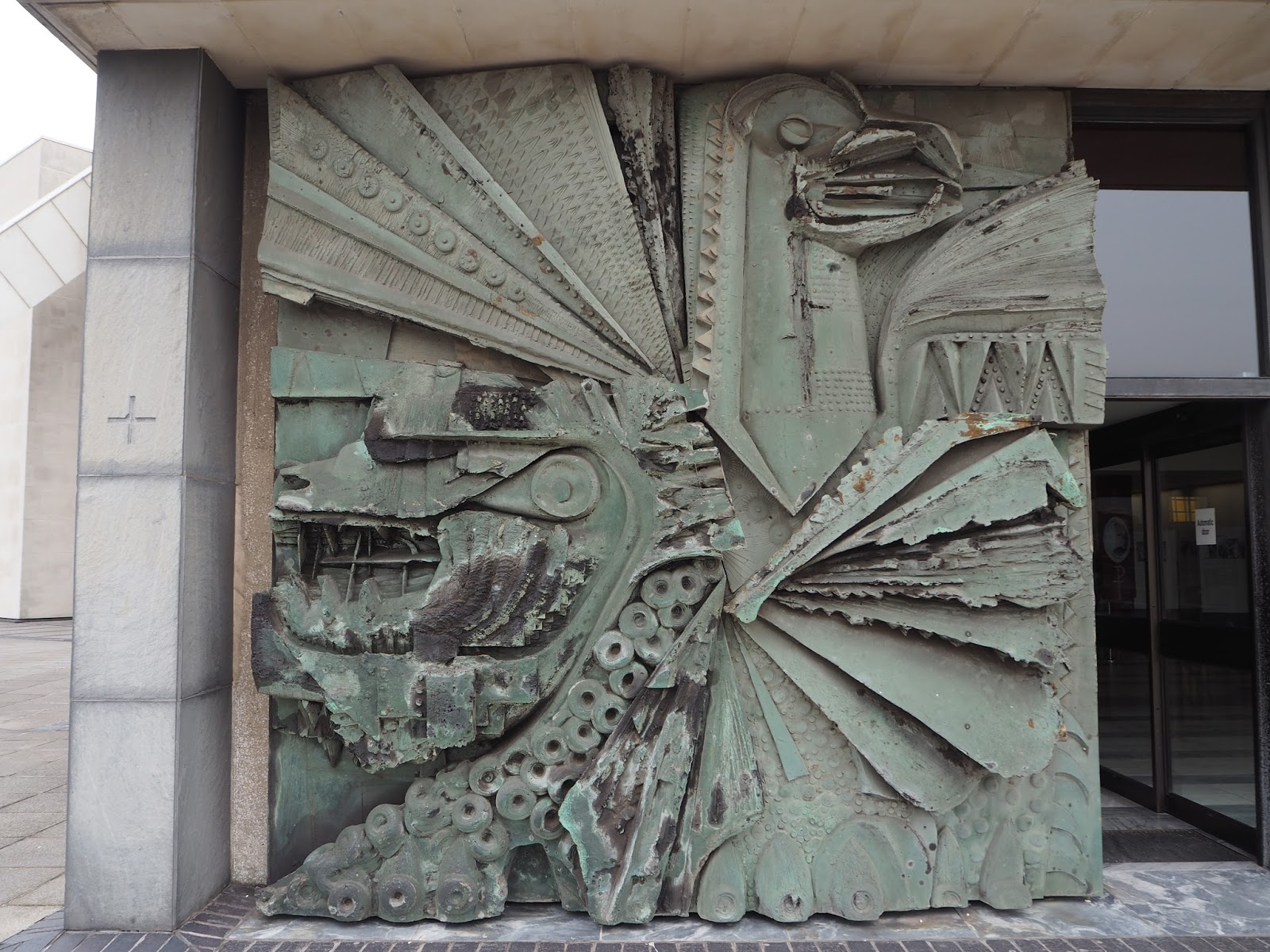
Metropolitan Cathedral, Liverpool
We visited two very different cathedrals in Liverpool, the first of which was the Metropolitan Cathedral. This was very much a case of third time lucky.


They first tried to build it in 1850, on a different site, and in a gothic style by Edward Welby Pugin, son of Augustus Pugin, who designed the interior of the Palace or Westminster. This fell through due to lack of funds.


Lutyens Crypt, Metropolitan Cathedral, Liverpool

They tried again in 1933, with Sir Edwin Lutyens. He had a grand design, but although the crypt was built, WWII intervened, and the rest of the plans were abandoned.


You can normally visit the crypt for a fee, but it was mostly closed off when we were there, we could just dip in to one of the four rooms.

Metropolitan Cathedral, Liverpool


The cathedral was finally finished in 1967, to a design by Frederick Gibberd, and is rather more modern that the those early designs. The inside continues the contemporary feel, with Sean Rice's fourteen 'Way of the Cross' bronzes, and other works.
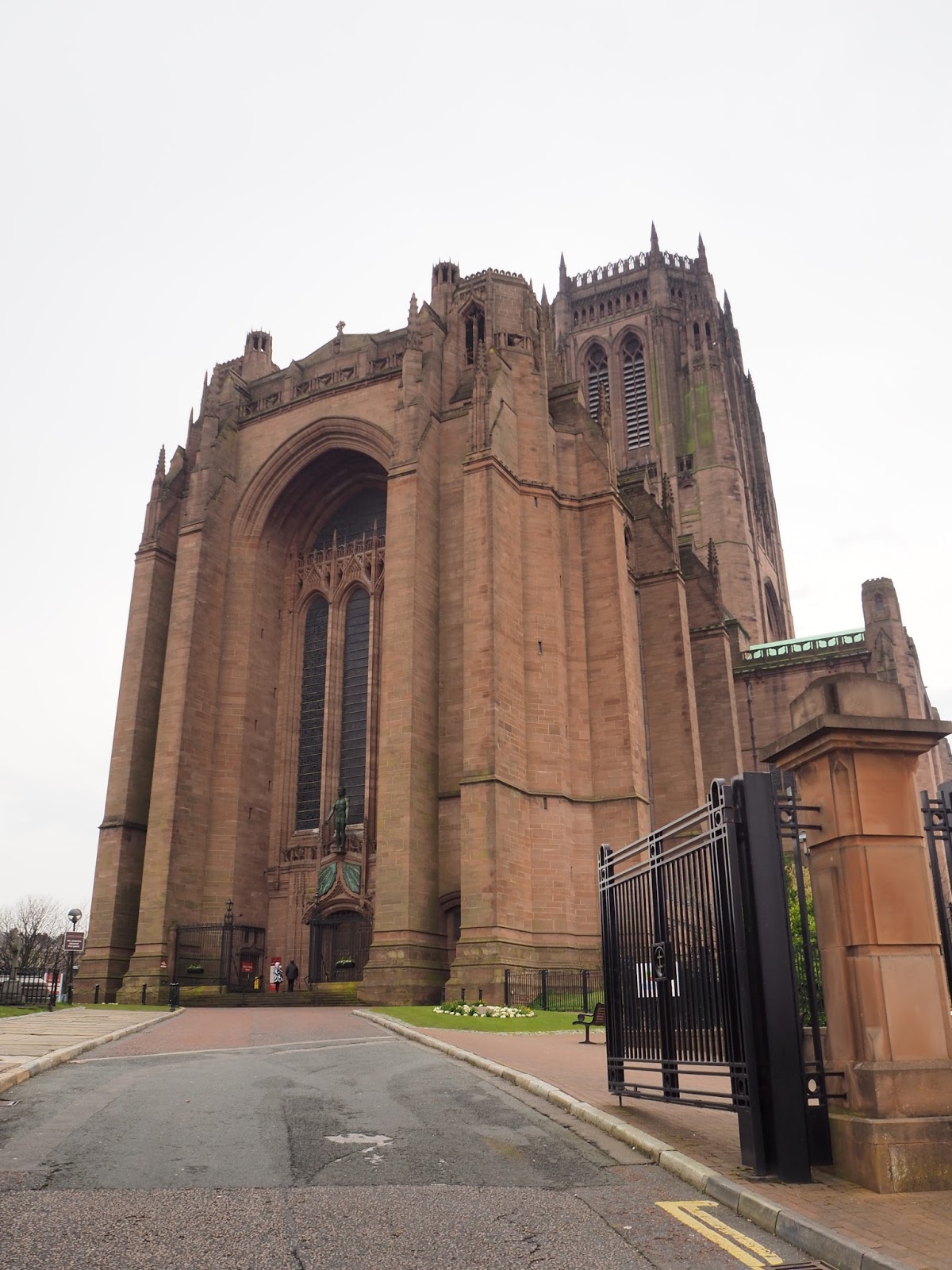

Liverpool Cathedral, Liverpool


The other one was the Liverpool Cathedral, which was in fact completed in 1978, later than the Metropolitan Cathedral, after taking 74 years to build.


Despite its newness, it looks far more traditional in style, although it combines that nicely with more modern touches both inside and out.


It is the largest cathedral in the UK, and the fifth largest in the world, with around 1700m² of stained glass. It was designed by Giles Gilbert Scott, who was only 22 years old at the time, and he was also one of the two architects, the other being George Bodley.

Liverpool Cathedral, Liverpool


The cathedral has some modern artwork inside, including pieces by five members of the Royal Academy of Art. Something that I understand, but find slightly incongruous, was the large shop and café that are situated right in the midst of the place.


Liverpool Cathedral café and shop, Liverpool
I know that visitors want these things, and as the cathedral is free to enter, they need them to make money for the upkeep, but do they have to be so obtrusive? I'm not especially familiar with the bible, but I seem to recall something about Jesus throwing the traders out of the temple. I am sure that there is a good argument for having it inside, perhaps to encourage people to spend longer 'with God', (or perhaps just to spend more money,) but for me, it made it feel a bit too commercialised, and less like the religious sanctuary that I associate with churches.

Liverpool Cathedral, Liverpool


They also have an interesting motto of "Liverpool Cathedral is a safe place to do risky things in Christ's service". I'm not sure quite what risky goings-on take place here, but it sounds more interesting than I generally find most church activities to be!


So of the two, which did I prefer? Well. despite the shop and restaurant, I liked the Liverpool Cathedral. I liked the more traditional shape and materials, and thought they combined really well with the more modern touches.

(More photos under the rest of the post)


Moving on from the cathedrals, to a subject that is the direct opposite of the sort of benevolent and kind behaviour that you would expect from a church. I'm talking here about our visit to the International Slavery Museum. If you're wondering why such a thing would be here, well of course many of the slave ships docked in Liverpool, so there is a clear connection to the historical events that it looks at.

The Museum had some really good aspects, with a strong focus on West African slavery, the history and culture of the people enslaved, the terrible Middle Passage voyage, and also the legacy of slavery. That last part was probably one of the more interesting elements, and it is a bit of a shame that they didn't take it even further, as it is an important part of understanding both overt racism, and in particular, the more complex issues of institutionalised racism, prejudice, and white privilege.

The last of those is a much used term these days, but very few people really understand what it means, seeing it as a suggestion that white people are better off financially and have an easy life, which of course many white people do not. But in fact the terms refers more to the societal disadvantages that black people face, that come from our history of regarding them as inferior, as possessions, and as dangerous, which was fundamental part of why we once considered slavery acceptable.

That kind of ingrained 'knowledge' has seeped into black and white people over the years, and it will take real effort to dislodge it. Most people know that slavery was wrong, and know - even those that are actually racist and don't agree with it - that black people should have equal rights, but the museum could have done more to widen that understanding to those aspects that are less obvious.

The Black Lives Matter movement is a classic example. It is a contentious issue, largely because many white people don't understand what it means. It isn't saying that black lives matter more, or that white lives don't matter. What it is saying is that, at present, too many people seem to regard black lives as less important, just as they did when they decided black people could be used as slaves, or during times of segregation.

And let's face it, inn the USA especially, they aren't wrong.  There has been a raft cases there of pretty atrocious killings of black people by the public - and more importantly by police - which have been defended because the killer 'felt afraid' of the person 'because they were black'. Not for any other reason. In those cases it seems pretty clear that, if the person had been white, they wouldn't have been afraid, they would have treated the white person more circumspectly, and they absolutely would not have just shot them.

That kind of evidence shows why we need reminding that Black Lives Matter too. After all, it is only once this movement started up that it finally brought attention to these cases. Our 'white privilege' is the difference between a white person generally seeing a police officer as someone to look to for help, and who will recognise us as an innocent victim, whereas a black person's experience is too often that they are stopped because they look suspicious, more likely to be assumed to be a criminal than a victim, and more likely to be shot.

White mothers don't have to school their sons in how to behave if you get stopped by the police - whereas is the USA especially, black mothers do. It is a privilege that we don't even know that we have, but black people certainly know that they don't! And whilst it is undoubtedly worse there, lets not pretend this is just the USA - we have some pretty dodgy sounding cases here in the UK too.

The other aspect that the museum touched on, especially in terms of places like Bangladesh, is modern day slavery, with sweat shops and forced labour, that is the awful truth behind far too many of our cheap clothes and other goods these days. Where it again could have done more, was in raising awareness of the issue of modern day slavery here in the UK.

Of course it is rather more discreet these days, but whether it be women trapped into the sex trade, people held in domestic service, or gangs of men being forced into working as labourers or fruit pickers, it is here, and in 2017, in a supposedly civilised country, that's a pretty horrendous thought.

That said, they are just areas where I felt more could be usefully covered, but I still think the museum was good, and it is worth visiting.

Lutyens Crypt, Metropolitan Cathedral, Liverpool

Metropolitan Cathedral, Liverpool

Metropolitan Cathedral, Liverpool

Metropolitan Cathedral, Liverpool


Metropolitan Cathedral, Liverpool

Metropolitan Cathedral, Liverpool

Metropolitan Cathedral, Liverpool


Metropolitan Cathedral, Liverpool


Liverpool Cathedral, Liverpool


Liverpool Cathedral, Liverpool

Liverpool Cathedral, Liverpool


Liverpool Cathedral, Liverpool


Saturday, February 18, 2017

Liverpool: Home of the Liver Birds - and the Lambanana!

The Beatles, Liverpool
Let me start by saying that yes, we went to Liverpool, but no, we didn't do a Beatles tour, and no, we didn't go into the Cavern Club. It isn't that we hate The Fab Four or anything, but we had no particular need to see where they lived and the Cavern Club isn't the original one, so just doesn't feel the same.

We did walk down Penny Lane - simply because it was right next to where we were staying in our Airbnb, and we did take a photo of a statue of them.


Ronald Wycherley, Liverpool

Talking of The Beatles, we also took a photo of a statue of Ronald Wycherley, although I suspect he is rather better known by his stage name.

What is the connection? Well in 1960, The Silver Beetles, as they were then known, auditioned to be the backing group for Ronald. They got the job too, but only if they dumped Stuart Sutcliffe; they refused and turned it down.

I'm guessing that they weren't too worried about that, as The Beatles had their first hit a couple of years later.

So, if we didn't spend our time on The Beatles, what did we do? Well for one thing, Nic was also quite happy to watch a Liverpool match in a pub here, where the other supporters actually had Liverpool accents!


Port of Liverpool Building, Liverpool


But aside form that, we pottered around some of the sights. Liverpool is quite a nice city just to wander about in, as it has a good variety of architecture, including lots of Georgian buildings.


Albert Docks, Liverpool


One fairly well known sight in Liverpool, is the Albert Docks; I never watched it myself, but the docks were made famous by the programme This Morning, and the floating weather map.


Albert Docks, Liverpool
It is apparently the largest group of Grade I listed buildings in the country. The docks were built in 1839, and where most docks were built of highly flammable wood, this was the first enclosed dock warehouse in the world, that was non-combustible.

The docks closed in 1972, but were repurposed and reopened in 1988. These days it is largely touristy stuff, but we did go in the International Museum of Slavery. I'll do a separate post on that, but it is worth a visit.


Piermaster's House, Liverpool
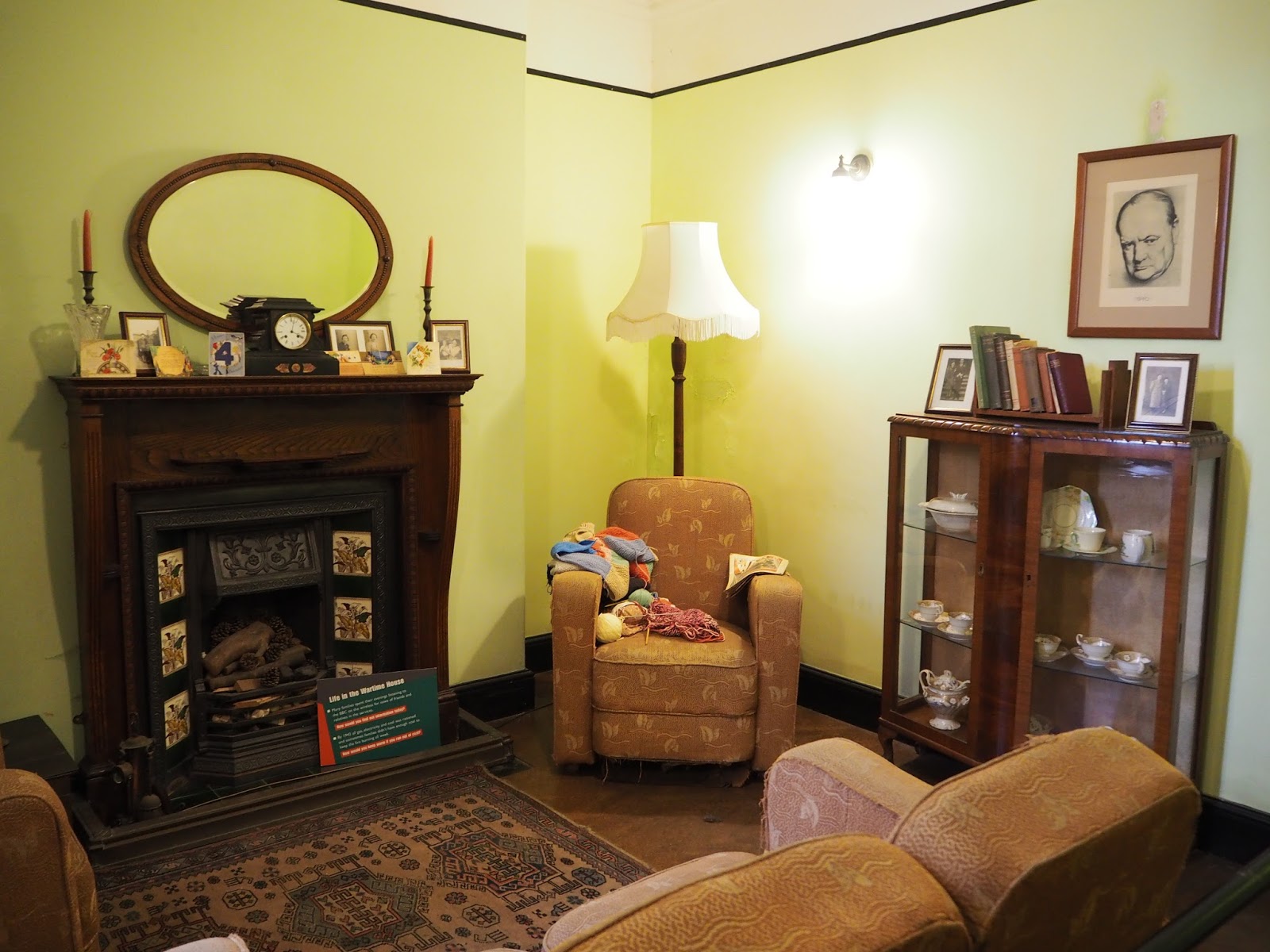
Liverpool was badly hit during WWII, being the second most bombed city after London. One house that survived, was the Piermaster's House.

Built in 1852, and the only one of the four houses that remains, it would have been the home of the Piermaster and his family, so that he was on site to deal with ships coming and going at all hours.
The house was restored back to its WWII days in 2003, and makes an interesting place to pop in to while you're here.


Lambanana, Liverpool

Further along the riverfront, we came across some of the Lambananas. No, I'm not making it up, they really are called that - when you look at the pictures, you can see why. These statues are smaller versions of the original yellow Superlambanana created by Japanese artist Taro Chiezo in 1998.


Lambanana, Liverpool


It was apparently "intended as a fusion of thoughts about the future and the past at a time when Liverpool was leaving behind a rather troubled recent history to become a centre of excellence for medical science and hi-tech engineering."

Don't ask me why that should be achieved by a lamb with a banana shaped tail, but the Liverpudlians took to it, and now there are little ones too.

Royal Liver Building, Liverpool


And of course the riverfront is where you find two more traditional symbols of the city, the Ferry across the Mersey, and the Liver birds on top of the Royal Liver Building.

These particular 18 foot tall birds, called Bella and Bertie, were made in 1911 by Carl Bernard Bartels. One faces the city and the other the river, and legend says that they protect the people of the city and those coming into port respectively.

Of course the Liver Bird is much older than these 1911 ones. They actually go back to a unique seal that was created for 'signing' documents after Henry III allowed the city to be self governing in 1229.


Liver bird, Royal Liver Building, Liverpool

Of course at some stage, we needed to stop for some refreshments, and one of the places that we happened upon, was a nice bar called Jenever, which specialised in gins. The guy there was great, and helped us work our way through a decent number, before we felt we really ought to move on, rather than just spend the rest of the day here. I know, that doesn't sound like us at all, does it?

While I'm on the subject of food and drink, we tried out a few places, and I'll just mention a couple of the ones that we liked. We found a great little cocktail bar at number 48 Berry Street, which is called Berry and Rye. This is one of those places that doesn't have a name, or any indication from the outside that it is a bar, so you have to know it is there, and even then, you feel a little bit anxious as you walk in, pushing past the heavy curtain just inside the door, just in case you've got the wrong place!


Sailors' Gate
Rather easier to find, were East Avenue Bakehouse on Bold Street, which was good food, and gave us a free loaf of bread when we left, and Salt House Tapas, which is by the Sailors' Home Gates on Paradise Street.

The gates, which were made in 1850 by Henry Pooley, used to be at the entrance to the old Sailors' Mission, which was nearby, but were at some stage moved down to the Midlands. They were brought back to Liverpool in 2011. They are said to be the first architectural piece to show the famous liver bird.

Gents' loos, Philharmonic Dining Rooms, Liverpool


Another place that I have to mention, which was find for a quick meal, but is more interesting for itself, is the Philharmonic Dining Rooms. the pub was built around 1900, and has some pretty lavish decoration, including some particularly impressive gents' loos.

Get a guy to make sure they are empty and pop in to take a look - I think the staff are quite used to that happening.


Oh, and one last thing. Ronald Wycherley was better known as Billy Fury, who had a number of hits in the 60s, with the best known probably being Halfway to Paradise.

Liverpool

Sailors' Gate

Albert Docks, Liverpool

Albert Docks, Liverpool


Jelly Bean art, Albert Docks, Liverpool


Albert Docks, Liverpool

Piermaster's House, Liverpool

Piermaster's House, Liverpool


Liverpool


Lambanana, Liverpool


Liverpool


Cunard Building, Liverpool

George's Dock Ventilation and Control Station, Liverpool

Liverpool


St Luke's Church, Liverpool