Welcome to our travel blog. We are Tabitha and Nic. In 2011 we 'retired' in our early 40s and set off to travel the world. We spent our first year in South America and have been lucky enough to make two trips to Antarctica.

Our blog is a record of our travels, thoughts and experiences. It is not a guide book, but we do include some tips and information, so we hope that you may find it useful if you are planning to visit somewhere we have been. Or you may just find it interesting as a bit of armchair travel.


Showing posts with label Geisha. Show all posts

Saturday, June 4, 2016

Tokyo: Senso-ji Temple and the Sanja Matsuri

Sensoji Temple, Tokyo
We timed our stay in Asakusa to hit the first two days of the Sanja Matsuri (festival) at the Sensoji Temple.


Sensoji Temple, Tokyo


We couldn't stay for the third day as that was when we had to go up to Nikko for the archery festival, but I think we got the feel of the event nonetheless.


Sensoji Temple, Tokyo
The Sanja Matsuri is held every year to celebrate the three founders of the Sensoji Temple, and attracts around two million visitors.
Sensoji Temple, Tokyo


The story goes that, in 628, two fishermen brothers, Hinokuma Hamanari and Hinokuma Takenari, fished a statue of the Kannon, the goddess of mercy, out of the Sumida River. They put it back, but it kept returning to them.

When the village chief, Hajino Nakamura, saw the statue, he recognised its importance, and converted his own house into a Buddhist temple to house it. The Sensoji Temple was completed in 645, making it the oldest temple in Tokyo.
Kaminarimon Gate, Sensoji Temple, Tokyo


The are other buildings on the grounds. The Shinto Asakusa Shrine, built in 1649 by Tokugawa Iemitsu, is next door, and there is a five story pagoda and a main hall, both of which are newer rebuilds after they were destroyed.

One of the most impressive elements is the outer gate, the Kaminarimon, or Thunder Gate, with its huge lanterns.


Nakamise-dori, Tokyo
The 200m walkway that leads from the Kaminarimon to the inner Hozomon, or Treasure House, Gate, is the Nakamise-dori, which is a centuries old shopping street. The little shops here sell a mix of good and tacky souvenirs, foods and other goods. They are worth having a look in - just not on the festival days!
Hozomon Gate, Sensoji Temple, Tokyo
Sensoji Temple, Tokyo

Sanja Matsuri, Sensoji Temple, Tokyo
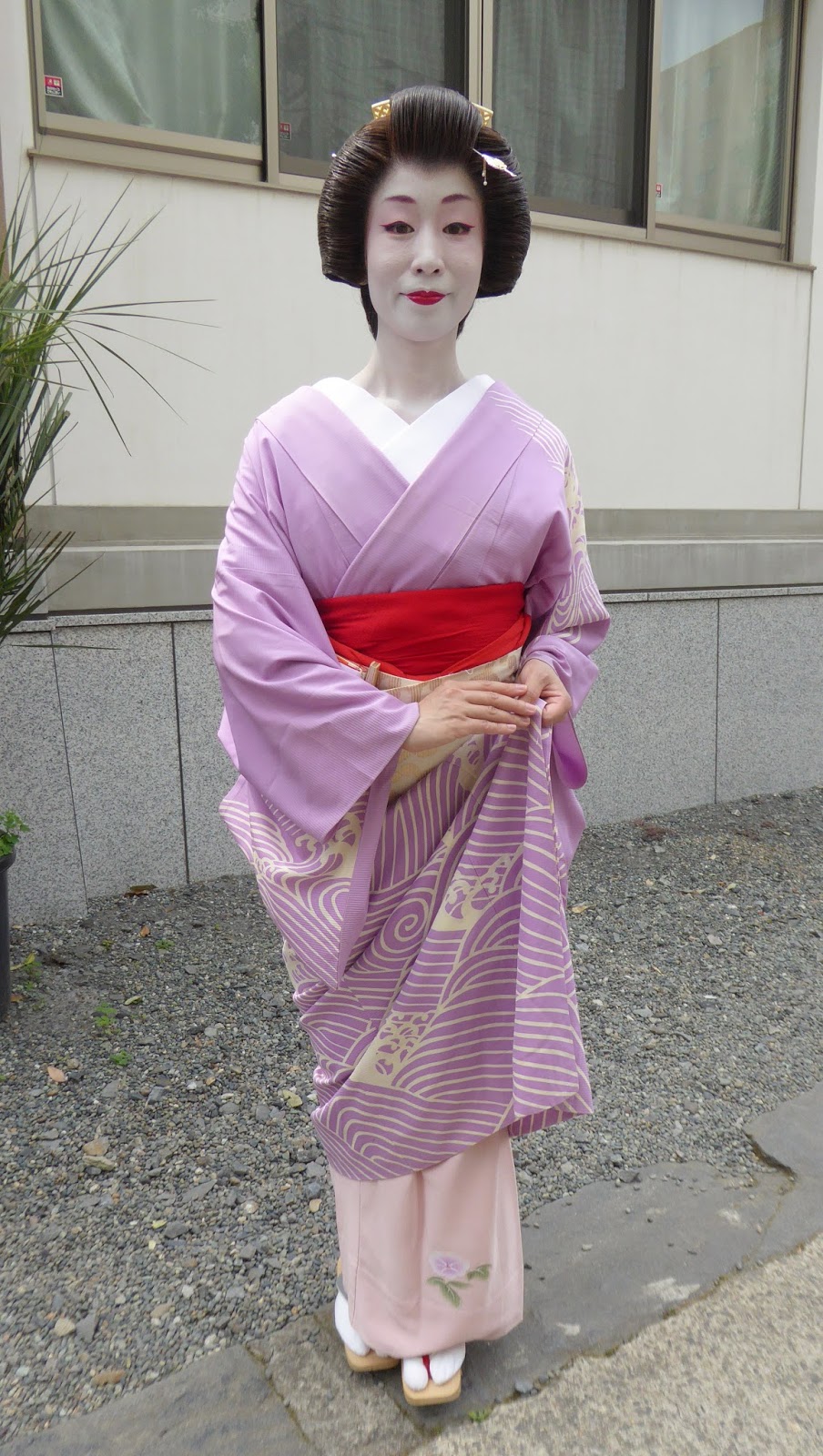
The first day of the festival, Friday, is the Daigyoretsu parade, with priests, officials and geisha, accompanied by musicians and dancers, who wear Edo period costumes.
Sanja Matsuri, Sensoji Temple, Tokyo

One of our favourite groups was the dancers dressed as cranes.

When the parade arrives at the temple, there is a Shinto ceremony in the Asakusa Shrine, where they pray for an abundant harvest and prosperity.

Sanja Matsuri, Sensoji Temple, Tokyo
The Binzasara Mai dance seeks the same, accompanied by musicians playing the binzasara, which is an instrument made from strips of bamboo.
Sanja Matsuri, Sensoji Temple, Tokyo

Sanja Matsuri, Sensoji Temple, Tokyo

Sanja Matsuri, Sensoji Temple, Tokyo


Sanja Matsuri, Sensoji Temple, Tokyo

Sanja Matsuri, Sensoji Temple, Tokyo


Sanja Matsuri, Sensoji Temple, Tokyo

Sanja Matsuri, Sensoji Temple, Tokyo


Sanja Matsuri, Sensoji Temple, Tokyo

Sanja Matsuri, Sensoji Temple, Tokyo


Sanja Matsuri, Sensoji Temple, Tokyo

Sanja Matsuri, Sensoji Temple, Tokyo

Sanja Matsuri, Sensoji Temple, Tokyo


Sanja Matsuri, Sensoji Temple, Tokyo


Sanja Matsuri, Sensoji Temple, Tokyo

Sanja Matsuri, Sensoji Temple, Tokyo


Sanja Matsuri, Sensoji Temple, Tokyo
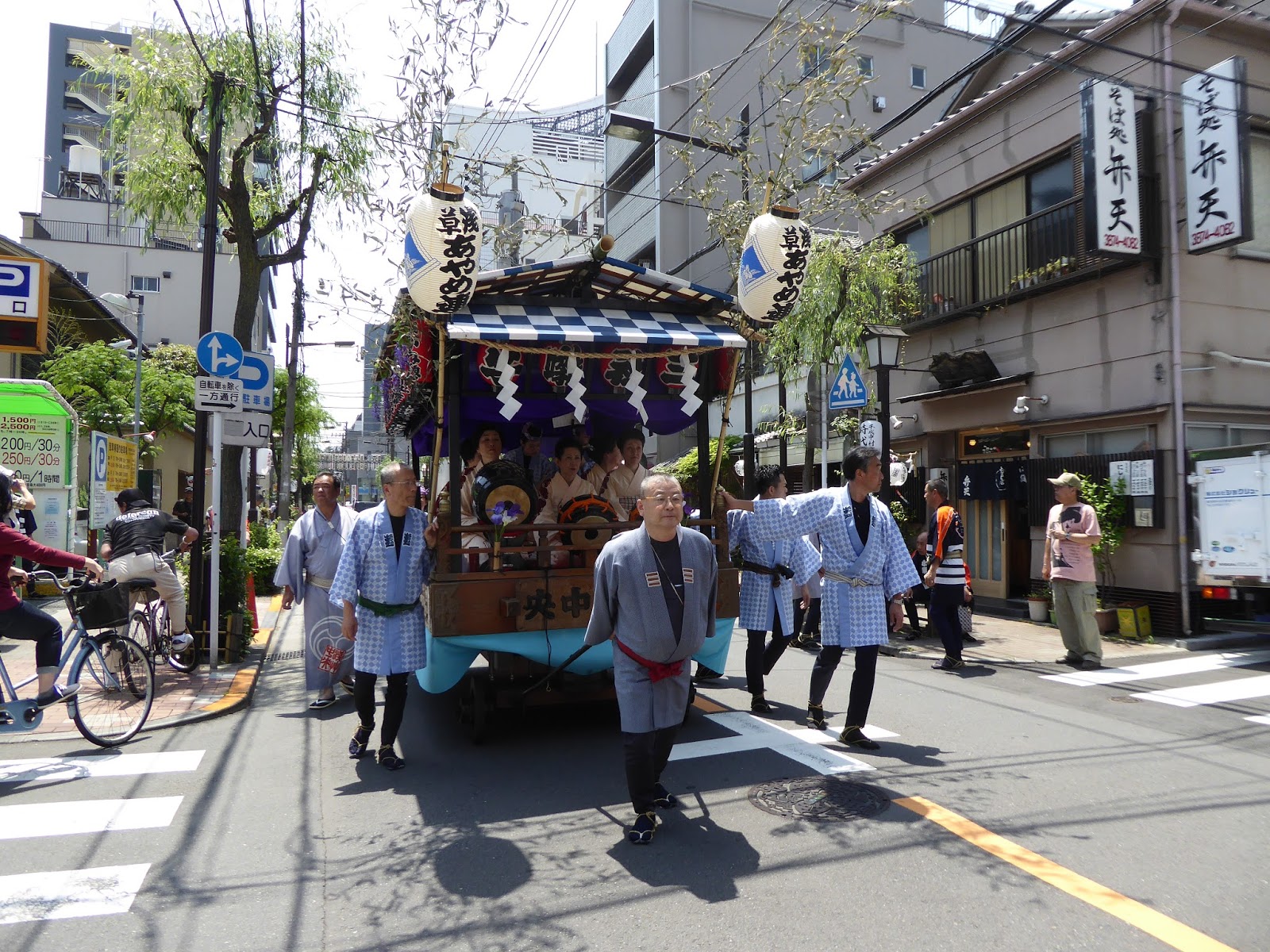
The second day is when the neighbourhood mikoshi, or portable shrines are carried to the temple to be blessed. This is quite crazy to watch. We found a nearby shrine, and saw them getting ready to take the mikoshi to Sensoji, and then carry it in.

Sanja Matsuri, Sensoji Temple, Tokyo

The shrines may be portable, but they are still pretty heavy, and it takes quite a few of them to carry it. Just as well it is such a popular thing to do - there are a lot of volunteers. Some also have shrines for ladies to carry, and even mini shrines for the kids.

Around a hundred shrines are brought to the temple, and it is great to see them all arrive. If carrying them isn't enough, they also will jolt the shrine up and down every so often, as doing so is said to intensify the power of its Gods.

Sanja Matsuri, Sensoji Temple, Tokyo
We noticed one particular shrine was getting a lot of attention as it arrived, as was the man who was awaiting it. It was him that gave us the clue as to why this one was so interesting - he was covered in tattoos. This could only mean that he was a member of the Yakusa, or bōryokudan, the huge Japanese organised crime syndicate, and it was their shrine arriving.


Sanja Matsuri, Sensoji Temple, Tokyo
Had we been here for day three, we would likely have been struggling to catch a glimpse of the main event, because so many locals are jostling to participate, that there is little or no room for onlookers. The three main mikoshi, to the founders, are carried from their home in the Asakusa Shrine, down Nakamise-dori and then split up and carried around the neighbourhoods.


Sanja Matsuri, Sensoji Temple, Tokyo

Sanja Matsuri, Sensoji Temple, Tokyo

Sanja Matsuri, Sensoji Temple, Tokyo

Sanja Matsuri, Sensoji Temple, Tokyo

Sanja Matsuri, Sensoji Temple, Tokyo

Yakusa, Sanja Matsuri, Sensoji Temple, Tokyo

Sanja Matsuri, Sensoji Temple, Tokyo

Sanja Matsuri, Sensoji Temple, Tokyo

Sanja Matsuri, Sensoji Temple, Tokyo

Sanja Matsuri, Sensoji Temple, Tokyo

Sanja Matsuri, Sensoji Temple, Tokyo

Sanja Matsuri, Sensoji Temple, Tokyo

Sanja Matsuri, Sensoji Temple, Tokyo


Sanja Matsuri, Sensoji Temple, Tokyo

Sanja Matsuri, Sensoji Temple, Tokyo

Sanja Matsuri, Sensoji Temple, Tokyo

Sanja Matsuri, Sensoji Temple, Tokyo


Saturday, March 12, 2016

Kyoto - Tea ceremony in Higashiyama-ku and Miyako Odori in Gion

Kyoto
Kyoto
Higashiyama-ku is one of the oldest and best preserved parts of Kyoto and, despite being quite crowded, is a lovely area to wander around and poke around in the shops.

There is of course a pagoda, the Yasaka Pagoda, and it is close to a number of temples, but we were there for the general area and to do a tea ceremony.


Kyoto
Kyoto
Kyoto
Having spent some time researching the various tea ceremonies on offer, we had opted for one that was well recommended, and though obviously intended for tourists, was a smaller, less tour group style.

Camellia Tea Ceremony, Kyoto
We did it at the Camellia tea house, and thought it was an excellent introduction to the long and intricate process of making the matcha tea.

Our host showed a small group of us into the room, with its traditional tokonoma, a display alcove that has carefully selected pieces of decorative art or floral displays, which are part of the artistic and cultural nature of the ceremony. When we had all  comfortably settled ourselves on to the tatami mats, she started the rituals.

Camellia Tea Ceremony, Kyoto
The tea ceremony is not so much about drinking tea, as about the aesthetic tradition of preparing the tea for the guests and admiring the artefacts in the room and, very importantly, the quality of the tea bowl. Every item is placed and used in a very specific and artistic way. Our host explained the process to us first, so that we understood the steps and methods, then performed the ceremony.

Camellia Tea Ceremony, Kyoto
The rituals were clear throughout: the careful folding of the fukusa, a square piece of silk used to wipe the utensils; the three slow and rhythmic taps of the hishaku, or ladle, used to add the water; the elegant and slow whisking of the tea with the father beautiful looking chasen, a whisk made from a single piece of bamboo; through to the final precision placement of the chawan, or tea bowl, to ensure that the decoration is at the correct position when handed to the guest.

Camellia Tea Ceremony, Kyoto
The guest given the tea first is the person seated in front and to the left of the the host, which in this case was Nic, so he had both the honour of receiving the tea, and the responsibility of remembering to turn the bowl a quarter turn to avoid drinking from the front.

After the formal ceremony was complete, we all had a go at making our own tea. They also gave us a very tasty little sweet.


Kyoto
Nearby Gion is the Geisha area, with streets like Hanami-koji, that is full of well preserved traditional wooden machiya merchant houses.
Machiya Houses, Kyoto
The machiya houses are very narrow and long, due to the old system of taxing properties based on the size of their street frontage. Many of these are now restaurants, or the up market ochaya (tea rooms) where the Geisha entertain their clients.
Kyoto


Miyako Odori, Kyoto
Miyako Odori, Kyoto


It is possible to do general Geisha thing at Gion Corner, where they have shows that give you a taste of Geisha activities like music, dance and flower arranging.

But if you are in Kyoto in April, as we were, you can go one better and get tickets for the Miyako Odori.

The Miyako Odori is a one hour performance of music and dance, by Maiko and Geiko.


Miyako Odori, Kyoto
Miyako Odori, Kyoto
The ticket includes a tea ceremony performed by a Geiko and assisted by a Maiko first, and then the show.


Miyako Odori, Kyoto
Miyako Odori, Kyoto


Miyako Odori, Kyoto
Miyako Odori, Kyoto


The venue also has some of the stunning Geiko kimono displayed.


Miyako Odori, Kyoto
You also have the opportunity to look around the gardens, which are quite pretty; Nic was even persuaded to do a Japanese style pose with the blossom!

Miyako Odori, Kyoto


Miyako Odori, Kyoto

Miyako Odori, Kyoto


Miyako Odori, Kyoto
The show itself has eight scenes, each showing scenes or little tales that depict the seasons of the year.

Miyako Odori, Kyoto
Sadly no photos were allowed, and my effort at sneaking one was pretty rubbish, so I have included a photo from the leaflet.


Kyoto
Another area close by, is Shirakawa which runs along the Shirakawa Canal parallel to Shijo Avenue.


Kyoto
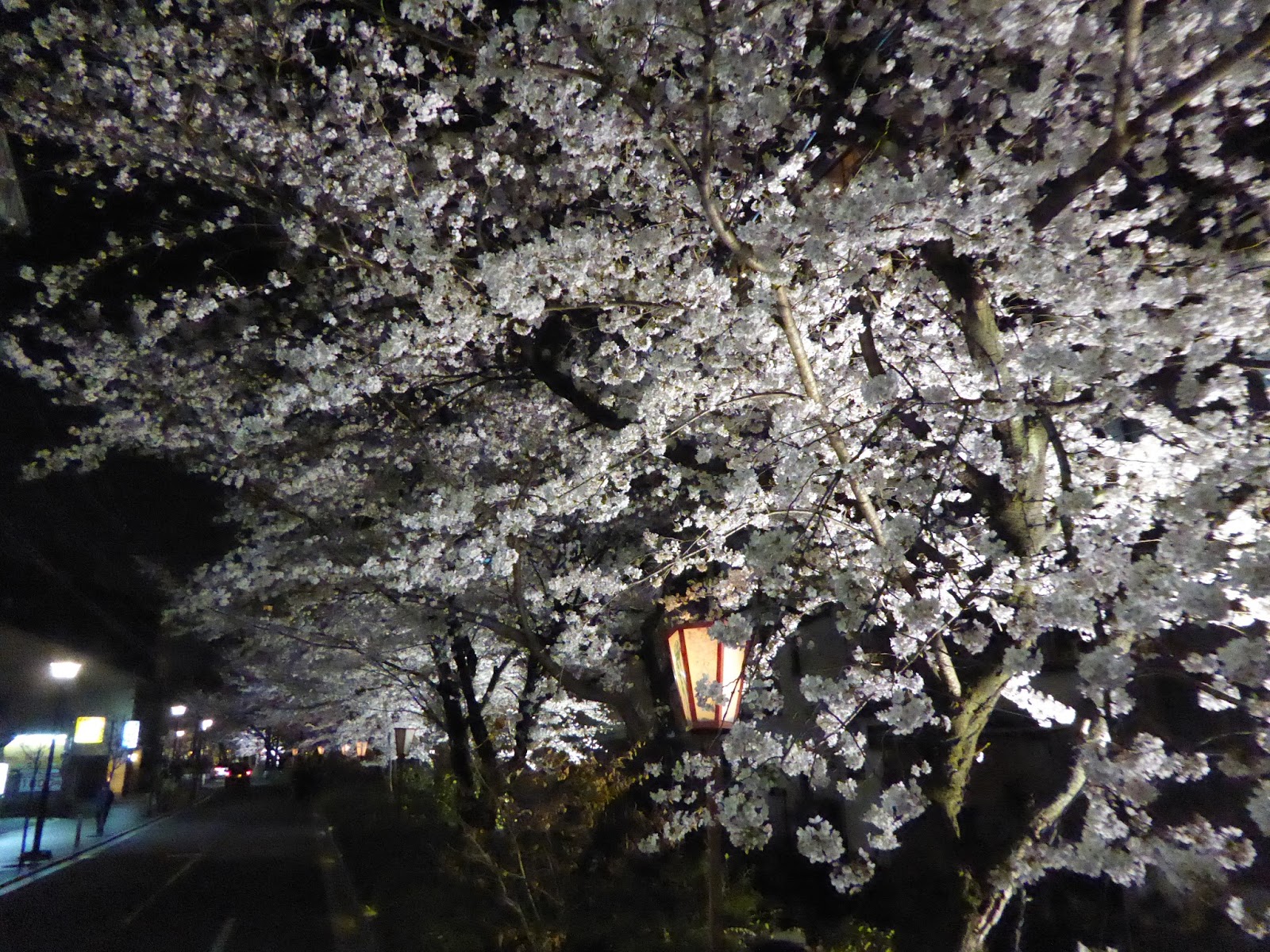
The canal is lined by willow trees, high class restaurants and ochaya, many of which have rooms overlooking the canal. There are more cherry blossom trees here too, as well as a few cranes, so it attracts locals dressed up for photos, and even a few newlyweds having their wedding photos taken


Kyoto


Kyoto
Kyoto


Kyoto

Kyoto